 Blaine Siding
 Ferndale's Coastal Climate Puts Real Demands on Board & Batten Siding
Ferndale sits close enough to the water that salt air is a year-round fact of life, not an occasional nuisance. Add in driving rain that comes sideways off winter storms and a moss season that can stretch for most of the year on shaded or north-facing walls, and you've got a climate that is genuinely hard on exterior siding. Board and batten siding — with its vertical boards and raised battens covering the seams — can handle this environment well, but only when the materials and the install are matched to what Whatcom County actually throws at a house.
Salt-laden air accelerates corrosion of fasteners and metal flashing, and it slowly breaks down finishes that aren't built to resist it. Wind-driven rain doesn't just fall on a wall, it gets pushed into every gap, seam, and fastener hole that isn't properly sealed or drained. And moss, algae, and mildew take hold anywhere moisture lingers, especially on the shaded sides of a home or under tree cover, which describes a lot of lots in this part of the county. Board and batten siding done right accounts for all three. Done wrong, it fails faster here than it would somewhere drier and calmer.
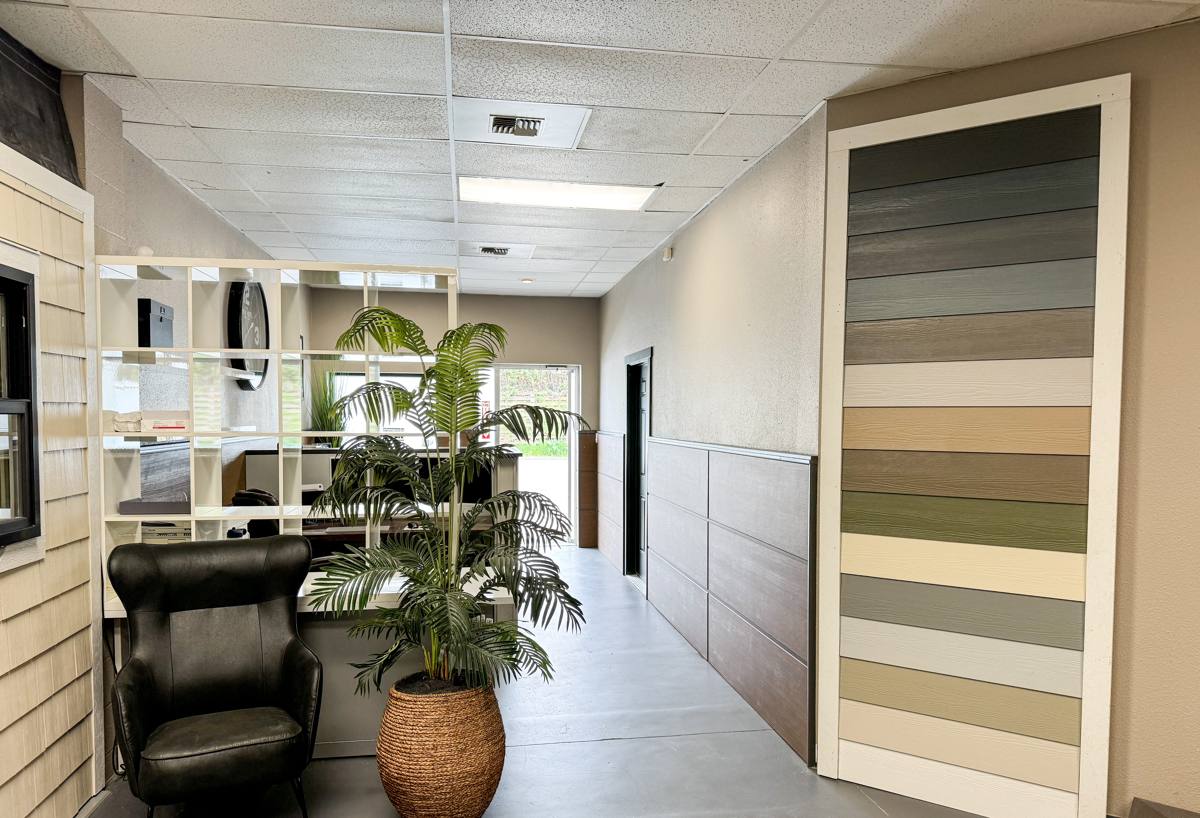
Why Board & Batten Fits Ferndale and Blaine-Area Homes
Board and batten has real functional advantages in a wet coastal climate, not just a look homeowners like. The vertical board orientation sheds water downward instead of collecting it along horizontal laps, and the raised battens create a secondary layer that helps break up wind-driven rain before it reaches the seams underneath. It's also a style that suits a lot of the farmhouse, craftsman, and modern-rustic homes we see throughout Ferndale and the broader Blaine area, often paired with lap siding on the same elevation for contrast.
The trade-off is that board and batten is less forgiving of a sloppy install than standard lap siding. Every seam, every batten fastener, and every transition at a window or corner is a potential entry point for moisture if it isn't detailed correctly. In a climate with this much rain and salt exposure, a marginal install doesn't just look bad sooner — it lets water behind the cladding, which is where the expensive damage happens.
What a Correct Board & Batten Installation Actually Involves
The Drainage Plane Comes First
Before a single board goes up, the wall needs a continuous weather-resistive barrier with properly lapped and taped seams, plus a drainage gap or furring strategy so any water that does get behind the siding has somewhere to go besides your sheathing. This step matters more in Ferndale than in a dry inland climate — it's the difference between siding that manages incidental moisture and siding that traps it.
Batten Spacing and Fastening
Batten spacing has to be planned around the width of the boards and the layout of the wall, not just eyeballed for even reveals. Battens are fastened into studs or solid backing wherever possible, with fastener spacing and penetration depth that match the manufacturer's engineering — not a generic nailing pattern borrowed from lap siding. In a salt-air environment, fastener material matters too; corrosion-resistant fasteners are non-negotiable, not an upgrade.
Flashing at Windows, Corners, and Trim
Every window, door, outside corner, and trim transition is a place where two materials meet, and that's exactly where wind-driven rain finds its way in if the flashing details aren't right. Head flashing above openings, properly lapped kick-out flashing at rooflines, and sealed (not just caulked-over) corner transitions are what keep a board and batten wall dry through a real Pacific Northwest winter.
James Hardie Board & Batten vs. Other Siding Options
Board and batten can technically be built out of several materials. Here's how they compare for a Ferndale-area home dealing with salt air, sustained rain, and moss pressure:
| Material | Moisture & Salt Air Behavior | Moss/Algae Resistance | Maintenance | Typical Warranty |
|---|---|---|---|---|
| James Hardie fiber cement | Engineered for wet climates; won't rot; resists corrosion when installed with proper fasteners | Factory finish resists staining better than raw wood; still needs periodic washing | Low — repaint cycle is years longer than wood | Strong, transferable product warranty |
| Cedar or primed spruce | Absorbs moisture, prone to rot and cupping in constant damp exposure | Prone to moss and mildew growth without frequent treatment | High — regular sealing, staining, or painting | Limited or none from the material itself |
| Vinyl board & batten | Doesn't rot, but can warp or crack; seams rely heavily on caulk over time | Can trap moisture behind panels if installed too tight | Low upfront, but limited repair options if damaged | Varies widely by manufacturer, often prorated |
| LP SmartSide (engineered wood) | Treated to resist moisture, but still wood-based and edge-sensitive if cut or damaged on site | Moderate; depends heavily on finish maintenance | Moderate — finish and edge sealing matter long-term | Manufacturer warranty, install-sensitive |
We install James Hardie exclusively because, in a climate like this one, the difference between a siding that's engineered for sustained moisture and one that simply tolerates it shows up on the wall within a few years, not decades.
Our Process for Ferndale Board & Batten Projects
Site Assessment and Measurement
We walk the home, check for existing moisture damage, note sun and shade exposure on each elevation, and identify the areas most exposed to wind-driven rain and salt air. This shapes decisions on batten layout, flashing details, and fastener spec before any material is ordered.
Prep and Moisture Barrier
Old siding comes off down to the sheathing so we can check for hidden rot before it's covered up again. A continuous weather-resistive barrier goes on with properly lapped seams, and any damaged sheathing is repaired — not sided over.
Installation and Fastening
Boards and battens go up to Hardie's engineered spacing and fastening spec, with corrosion-resistant fasteners driven into solid backing. Flashing is installed at every window, door, and transition as the wall is built, not patched in afterward.
Finish Check and Walkthrough
We check caulking at trim and penetrations, confirm the ColorPlus finish is free of jobsite damage, and walk the home with the owner before calling the job done.
Maintaining Board & Batten Siding in a Salt Air, Moss-Prone Climate
Even correctly installed siding needs some seasonal attention in this climate. A short, manageable routine goes a long way:
- Rinse the exterior once or twice a year to clear salt residue and organic buildup, especially on shaded or north-facing walls
- Trim back trees and shrubs that keep siding shaded and damp longer than necessary
- Check gutters and downspouts before the fall rains so water isn't sheeting down the wall
- Inspect caulking at windows, trim, and corners annually and re-caulk any cracked or shrunken joints
- Watch for moss or algae starting on battens and shaded seams and clean it early before it spreads
- Look for any fastener staining, which can signal a corroding fastener that should be addressed before it stains the finish
Cost Factors for a Board & Batten Project
Board and batten typically costs somewhat more than a straightforward lap siding job on the same house, mainly because of the added batten material and the extra labor time to lay out and fasten two layers instead of one. The real cost drivers on any given Ferndale home are the same ones that affect most siding projects:
- Total wall square footage and number of stories
- Whether it's a full tear-off or there's existing damage to repair first
- How much trim, window, and corner detail the home has
- Access — steep lots, tight setbacks, or limited staging area can add labor time
- Whether board and batten is used on the whole home or as an accent alongside lap siding
We give homeowners an honest, itemized estimate after seeing the actual house — broad national averages don't account for the specific layout and condition of your walls.
Why a Crew That Already Works Ferndale Matters
Board and batten's biggest failure points — flashing details, fastener corrosion, moisture behind the wall — are exactly the things a crew learns to watch for after years of working homes in this specific stretch of Whatcom County. We already know how far wind-driven rain travels up a wall in a coastal storm, which elevations tend to grow moss first, and how the permitting process works with Whatcom County and the City of Blaine. That local familiarity shows up in fewer callbacks, not just a shorter learning curve.
It also matters after the job is done. A crew based in the area is the one that shows up if a warranty question comes up down the road, not a company that installed once and moved on to the next region.
If you're considering board and batten siding for a Ferndale home, we're happy to take a look and give you a straightforward, no-pressure estimate — including an honest read on whether board and batten, lap siding, or a mix of both makes the most sense for your walls and your budget.