 Blaine Siding
 Why Birch Point's Location Changes the Roofing Math
Birch Point sits on the water, and that changes what a roof has to deal with compared to a home a few miles inland. Salt-laden air off the Salish Sea moves through this area constantly, wind off open water hits roofs at angles inland homes never see, and the long, damp Whatcom County shoulder seasons keep shaded roof slopes wet for months at a stretch. None of that makes metal roofing a bad choice here — it's actually one of the better options for this kind of exposure. But it does mean the material, the fasteners, and the installation details matter more in Birch Point than they would on a dry inland lot, and cutting corners on any one of them shows up faster near the water than it would anywhere else.
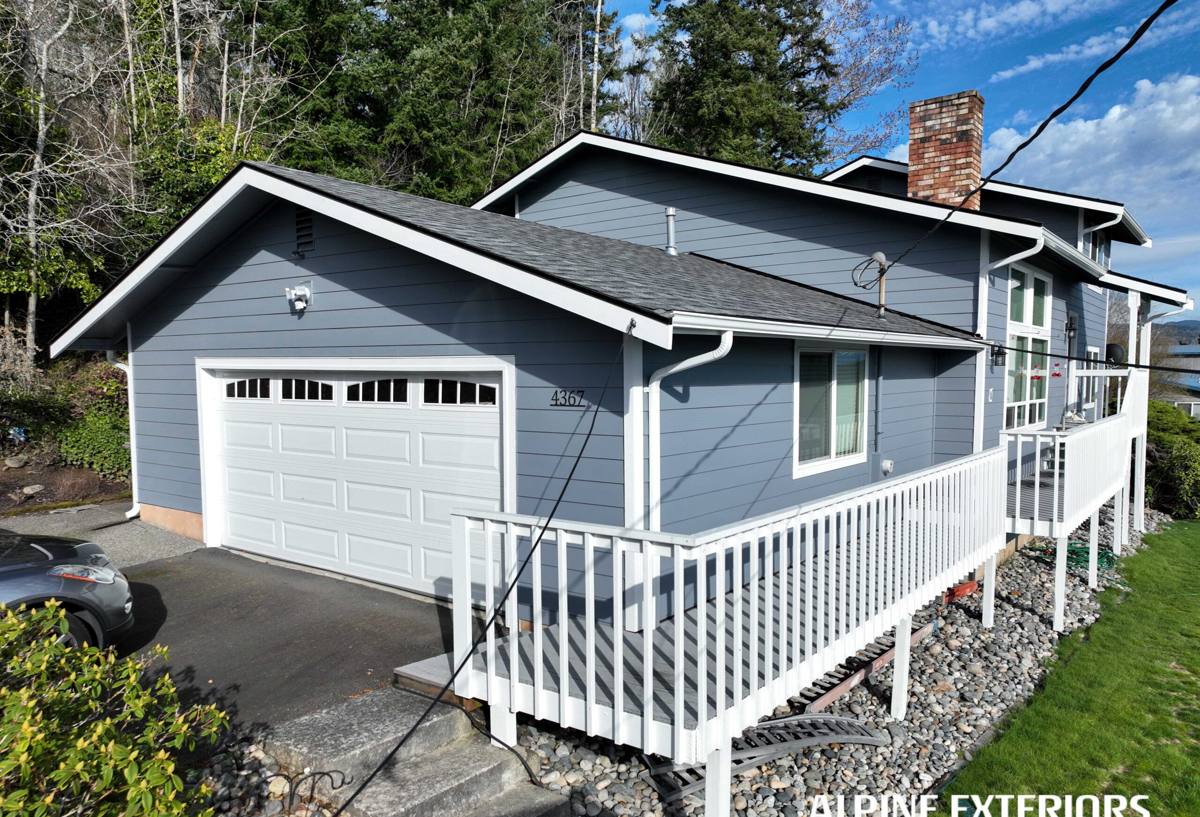
What Salt Air, Driving Rain, and Moss Actually Do to a Roof
Salt Air and Corrosion
Airborne salt is corrosive to bare or poorly coated metal, and it doesn't need direct ocean spray to do damage — it travels on the wind and settles on every exposed surface, including roof panels, fasteners, and flashing. Cut edges, scratches in a factory finish, and exposed steel fasteners are where corrosion typically starts first, because that's where the protective coating has been broken or was never applied in the first place.
Wind-Driven Rain
Rain that comes in sideways off the water finds every weak seam, lap, and penetration a roof has. On a metal roof, that means flashing details and fastener seals carry more of the waterproofing burden than they would in a calmer inland setting — a marginal detail that would hold up fine elsewhere can leak here.
The Moss Season
Blaine's mild, wet climate keeps shaded and north-facing roof slopes damp for a large part of the year, which is exactly what moss needs to take hold. Moss holds moisture against a roof surface, works into laps and fastener heads, and — on the wrong material — can accelerate wear over time.
Choosing the Right Metal for a Home This Close to Saltwater
Not all metal roofing is built the same way, and the differences matter more here than they would inland. The two most common choices are aluminum and coated steel, and each has real trade-offs worth understanding before you pick one.
| Factor | Aluminum | Coated Steel (Galvalume/Kynar-type finish) |
|---|---|---|
| Corrosion resistance in salt air | Naturally corrosion-resistant; doesn't rust | Depends entirely on an intact factory coating — good when uncompromised, vulnerable at cuts and scratches |
| Weight | Lighter | Slightly heavier |
| Upfront cost | Generally higher | Generally lower |
| Best fit | Homes with direct water exposure or minimal windbreak | Homes set back from the water with good coating and detailing |
| Long-term coastal maintenance | Lower, since the base metal itself resists rust | Coating condition should be checked periodically, especially at cut edges |
Neither option is wrong for Birch Point — the right call depends on how exposed a particular lot is, what the roof's slopes and details look like, and what the homeowner wants to budget for both upfront cost and long-term upkeep. We'll walk through that trade-off honestly during an estimate rather than defaulting to one answer for every house.
Standing Seam vs. Exposed-Fastener Panels
Beyond the metal itself, panel style matters just as much in a coastal setting.
Standing seam panels use concealed clips and interlocking seams instead of exposed screws through the panel face. There's nothing on the roof surface for wind-driven rain to work against directly, and no exposed fastener heads for salt air to attack over the years. This is our default recommendation for homes with direct or near-direct water exposure.
Exposed-fastener panels cost less upfront, but every screw penetrates the panel face through a rubber washer, and those washers harden and crack with age — faster under UV and salt exposure than in a sheltered inland yard. When that happens, the roof doesn't fail all at once; it starts as a handful of individual fastener leaks that get worse year over year unless the washers are inspected and replaced. Exposed-fastener panels can still be a reasonable choice for a detached garage, shop, or a home with real wind protection, but we're upfront that they need more attention over time in a place like Birch Point than standing seam does.
The Details Most Roofs Get Wrong: Flashing, Fasteners, and Underlayment
Panel choice gets the attention, but on a coastal roof it's usually the details around the panels that determine whether the system holds up.
- Flashing metal compatibility — mixing dissimilar metals in direct contact (for example, certain metals paired the wrong way at a valley or wall flashing) can trigger galvanic corrosion. We match flashing material to the panel system rather than grabbing whatever's on hand.
- Fastener grade — stainless or coated fasteners rated for the panel system, not generic hardware-store screws that will corrode long before the roof panel itself does.
- Underlayment — a synthetic underlayment across the full roof deck, with self-adhered, waterproof underlayment at eaves, valleys, and every penetration, gives the roof a real second line of defense if wind-driven rain ever gets past a seam.
- Ventilation — proper intake and exhaust airflow under the roof deck keeps moisture from condensing on the underside of metal panels in our cool, humid climate.
- Sealant placement — used at specific transitions and penetrations, not as a substitute for correct flashing laps.
Any one of these details being wrong won't necessarily show up on day one. It shows up two, five, or ten years later, usually as a leak that's hard to trace back to its actual cause.
Reading the Warranty Fine Print: Coastal Exclusion Zones
This is a detail a lot of homeowners don't find out about until after they've bought a roof: many metal panel manufacturers reduce or exclude their paint finish warranty for homes within a certain distance of saltwater. The structural or weathertightness warranty on the panel itself is often unaffected, but the cosmetic finish warranty — the part that covers fading, chalking, or coating breakdown — can be shortened or voided outright for coastal properties. This isn't unique to any one brand; it's common practice across the industry because coastal air is genuinely harder on painted finishes. For a property like Birch Point, we make sure to check the specific warranty terms on any panel and coating we're proposing before it goes on the roof, not after, so there are no surprises later.
How We Install a Metal Roof at Birch Point
- On-site assessment — we look at the home's actual exposure: how close to the water, how much windbreak from trees or terrain, roof pitch and slope orientation, and the condition of the existing deck.
- Material and panel selection — based on that assessment, we recommend a metal, coating, and panel style suited to the specific lot, not a one-size answer.
- Deck prep — repairing or replacing any compromised sheathing before anything goes down, since a metal roof is only as good as what it's fastened to.
- Underlayment installation — full synthetic underlayment plus self-adhered waterproofing at eaves, valleys, and penetrations.
- Panel installation — correct clip or fastener spacing for the wind exposure at that specific site, not just the manufacturer's minimum.
- Flashing and detail work — valleys, walls, chimneys, and penetrations finished with compatible, correctly lapped metal.
- Final walkthrough — checking every seam, fastener, and flashing detail before we call the job done.
What Maintenance a Metal Roof Actually Needs Here
One of the real advantages of metal roofing in a mossy, wet climate is that it sheds debris and resists moss growth far better than a granulated shingle surface. That doesn't mean zero maintenance — it means different, and lighter, maintenance.
- Clear needles, leaves, and debris from valleys and gutters at least once or twice a year, more often under heavy tree cover.
- Check fastener heads and washers on any exposed-fastener panel every few years for cracking or backing out.
- Look over flashing at chimneys, walls, and valleys after major storms for anything that's shifted.
- Keep gutters and downspouts flowing freely so wind-driven rain has somewhere to go.
- Rinse off heavy salt buildup or debris accumulation periodically, especially on lots with direct water exposure.
Why Hiring a Crew That Already Works This Neighborhood Matters
A contractor who mostly works inland jobs isn't necessarily going to think about galvanic corrosion at a valley flashing, or ask what a manufacturer's coastal warranty exclusion actually covers, because it rarely comes up on their other jobs. Working roofs on and around Birch Point regularly means we've already had to think through these specific trade-offs — material selection for direct water exposure, fastener grade, flashing compatibility, and where moss actually causes problems versus where it's cosmetic. That's not a sales pitch; it's the practical difference between a roof detailed for an inland lot and one detailed for a shoreline exposure in Whatcom County.
If you're weighing a metal roof for a home in Birch Point, we're happy to walk the roof with you, talk through material and panel options honestly, and put together a free, no-pressure estimate — just fill out the form below.