 Blaine Siding
 Custom Windows Built for the California Creek Climate
Homes in the California Creek area, on the northern edge of Whatcom County near Blaine, sit right in the path of everything Puget Sound and Georgia Strait weather can throw at a window. Salt-laden air, months of driving rain, and a moss season that seems to start earlier every year all work on window frames, sills, and seals in ways that inland homes never have to deal with. A window that would hold up fine in a drier climate can start failing here in a fraction of the time if it wasn't built, installed, or sealed with this environment in mind.
Custom windows aren't just about matching an odd-sized opening or getting a specific grid pattern — though we do plenty of that too. In this area, "custom" also means selecting materials, glass packages, and flashing details that are actually appropriate for a marine climate, and installing them correctly the first time. Get either piece wrong and you're looking at fogged glass, soft framing, or interior moisture problems within a few years instead of a couple of decades.
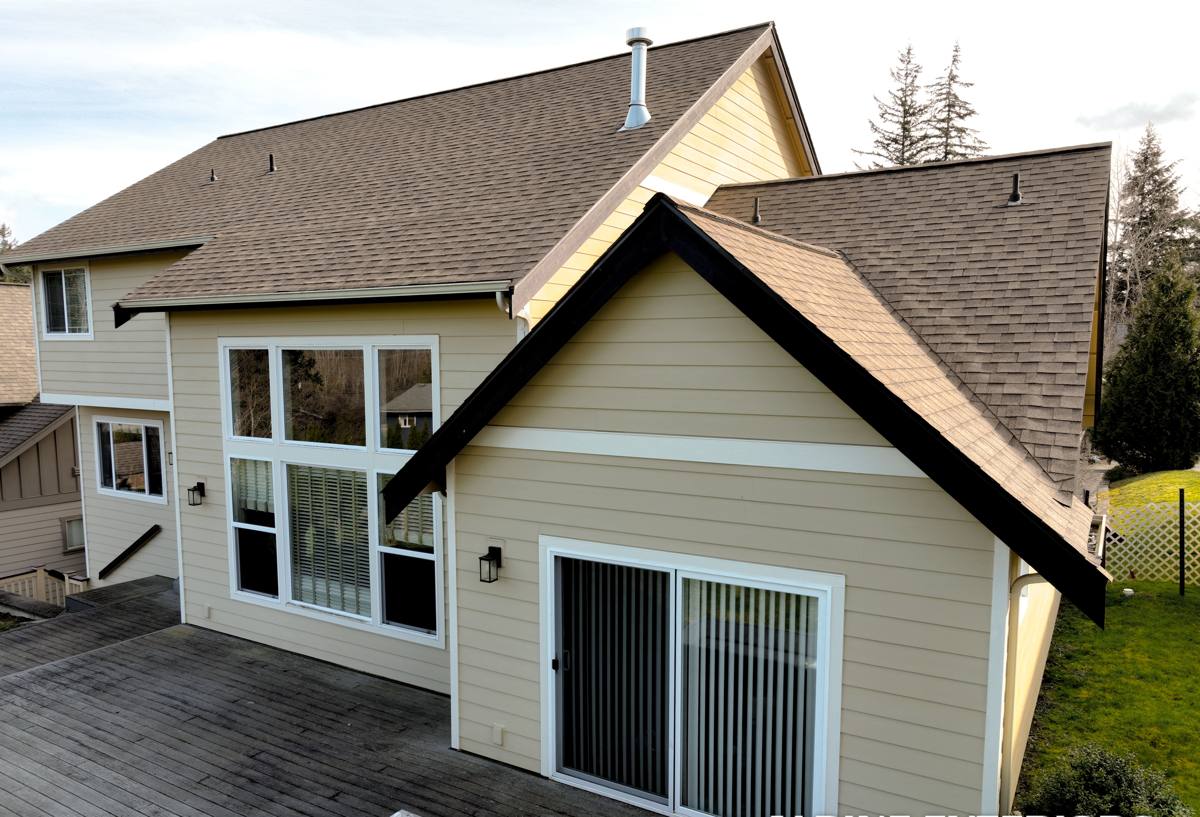
What California Creek Homes Are Up Against
This part of Whatcom County gets a specific combination of weather stresses that homeowners further inland rarely deal with all at once:
- Salt air — airborne salt from the nearby marine waters accelerates corrosion on hardware, screws, and lower-quality metal components, and it's harder on certain finishes and coatings than plain rain ever is.
- Driving rain — wind-driven rain doesn't just fall on a window, it gets pushed sideways into any gap in the flashing or sealant. Standard installation methods that work fine in calmer climates can leak here.
- A long moss season — extended damp, shaded conditions mean moss and algae get a foothold on sills, trim, and anything that stays wet for days at a time, which holds moisture against wood and paint longer than it should sit.
- Temperature swings between marine and inland air — condensation on the interior side of glass is more common here, which is often mistaken for a leak when it's really a sign of an underperforming glass package or poor ventilation.
None of this means windows can't last a long time in California Creek — plenty do. It means the materials and installation details matter more here than they would somewhere drier and calmer.
Signs Your Current Windows Are Losing the Fight
Most window failure in this climate doesn't show up as a sudden problem — it's gradual, and easy to write off until it's a bigger repair than it needed to be. Worth checking for:
- Fogging or haze between the panes of double- or triple-pane glass (a failed seal, not a cleaning issue)
- Soft or spongy wood at the sill or lower corners of the frame
- Visible moss, algae, or green staining building up on sills or exterior trim
- Drafts you can feel with a hand near the frame on a windy day
- Paint or finish peeling specifically at the bottom corners, where water tends to sit longest
- Difficulty opening, closing, or locking a window that used to operate smoothly
- Visible daylight or gaps around the frame from outside
Any one of these on its own might just mean a repair or re-caulk. Several at once, especially on a home that's had the original windows for 15–20+ years, usually means it's time to talk about replacement rather than chasing individual symptoms.
What a Correct Window Installation Actually Involves
The window unit itself only accounts for part of how well a window performs over time. In a wet, wind-driven climate like this one, the installation details matter just as much as the product.
Flashing and Water Management
Every opening needs a flashing sequence that sheds water downward and outward, layered correctly with the house wrap or building paper so water can never get behind the siding. This is the single most common place we find shortcuts on older or poorly-done installations, and it's usually the root cause of hidden rot that isn't visible until siding or trim comes off.
Sealing and Insulation
Between the window frame and the rough opening, the gap needs to be properly insulated and air-sealed — not just caulked around the outside trim. A window that's beautifully sealed on the exterior but has an open gap behind the frame will still draft and can still let moisture accumulate where you can't see it.
Fastening and Structural Fit
Windows need to be shimmed level, plumb, and square, and fastened per the manufacturer's specifications — not just wherever a screw happens to catch framing. An out-of-square window puts uneven stress on the frame and hardware, which shows up later as operating problems or premature seal failure.
Choosing Materials That Actually Hold Up Here
There's no single "best" window material for every home — it depends on budget, exposure, and how the home is used. Here's how the common options generally perform in a salt-air, high-rainfall climate like this one:
| Material | Salt Air / Moisture Resistance | Maintenance | Typical Trade-Offs |
|---|---|---|---|
| Vinyl | Good — won't corrode or rot | Low | Frame flexes over decades; color/finish options more limited |
| Fiberglass | Very good — dimensionally stable, resists moisture and corrosion | Low | Higher upfront cost than vinyl |
| Aluminum | Fair — can corrode in salt air without quality coatings | Moderate | Conducts heat/cold more than other materials |
| Wood / Wood-Clad | Fair to good with proper cladding and finish maintenance | High | Best appearance for some homes, but exposed wood needs regular upkeep here |
For most homes in this area we lean toward vinyl or fiberglass for exposed elevations, simply because they hold up to salt air and repeated wetting with the least ongoing maintenance. That said, plenty of homes have wood or wood-clad windows on more protected elevations that do fine, as long as the finish is kept up. We'll walk through what makes sense for your home's specific exposure rather than pushing one material across the board.
Glass Packages Worth Discussing
Double-pane, Low-E glass is the baseline for this climate — it cuts down on the interior condensation that's common when marine air meets a heated home. Triple-pane glass adds further insulation value and sound dampening, which some homeowners want given how much driving rain and wind this area sees, but it comes at a higher cost and added weight. Argon or krypton gas fills between panes improve insulation performance modestly and are worth considering as an upgrade, not a must-have.
Our Custom Windows Process
- On-site assessment — we look at existing window condition, framing, flashing, and any signs of moisture intrusion before recommending anything.
- Measuring and material selection — every opening is measured individually; we don't assume uniform sizing on older homes, and we'll talk through material and glass options based on that specific elevation's exposure.
- Removal and inspection — once old windows come out, we check the rough opening and surrounding framing for hidden rot or damage before anything new goes in.
- Correct flashing and installation — proper flashing sequence, air sealing, shimming, and fastening per manufacturer spec, not a quick trim-and-caulk job.
- Exterior and interior finish work — trim, caulking, and touch-up work done to match the rest of the home.
- Final walkthrough — every window opened, closed, and locked with you before we consider the job done.
What Affects the Cost of a Custom Window Project
Costs vary a lot from home to home, but the main drivers are consistent. Rather than quote a number that won't apply to your project, here's what actually moves the price:
| Factor | Why It Matters |
|---|---|
| Window material and glass package | Fiberglass and triple-pane glass cost more upfront than vinyl and standard double-pane |
| Number of openings and sizes | Larger and non-standard sizes typically require custom manufacturing, which adds cost and lead time |
| Condition of existing framing | Hidden rot or water damage found during removal adds repair work before new windows go in |
| Access and elevation | Upper-floor or hard-to-reach windows take more time and equipment than ground-level replacements |
| Trim and finish work | Matching existing exterior trim or siding profiles adds labor beyond the window unit itself |
We give a firm, itemized quote after seeing the actual openings — not a rough guess over the phone — because the range between a straightforward vinyl replacement and a full custom fiberglass job with repair work is significant.
Why a Crew That Already Works California Creek Matters
A contractor who mostly works drier, inland areas will often default to installation methods and materials that are fine somewhere else but undersized for what this climate actually does to a home. Knowing how far driving rain gets pushed sideways in a coastal wind, which elevations take the worst of the salt air, and how long moss season really runs here changes real decisions — flashing details, material choice, even which openings deserve the upgraded glass package versus which can run standard.
We work on homes throughout Blaine and the surrounding Whatcom County area, including California Creek, regularly enough to know what tends to go wrong here and how to build the installation so it doesn't happen on your home. That's less about a sales pitch and more about not having to relearn the local climate's lessons on your project.
If your windows are showing their age, letting in drafts, or you're planning a renovation that includes new openings, we're happy to come take a look and put together a free, no-pressure estimate for your California Creek home.