 Blaine Siding
 Siding Installation in California Creek: A Job That Has to Match the Location
California Creek sits close enough to the water that homes here take a different kind of weathering than siding twenty miles inland. Salt-laden air off the strait, driving rain that comes in sideways during winter storms, and a moss season that can stretch from October into April all put steady pressure on exterior walls. A siding installation done to a generic standard — the kind that might hold up fine in a drier part of the state — often starts showing problems within a few years out here. A siding job done right for California Creek is built around this specific set of conditions from the first layer of house wrap to the last piece of trim.
This page is about that one job — installing siding correctly on a California Creek home — not siding in general. We'll walk through what the climate actually does to a wall assembly, what a correct installation includes, how our process works, and why hiring a crew that already knows this stretch of Whatcom County coastline matters more than it might seem.
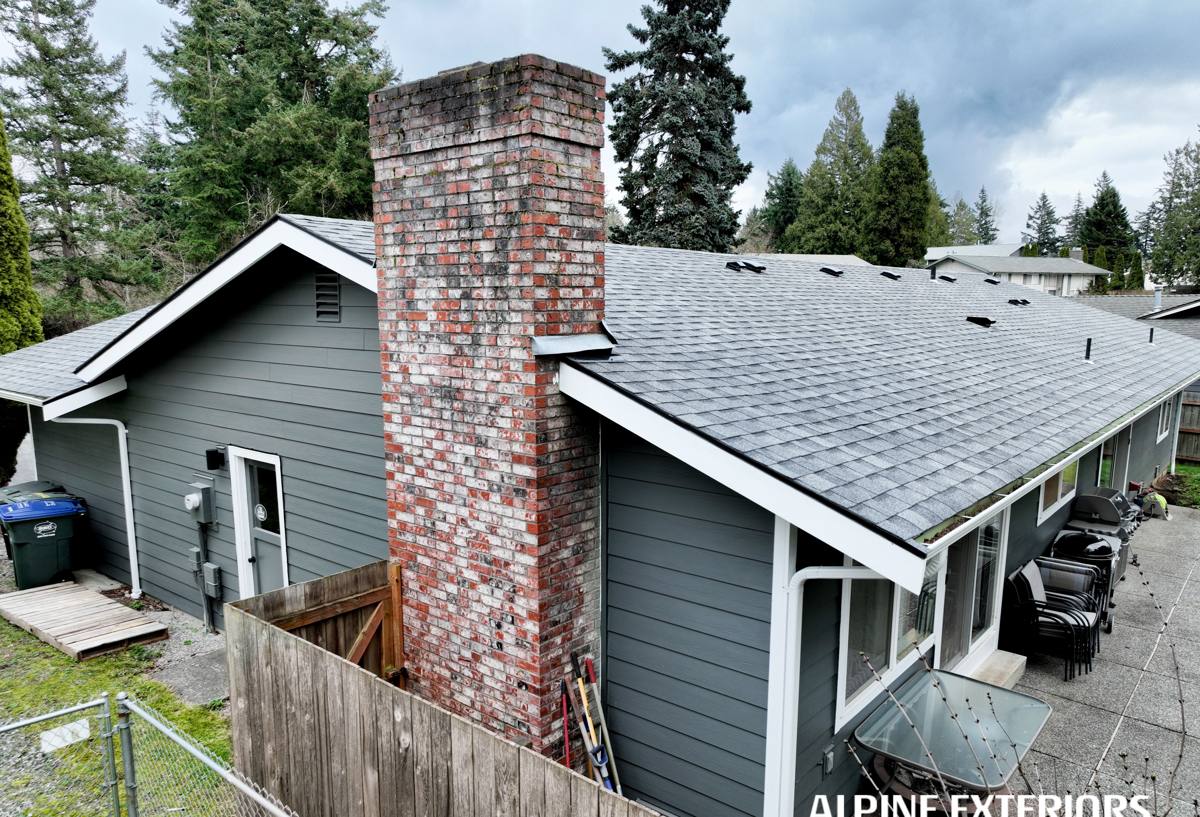
What Salt Air, Driving Rain, and Moss Season Actually Do to a Wall
Salt Air
Airborne salt doesn't just sit on the surface of siding — it works into fasteners, trim seams, and any exposed cut edges over time. Metal components that aren't corrosion-resistant degrade faster near the water, and coatings that aren't formulated to resist salt exposure can chalk, fade, or fail early. This is one of the reasons product choice matters as much as workmanship in a location like California Creek.
Driving Rain
Rain that comes in at an angle, pushed by wind off the water, doesn't behave like a gentle vertical rainfall. It gets forced up under laps, into gaps around windows and doors, and behind trim that isn't properly flashed. A wall assembly built for driving rain needs a continuous drainage plane behind the siding, correctly lapped house wrap, and flashing details that shed water outward rather than letting it track back toward the sheathing.
Moss and Sustained Moisture
Whatcom County's long, wet, mild winters create ideal conditions for moss and algae growth on anything that stays damp for extended stretches — north-facing walls, areas shaded by trees, and surfaces near ground level. Moss holds moisture against the siding surface, which accelerates whatever degradation is already happening from rain and salt exposure. Siding material, finish quality, and details like ground clearance and gutter performance all affect how much moss becomes a long-term maintenance headache.
What a Correct Siding Installation Actually Involves
Siding is a system, not a single product. A correct installation in a climate like this one includes several layers working together, and skipping or rushing any one of them is usually where premature failures start.
- Weather-resistant barrier (WRB): A continuous, properly lapped house wrap or building paper behind the siding that manages any moisture that gets past the cladding.
- Flashing at every penetration: Windows, doors, hose bibs, vents, and any other wall penetration need flashing that directs water out and down, not into the wall cavity.
- Proper fastening: Corrosion-resistant fasteners driven at the correct spacing and depth — manufacturer specs exist for a reason, and over-driven or under-driven nails are a common cause of siding failure.
- Correct clearances: Siding needs a minimum gap above grade, roof lines, decks, and patios so water and debris don't sit against the bottom edge.
- Caulking and sealant only where specified: Modern fiber cement systems are designed to shed water through overlaps and flashing, not to be sealed airtight — over-caulking can trap moisture instead of releasing it.
- Factory-finished coatings applied correctly: Field-cut edges need to be primed or sealed per the manufacturer's instructions to protect the cut face from moisture intrusion.
Any one of these steps done poorly can undercut the performance of even a good siding product. This is why we treat installation quality as being just as important as which siding we put on the wall.
Why We Install Only James Hardie Fiber Cement
We made a decision a long time ago to install one siding system — James Hardie fiber cement — rather than offering vinyl, LP SmartSide, cedar, or primed spruce alongside it. That's not a marketing position; it's a practical one built around what holds up in this specific climate.
Fiber cement is non-combustible, dimensionally stable, and doesn't absorb moisture the way engineered wood products can. James Hardie's ColorPlus factory finish is baked on and warranted separately from the substrate, which matters in an area where UV exposure and salt air both work against paint film over time. Hardie's HZ5 product line is engineered specifically for climates with more moisture exposure, which fits California Creek's conditions well. We're not going to tell you other products don't have their place — vinyl is inexpensive, cedar has real appeal, LP SmartSide has its fans — but each comes with trade-offs in moisture behavior, maintenance burden, or long-term appearance that we're not willing to install and then stand behind in this environment. Hardie is what we put on homes because it's what we've seen perform.
Comparing Common Siding Options for a Coastal Whatcom County Home
| Material | Moisture Resistance in Coastal Climate | Maintenance Burden | Typical Longevity |
|---|---|---|---|
| James Hardie Fiber Cement | Strong — non-combustible, engineered HZ lines, factory finish | Low — occasional wash, repaint on a long cycle if not ColorPlus | Decades when installed to spec |
| Vinyl | Moderate — doesn't rot, but can warp/crack in temperature swings | Low, but limited repair options if damaged | Variable, shorter in harsh coastal exposure |
| Cedar | Requires diligent maintenance to resist moisture and moss | High — regular sealing/staining and moss treatment | Shorter without consistent upkeep |
| LP SmartSide (engineered wood) | Sensitive to sustained moisture exposure at cut edges and seams | Moderate — edge sealing and inspection are important | Depends heavily on installation detailing |
Our Installation Process for California Creek Homes
- On-site assessment: We look at wall orientation, tree cover, drainage patterns, and existing moisture or moss issues specific to your lot.
- Removal and inspection: Old siding comes off and we inspect the sheathing underneath for rot or hidden moisture damage before anything new goes up.
- WRB and flashing installation: A continuous weather barrier goes on first, followed by flashing at every window, door, and penetration.
- Hardie installation to manufacturer spec: Correct fastener type, spacing, and clearances, with attention to lap lines and corner details.
- Trim, caulking, and finish detailing: Only where the manufacturer calls for sealant, plus finish work at corners and transitions.
- Final walkthrough: We review the completed job with you and point out any maintenance items specific to your home's exposure.
Signs a California Creek Home Needs New Siding
Not every siding problem calls for a full replacement, but several signs point toward it being time:
- Persistent moss or algae staining that returns quickly after cleaning
- Visible warping, buckling, or separation at seams and corners
- Soft spots or discoloration on the wall surface, which can indicate moisture behind the siding
- Paint that's failing across large areas rather than just a few boards
- Siding that's original to a home built more than a couple decades ago, especially without documented upgrades
If you're only seeing isolated issues, a repair or partial replacement may be enough — we'll tell you honestly which situation you're in rather than push a full job you don't need.
What to Ask Before Hiring a Siding Contractor Here
Whatcom County has contractors who work primarily inland and others who work primarily along the coast, and the difference in how they detail a wall assembly can be significant. Before hiring anyone for a California Creek project, it's worth asking:
- Do you install one siding system exclusively, or several — and why?
- What flashing details do you use around windows and doors specifically for wind-driven rain?
- How do you handle ground clearance and drainage on lots with limited slope?
- What warranty covers the material, and what warranty covers your labor?
- Have you worked on other homes in this immediate area, and what did those conditions require?
Why Local Experience in California Creek Specifically Matters
A contractor who mostly works twenty or thirty miles inland can still be a good builder, but they may not have hands-on familiarity with how quickly moss establishes on a shaded, water-adjacent wall, or how much more attention flashing needs on a lot exposed to wind off the strait. Crews that already work this immediate area know which details tend to fail first here and build in the extra margin those conditions call for — tighter attention to lap lines, more conservative clearances, and flashing choices suited to salt exposure. That local pattern recognition doesn't show up in a product brochure; it comes from having done the work in this exact setting.
After Installation: What Ongoing Care Looks Like
James Hardie siding installed correctly is low-maintenance, not no-maintenance. In a California Creek setting, a simple annual routine goes a long way:
- Rinse siding periodically to remove salt residue and organic buildup before it takes hold
- Keep gutters clear so overflow isn't running down the wall face
- Trim back vegetation that shades walls and keeps them damp longer than necessary
- Inspect caulking at trim and penetrations annually and have any gaps addressed promptly
None of this is heavy work, but it's the kind of routine attention that keeps a well-installed siding job performing the way it should for decades rather than years.
If you're weighing a siding project for a home in California Creek, we're glad to take a look and give you a straightforward, no-pressure estimate — including an honest read on whether you're looking at a full replacement or something less. There's a form below to get that conversation started.