 Blaine Siding
 Building Decks for Cherry Point's Specific Conditions
Cherry Point sits close enough to the water that salt-laden air is part of daily life, not an occasional weather event. Add Whatcom County's long wet season and the moss growth that comes with it, and you have a set of conditions that will find every weak point in a deck within a few years if the job wasn't built with those conditions in mind. We work on homes in this area regularly, and the decking failures we get called out to fix almost always trace back to the same handful of shortcuts: fasteners that weren't rated for a marine-influenced environment, framing that never had a chance to dry out, or board systems chosen for looks rather than how they actually perform under constant moisture and salt exposure.
This page is specifically about composite decking for homes in and around Cherry Point. Composite has become the default recommendation for this stretch of coastline for good reason, but "composite" covers a wide range of products and installation approaches, and getting it right here takes more attention than in a drier, inland part of the state.
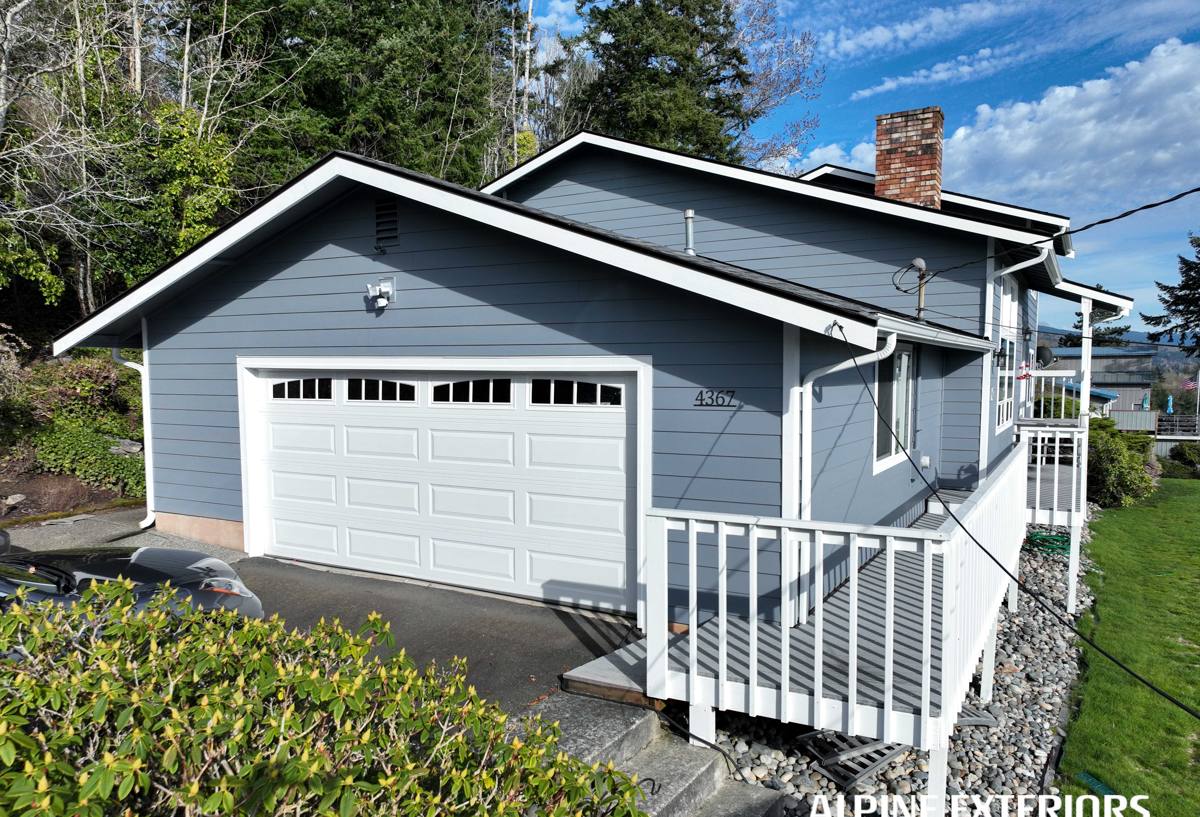
What Salt Air, Rain, and Moss Actually Do to a Deck
Salt Air
Airborne salt doesn't just sit on the surface of a deck — it works its way into any exposed metal fastener, hinge, or bracket and accelerates corrosion far faster than it would a few miles inland. Over time, corroding fasteners loosen boards, stain the surrounding material, and eventually need to be dug out and replaced, often damaging the decking around them in the process.
Driving Rain
Rain that comes in at an angle, rather than falling straight down, gets up under rail skirts, behind fascia boards, and into end-grain cuts that weren't sealed properly. Standing water in these spots is where rot in the substructure and premature failure in lower-quality decking both get started.
Moss and Algae
A long wet season with limited direct sun in shaded areas of a yard is ideal moss habitat. On a deck surface, moss and algae growth isn't just an appearance issue — it holds moisture against the board surface and makes the deck genuinely slick and unsafe underfoot, especially on stairs.
Why Composite Makes Sense Here — and Where It Still Needs Respect
Composite decking, when it's a quality capped product installed correctly, resists the moisture absorption, splintering, and rot that wood struggles with in this climate. That's the honest case for it. But composite is not maintenance-free, and it is not immune to installation mistakes. A composite deck installed with the wrong fastening system, inadequate ventilation underneath, or insufficient gapping between boards will still trap moisture, still grow algae, and still fail early — just in different ways than wood does.
Our standard for composite work in Cherry Point starts with the assumption that the deck will be rained on sideways and coated in salt residue for most of the year, and the build has to account for that from the framing up, not just at the surface.
What a Correctly Built Composite Deck Involves
Substructure First
The framing underneath a composite deck matters as much as the boards on top. We check joist spacing against the manufacturer's specification for the board being used (composite typically needs tighter joist spacing than wood, especially at angles or on stairs), confirm the ledger connection is flashed correctly against the house, and make sure there's real airflow underneath the deck rather than a sealed, damp cavity.
Fasteners and Hardware
In a salt-air environment, we use stainless steel or coated fasteners rated for coastal exposure, along with hidden fastener clip systems where the board allows it. Cutting corners on hardware here is the single most common cause of the early failures we see on service calls.
Gapping and Drainage
Composite boards need consistent spacing to allow water to drain through rather than pool on the surface. We set gapping based on the board manufacturer's guidance and the expected seasonal movement, not a generic rule of thumb, and we grade the ground or membrane underneath so water has somewhere to go.
Edge and Cut Treatment
Every cut end on a composite board is a spot where moisture can wick in if it's not treated. We finish exposed cuts per the manufacturer's method, and we use manufacturer-matched trim and fascia rather than mismatched material that ages differently than the deck field.
Our Process for Cherry Point Deck Projects
- On-site assessment: We look at sun exposure, prevailing wind and rain direction, existing drainage, and how close the site is to salt spray influence, since these factors change hardware and layout choices.
- Framing evaluation: On replacement projects, we inspect the existing substructure for rot or corrosion before deciding whether it can be reused or needs to be rebuilt.
- Material selection: We walk through board options with the homeowner based on budget, traffic level, and how much upkeep they actually want to do, rather than defaulting to one product for every job.
- Build: Framing, ledger flashing, joist protection tape, fastener installation, and board layout following manufacturer spec for this climate.
- Finish details: Fascia, stair treads, railing attachment points, and any trim that needs coastal-rated hardware.
- Walkthrough: We go over basic seasonal care specific to the site — where moss is likely to form, how to clean salt residue off railings, and what to check each fall.
Comparing Decking Approaches for This Climate
| Material | How It Handles Salt Air | How It Handles Rain/Moisture | Moss/Algae Behavior | Upkeep |
|---|---|---|---|---|
| Capped composite | Good, especially with coastal-rated fasteners | Resists water absorption into the board core | Can grow on surface if not periodically cleaned; doesn't rot | Occasional washing, no sealing/staining |
| Uncapped composite | Weaker — more prone to surface wear from salt exposure over time | Some moisture absorption at the surface | More prone to staining from moss/algae than capped boards | Moderate — surface can fade and needs more attention |
| Pressure-treated wood | Fasteners and hardware corrode faster; wood itself needs regular sealing near salt exposure | Absorbs moisture, prone to warping and rot if maintenance lapses | Moss takes hold easily on damp wood surfaces | Regular sealing/staining, ongoing rot inspection |
| PVC decking | Very good — no wood fiber to degrade | Essentially waterproof board core | Surface can still grow algae in shaded, damp spots; cleans off easily | Low — periodic washing |
What Drives Cost on a Composite Deck Project
| Factor | Why It Matters Here |
|---|---|
| Board tier (uncapped vs. capped composite vs. PVC) | Higher-tier boards cost more up front but hold up better against salt exposure and moisture, lowering long-term maintenance and replacement costs |
| Substructure condition | Rebuilding rotted or corroded framing adds cost but is not optional if the existing structure is compromised |
| Fastener and hardware system | Coastal-rated stainless or coated hardware and hidden-fastener systems cost more than basic hardware, but reduce the corrosion-related repairs common in this area |
| Deck size and layout complexity | Stairs, multiple levels, and custom railing add labor and material beyond a simple rectangular deck |
| Site access and drainage grading | Sites needing ground regrading or drainage work under the deck add prep cost but prevent moisture problems later |
Maintaining a Composite Deck in a Wet, Salty Climate
Composite decking cuts down on maintenance compared to wood, but "low maintenance" doesn't mean "no maintenance" in this climate. A simple seasonal routine goes a long way:
- Sweep debris off the deck regularly, especially in fall, so organic matter doesn't sit and feed moss growth
- Wash the deck surface a couple of times a year with a soft-bristle brush and a cleaner appropriate for composite, focusing on shaded areas where moss tends to establish
- Rinse railings and hardware periodically to clear salt residue, particularly on the sides of the home facing open water or prevailing wind
- Check fastener heads and hidden clip areas once a year for early signs of corrosion or loosening
- Confirm gaps between boards stay clear of debris so water continues to drain through rather than pooling
- Trim back nearby vegetation that keeps sections of the deck shaded and damp for extended periods
Why a Local Cherry Point Crew Matters
A contractor who works this area regularly already knows which sides of a property tend to take the worst of the rain and salt exposure, what Whatcom County permitting and setback requirements apply to deck projects, and which fastener and board combinations have actually held up on similar homes nearby. That's different from a crew that installs decks broadly across a much drier region and treats every job the same way. We've seen what happens when a deck is built to a generic spec and installed in a coastal-influenced setting — it's the reason a fair share of our work in this area is repair and replacement rather than new builds.
Hiring locally also means someone is available for a straightforward warranty conversation or a maintenance question later, rather than trying to track down a contractor who was only in the area for one project.
Ready for an Honest Assessment
If you're planning a new composite deck or replacing one that hasn't held up to Cherry Point's weather, we're glad to take a look and give you a straightforward read on what your site needs. The estimate is free, there's no pressure, and we'll tell you plainly what a correct build looks like for your specific situation — just fill out the form below to get started.