 Blaine Siding
 Roof Repair Built for Cherry Point's Coastline
Cherry Point sits right up against the water in Whatcom County, and that location shapes everything about how a roof ages out here. Homes get a steady diet of salt-laden air off the strait, wind-driven rain that finds its way under anything loose, and a moss season that can run most of the year in a shaded, damp climate like ours. A roof repair that works in a drier inland town doesn't always hold up here — the materials, the flashing details, and the timing all need to account for what this specific stretch of coastline actually does to a roof.
We work on roofs in and around Cherry Point regularly, and the repair calls we get tend to follow a pattern: moss that's held moisture against shingles for too long, flashing that's corroded faster than it should have because of salt exposure, and leaks that show up well away from where the actual damage started. This page is about that specific set of problems and how we approach fixing them correctly the first time.
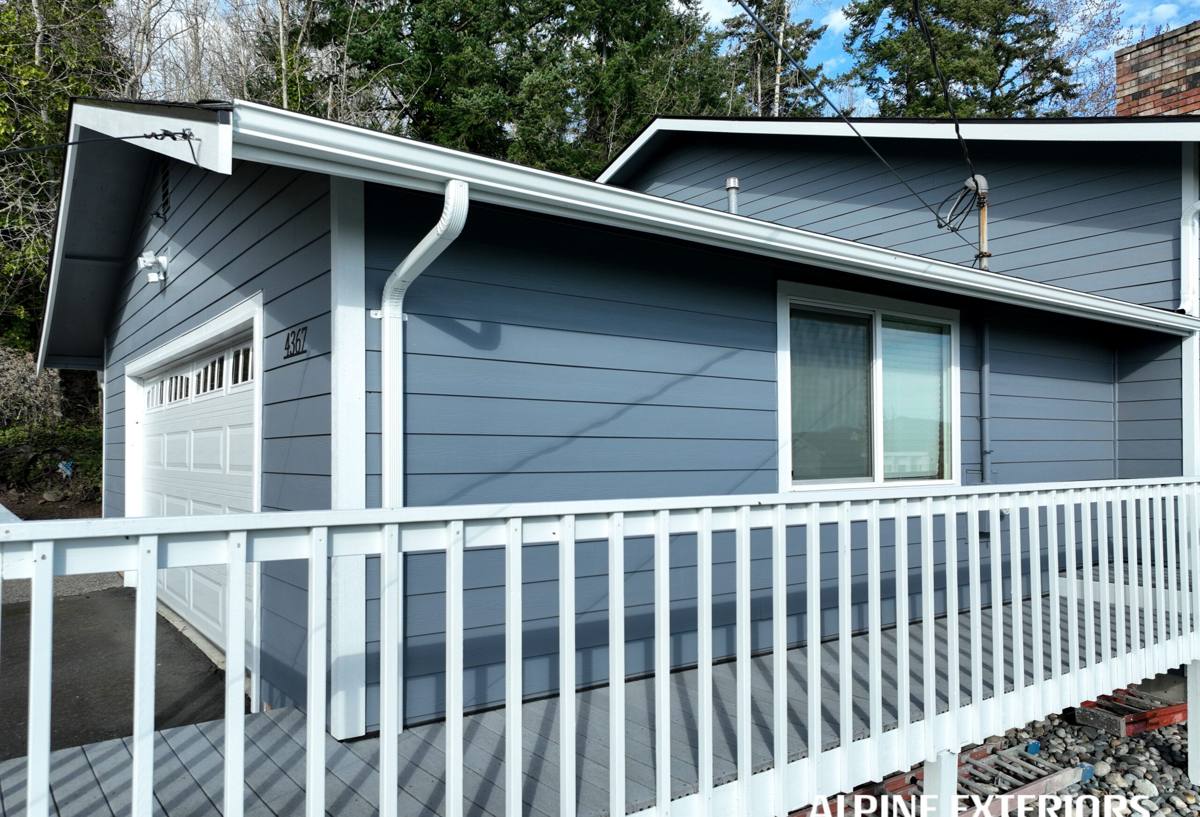
What Cherry Point's Climate Does to a Roof
Salt Air and Metal Fatigue
Proximity to the water means airborne salt settles on every exterior surface, including your roof. Metal flashing, fasteners, and vent components corrode faster near the coast than they do even a few miles inland. A nail or flashing seam that would last decades in a drier, less coastal part of Whatcom County can start failing years earlier out here, and a corroded fastener is a much smaller problem to fix now than the rot it causes once it lets water in.
Driving Rain and Wind
Storms coming off the water often bring rain sideways, not straight down. That matters because a lot of roofing details are designed to shed water moving vertically — driving rain tests every lap, seam, and flashing edge in a way that calm weather never will. Repairs that look fine on a dry day can still leak the next time wind pushes rain uphill under a shingle edge or around a poorly sealed penetration.
Moss and Organic Growth
Shade, moisture, and mild temperatures make Western Washington roofs some of the most moss-prone in the country, and low-lying, tree-adjacent areas near Cherry Point are no exception. Moss doesn't just look bad — it holds water against the roofing surface, works its way under shingle tabs, and lifts material as it grows. Left alone through a full wet season, a moss patch that started as a cosmetic issue becomes a leak point.
Signs a Cherry Point Roof Needs Repair
Most roof repairs get called in after a leak shows up inside the house, but the roof usually gave warning signs well before that. Watch for:
- Dark streaks or thick moss growth concentrated in shaded sections of the roof
- Granules collecting in gutters or at downspout outlets
- Shingles that look cupped, curled, or lifted at the edges
- Rust staining or visible corrosion around flashing, vent boots, or chimney counterflashing
- Soft or spongy spots when the roof is walked, which usually means the decking underneath has absorbed water
- Water stains on interior ceilings or in the attic, especially after a windy storm
- Daylight visible through the roof deck from inside the attic
Any one of these is worth a look. A roof that shows several at once usually has more going on than a single patch will fix.
What a Correct Repair Actually Involves
The biggest mistake in roof repair isn't skill — it's scope. A repair that only addresses the spot where water is visibly entering, without checking how it got there, tends to fail again within a season or two. Water travels along the underlayment and decking before it shows up as a stain, so the visible leak point and the actual failure point are often several feet apart.
Our Diagnosis Process
Before any material comes off or goes on, we trace the leak back to its source. That means checking flashing at roof-to-wall transitions, valleys, vent penetrations, and chimney or skylight surrounds — the places where two roof planes or materials meet are where the large majority of leaks originate, not the open field of shingles. We also check the decking around the leak for soft spots, since a repair over rotted plywood won't hold regardless of how well the shingles are installed.
Common Repairs We Handle in This Area
- Moss and organic growth remediation — safe removal without damaging the roofing surface, followed by treatment to slow regrowth
- Flashing repair and replacement — especially around chimneys, skylights, and wall intersections where salt-air corrosion shows up first
- Damaged or missing shingle replacement — matched as closely as possible to existing material and color
- Vent boot and pipe collar repair — rubber boot seals are a common failure point after years of UV and salt exposure
- Decking repair — replacing rotted or delaminated sections found during diagnosis, not just patching over them
- Gutter and edge flashing correction — misdirected water at the roof edge is a frequent, overlooked cause of fascia and soffit damage
What We Won't Do
We don't seal over a leak without finding its source, and we don't recommend a patch when the underlying decking has already failed. Covering a soft spot with new shingles hides the problem for a season and then makes it more expensive to fix once it reappears. Our standard is to tell you honestly whether you're looking at a repair or whether the damage has progressed to the point that replacement of that section — or the roof — makes more sense.
Repair vs. Replacement: How We Help You Decide
Not every roof problem needs a full replacement, and not every leak can be permanently fixed with a patch. The right call usually comes down to a handful of factors:
| Factor | Favors Repair | Favors Replacement |
|---|---|---|
| Roof age | Well within expected lifespan | Near or past the end of its service life |
| Extent of damage | Isolated to one area or detail | Spread across multiple sections |
| Decking condition | Solid, no soft spots | Widespread rot or delamination |
| Number of past repairs | First or second repair | Repeated repairs to the same areas |
| Material availability | Matching shingles still obtainable | Discontinued or badly weathered mismatch |
We'll walk you through where your roof falls on this before recommending anything — our goal is the option that actually solves the problem, not the bigger invoice.
Materials We Use and Why
For repair work, we prioritize matching your existing roofing material as closely as possible in style, weight, and color so the repair blends in rather than standing out as a patch. Where we deviate from a simple like-for-like replacement, it's usually to upgrade a detail that's undersized for this climate — for example, using a self-adhering waterproof membrane at valleys, eaves, and around penetrations even if the original roof didn't have one there. That membrane costs more up front than standard felt underlayment, but in a climate with this much driving rain and moss-related moisture, it's the difference that keeps a repair from becoming a callback.
We're selective about flashing metal for the same reason — coastal air is hard on lower-grade materials, and using flashing that resists corrosion better is a small cost difference that pays off over the life of the repair. We'll always explain the trade-offs of any material choice in plain terms, including cost, expected lifespan, and maintenance, so you're deciding with full information rather than guessing.
Our Repair Process
1. Inspection and Diagnosis
We inspect the roof surface, attic (where accessible), and all flashing details connected to the affected area, not just the spot where the leak appeared.
2. Written Scope and Estimate
You get a clear explanation of what's actually wrong, what it will take to fix it correctly, and a written estimate before any work starts. No surprise scope changes once we're on the roof.
3. The Repair
We remove and replace only what needs it, check the decking underneath, install proper underlayment and flashing at the repair area, and match roofing material as closely as available.
4. Cleanup and Walkthrough
We clear debris and old material from the site and walk you through what was done and why, including any maintenance recommendations specific to your roof.
Keeping a Cherry Point Roof Healthy Between Repairs
A repair fixes today's problem, but this climate keeps working on the roof every day after. A few habits go a long way toward stretching the life of both the repair and the roof around it:
- Have moss treated or removed at the first sign of growth rather than waiting for a full season of buildup
- Keep gutters and downspouts clear so water has somewhere to go besides under the shingle edge
- Trim back overhanging branches that keep sections of the roof shaded and damp
- Have flashing and vent boots checked every couple of years, since salt-air corrosion isn't always visible from the ground
- Get the roof looked at after any major windstorm, even if nothing looks obviously wrong from below
Why a Crew That Already Works Cherry Point Matters
Roofing problems in a coastal Whatcom County community aren't identical to roofing problems inland, and a crew that mostly works drier, less exposed areas may not think to check for salt-related flashing corrosion or account for how aggressively moss grows here. Working in this area regularly means we've seen how these roofs fail over time, which details tend to give out first, and what actually holds up against the specific combination of salt air, wind-driven rain, and moss that Cherry Point deals with year-round.
It also means practical things like knowing how weather windows work along this part of the coast, showing up when we say we will, and standing behind the repair afterward because we're not driving in from somewhere far away. Local familiarity isn't a marketing point — it's the reason the repair holds up the second and third winter, not just the first.
Get a Straight Answer on Your Roof
If you're seeing moss buildup, a stain on the ceiling, or flashing that looks worse than it did a couple of years ago, it's worth having someone take a real look before it turns into a bigger repair. We offer free, no-pressure estimates for Cherry Point homeowners — fill out the form below and we'll take it from there.