 Blaine Siding
 Roof Repair Built for Custer's Coastal Climate
Custer sits close enough to the water that its roofs age differently than roofs twenty miles inland. Homes here deal with salt-laden air off the Strait of Georgia and Puget Sound, wind-driven rain that comes in sideways instead of straight down, and long stretches of overcast, damp weather that keep roof surfaces wet for days at a time. That combination doesn't just wear a roof out faster — it wears it out in specific, predictable ways. A repair crew that understands those patterns can fix the actual problem instead of just patching the symptom.
This page is about roof repair specifically for Custer and the surrounding Blaine area of Whatcom County — not a generic roofing overview. If you're dealing with a leak, missing shingles, moss buildup, or flashing that's pulled away from a chimney or wall, this is what we look for, what we fix, and how we approach the job.
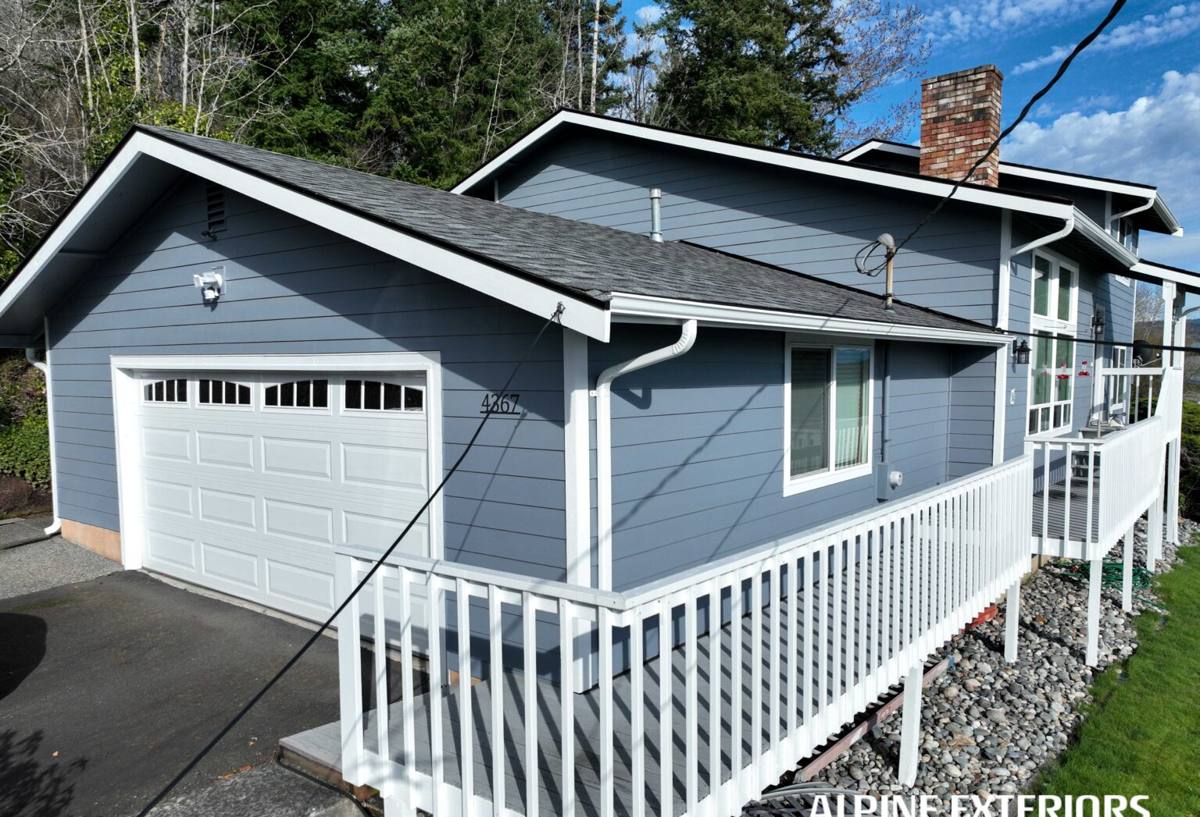
Why Custer Roofs Take a Beating
Salt Air and Metal Corrosion
Being near the water means airborne salt settles on roofing metal — flashing, fasteners, gutters, vents, and any exposed metal roofing panels. Over time that salt accelerates corrosion, especially at fastener heads and cut edges where protective coatings are thinnest. A nail head that's rusted through isn't just cosmetic; it's a future leak point. This is one of the first things we check on any Custer repair call, even when the homeowner's complaint is about something else entirely.
Wind-Driven Rain
Rain that falls straight down mostly runs off a well-shingled roof without issue. Rain that's being pushed sideways by wind off the water behaves differently — it can work up under shingle tabs, past poorly lapped flashing, and into gaps that would never leak in calmer weather. Roofs in Custer need flashing and underlayment detailing that accounts for wind-driven rain, not just gravity drainage. This matters most at valleys, roof-to-wall transitions, and anywhere two roof planes meet.
Moss and Shade
Whatcom County's long wet season, combined with tree cover common around Custer's more rural and wooded lots, gives moss and algae plenty of time to establish on north-facing and shaded roof slopes. Moss isn't just an appearance issue — it holds moisture against the roofing material, lifts shingle edges as it grows, and can work its way under laps over a couple of seasons. Left unchecked, a mossy roof section will eventually leak even if every shingle is technically intact.
Common Roof Problems We Fix in Custer
- Leaks around chimneys, skylights, and roof penetrations where flashing has corroded or separated
- Wind-lifted or missing shingles after a storm, especially on exposed or water-facing slopes
- Moss and algae growth that's started lifting shingle tabs or holding moisture on shaded sections
- Rusted or failing fasteners and metal flashing from long-term salt air exposure
- Soft or spongy roof decking found after a leak has gone unnoticed for a while
- Clogged or damaged gutters contributing to water backing up under the roof edge
- Deteriorated pipe boots and vent seals, a common quiet leak source on older roofs
- Ice dam or cold-weather related shingle damage after a hard freeze
What a Correct Repair Actually Involves
A roof repair that holds up in this climate is more than swapping out a few damaged shingles. There's usually a sequence of checks that has to happen first, or the same leak comes back within a year or two.
Finding the Real Source
Water often travels along the underside of decking or down a rafter before it shows up as a stain on a ceiling, so the visible damage inside the house isn't always directly below the actual leak point on the roof. We trace the path from the interior evidence back to the roof surface — checking flashing, underlayment laps, and penetrations uphill of the stain — rather than just patching the spot that looks obvious from the ground.
Matching Materials and Method
A patch that doesn't match the surrounding roofing — wrong shingle profile, mismatched metal, or underlayment that isn't compatible with what's already there — tends to fail at the seams between old and new. We match materials to what's already on the roof where possible, and where an older product is no longer available, we choose a compatible modern equivalent rather than forcing a mismatch.
Checking What's Underneath
Any time shingles are pulled back, we check the decking underneath for soft spots, delamination, or rot. Repairing over compromised decking is a short-term fix that fails once new fasteners lose their grip in soft wood. If decking needs to be replaced, we address that as part of the repair rather than skipping it to save time.
Ventilation and Moisture Balance
In a damp climate like Whatcom County's, attic ventilation plays a bigger role in roof longevity than most homeowners expect. Poor airflow traps moisture against the underside of the decking, which speeds up rot and can mimic or worsen an actual roof leak. Where ventilation looks inadequate, we'll flag it as part of the repair recommendation, even if it's not the primary reason for the service call.
Our Roof Repair Process
- Inspection and diagnosis — We assess the roof from the surface and, where accessible, the attic side, tracing any leak back to its actual source rather than the symptom.
- Written scope and estimate — You get a clear explanation of what's wrong, what needs to happen to fix it correctly, and a straightforward price before any work starts.
- Repair work — Damaged shingles, flashing, decking, or fasteners are replaced with materials matched to your existing roof and detailed for wind-driven rain.
- Cleanup and debris removal — Old material, nails, and moss debris are cleared from the roof and property before we leave.
- Final check — We walk the repair with you, confirm the area is watertight, and note anything else worth keeping an eye on going forward.
Repair or Replace? How We Help You Decide
Not every roof problem calls for a full replacement, and not every leak can be permanently solved with a patch. The table below covers the main factors we weigh when advising a Custer homeowner one way or the other.
| Factor | Points Toward Repair | Points Toward Replacement |
|---|---|---|
| Roof age | Well within expected material lifespan | Near or past the material's typical service life |
| Damage extent | Isolated to one section or a few penetrations | Widespread across multiple slopes |
| Decking condition | Solid, no rot or soft spots found | Soft decking or rot found in multiple areas |
| Leak history | First occurrence or single known cause | Recurring leaks in different spots over time |
| Moss/algae coverage | Light, limited to shaded edges | Heavy coverage across most of the roof |
| Cost outlook | Repair cost is a small fraction of replacement cost | Repeated repairs are approaching replacement cost |
Repair costs generally run from a few hundred dollars for a small, isolated fix up to a few thousand for larger flashing, decking, or multi-section work — the range depends entirely on scope, and we'll walk you through where your job falls before any work begins.
Roofing Materials in a Salt Air, High-Moss Environment
Most Custer homes are roofed in asphalt composition shingles or metal, and both can perform well here when installed and maintained correctly. Here's how they generally compare for repair and long-term upkeep in this climate.
| Material | Repair Considerations | Moss/Salt Air Behavior |
|---|---|---|
| Asphalt composition shingle | Individual shingles and sections can be replaced cost-effectively; widely available for matching | Prone to moss on shaded slopes; algae-resistant granule options help but don't eliminate the issue |
| Standing seam / metal panel | Repairs focus on fasteners, sealant, and panel seams rather than individual panels | Sheds moss better than shingles; fastener and cut-edge corrosion is the main salt air concern |
| Cedar shake | Repairs require matching weathered shake color and thickness, which gets harder as the roof ages | Holds moisture longer than other materials, making it more moss-prone in shaded, damp settings |
We don't push one material over another as a blanket rule — the right choice depends on your existing roof, your home's exposure to shade and wind, and your budget. Where a product carries real maintenance trade-offs for this climate, such as cedar's moisture retention or a metal system's fastener sensitivity, we'll explain that plainly so you can weigh it yourself.
Roof Maintenance Checklist for Custer Homeowners
A lot of repair calls we get could have been smaller, cheaper fixes if caught a season or two earlier. This is a practical list for keeping ahead of the climate here.
- Have gutters cleared at least twice a year — more often if you're near overhanging trees
- Check shaded and north-facing roof slopes for moss buildup each spring and fall
- Look inside the attic after major windstorms for new water stains or daylight gaps
- Have flashing around chimneys, skylights, and vents inspected every couple of years
- Trim back branches that keep a roof section shaded and slow to dry out
- Address small leaks promptly rather than waiting — decking damage compounds quickly in a wet climate
- Have a professional check attic ventilation if you notice condensation or musty smells indoors
Why Hire a Crew That Already Works in Custer
A roofer who works Blaine and Custer regularly already knows how salt air affects fastener choice, how local wind patterns drive rain into valleys and wall transitions, and which roof orientations in this area tend to hold moss the longest. That local pattern recognition speeds up diagnosis and reduces the chance of a repair that looks fine but fails again in the next big blow off the water.
There's also a practical side: a contractor already working in and around Custer can typically respond faster to an active leak, is familiar with Whatcom County permitting where it applies to roofing work, and has an ongoing reputation in the community to protect — which matters more to how a job gets done than any sales pitch.
Getting Your Roof Repair Done Right
Roof repair in a coastal, high-moisture climate isn't the place to cut corners — the same conditions that caused the original damage will find any shortcut in the fix. Whether you're dealing with an active leak, storm damage, or moss that's finally caught up with your roof, an honest diagnosis and a repair matched to your existing materials is what actually holds up in Custer's weather.
If you're noticing a leak, missing shingles, or heavy moss on your roof, reach out for a free, no-pressure estimate. We'll take a look, explain what we find in plain terms, and give you a straightforward recommendation — repair or otherwise — using the form below.