 Blaine Siding
 Building It Right the First Time in Everson
Everson sits inland from Blaine but shares the same Whatcom County weather pattern: long stretches of driving rain off the Pacific, humid air moving up the Nooksack valley, and a moss and mildew season that can run eight months out of the year. When a house is under construction, the window openings are one of the few chances a builder gets to control water management before the siding, trim, and interior finishes lock everything in place. Get the window opening wrong at framing, and you're often looking at a callback years later when staining or soft trim shows up around a window that "should" have been fine.
We install new-construction windows on homes being built or substantially reframed in and around Everson, working directly with builders, general contractors, and owner-builders. Our focus is narrow on purpose: get the flashing, the rough opening, and the window unit itself right the first time, in a climate that doesn't forgive shortcuts.
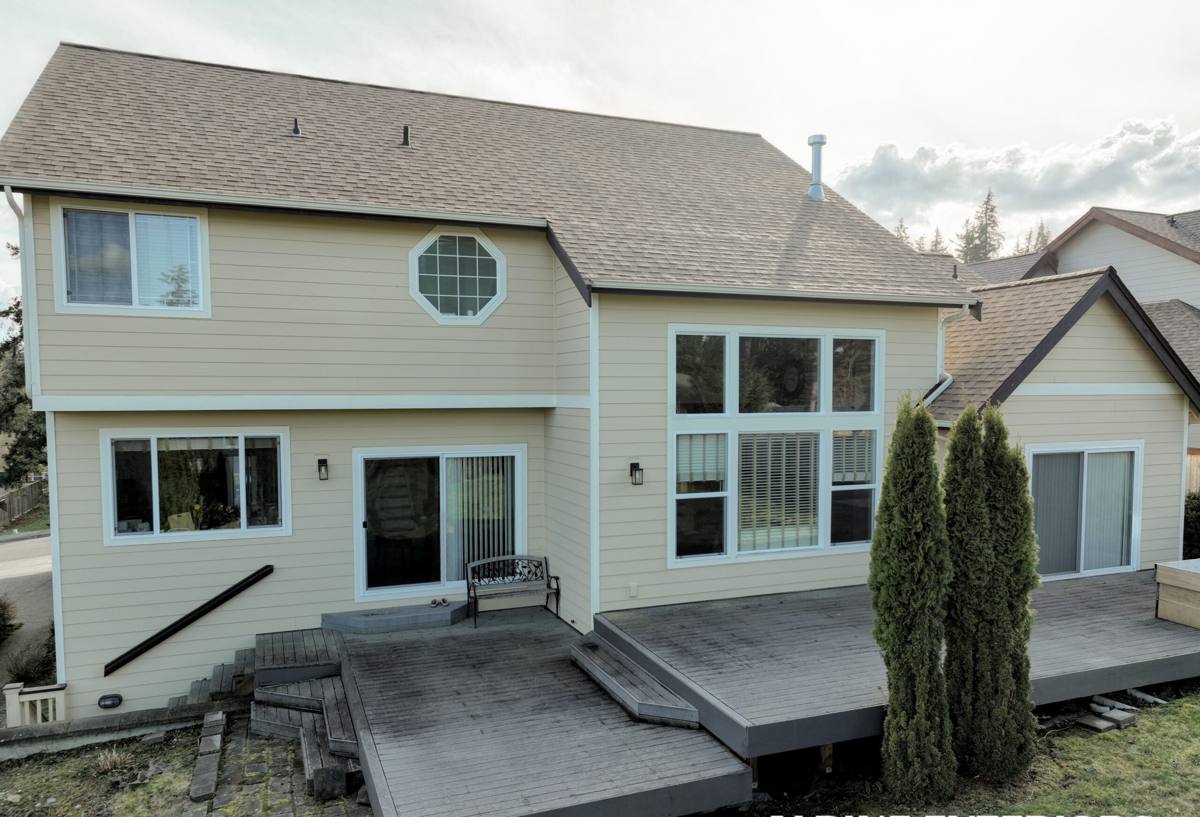
Why New-Construction Windows Are Different From Replacements
New-construction windows have a nailing fin (sometimes called a flange) around the perimeter of the frame that gets fastened directly to the sheathing, then integrated into the home's water-resistive barrier (house wrap) and flashing system. This is different from a retrofit or "pocket" replacement window, which is designed to fit inside an existing frame without disturbing the exterior finish.
Because a new-construction window is installed before siding goes on, it has to be sequenced correctly with the house wrap, flashing tape, and any rain screen or drainage gap the wall assembly uses. There's more work involved than just setting the window into the opening — but done right, it also produces a more reliable, long-term water seal than most retrofit approaches, because the flashing laps are built in from the start rather than worked around later.
What a Correct Installation Sequence Looks Like
- Rough opening checked for square, level, and correct dimension before the window ever arrives on site
- Sill pan flashing installed first, sloped to shed any water that gets past the window back to the exterior
- Window set into the opening, shimmed properly, and fastened through the nailing fin per the manufacturer's schedule
- Side and head flashing integrated in the correct shingle-lap order — bottom to top, so water always sheds outward and downward
- House wrap and flashing tape tied back into the window flange so the whole assembly drains as one system
- Interior and exterior gaps sealed and insulated without blocking the drainage plane
Skip or reverse any one of those steps and the window can look fine for years while water is quietly getting behind the wall assembly.
What Everson's Climate Asks of a Window Installation
Everson doesn't get the direct salt exposure of coastal Blaine, but it sits in the same wet, low-elevation air pattern that defines Whatcom County — moisture-laden air off the Strait and Georgia Strait pushed inland, cooler valley temperatures that slow drying, and rainfall that's frequent rather than heavy in any single storm. That combination matters more for window installation than a lot of homeowners realize:
Driving Rain and Wind-Driven Moisture
Wind-driven rain finds gaps that vertical rain never would. It pushes water sideways and even slightly upward under the wrong conditions, which is exactly why head flashing and end-dam details on sill pans matter here more than in a drier climate. A window that only handles straight-down rain isn't handling Whatcom County weather.
Long Moss and Damp Season
Extended damp periods mean any moisture that does get trapped behind a window frame has more time to do damage before things dry out. In a drier region, a minor flashing error might go unnoticed for a decade. Here, the same error can show up as soft trim, staining, or interior sill damage in a few wet seasons, because the wood and sheathing rarely get a long enough dry stretch to recover.
Temperature Swings and Condensation
Everson's inland location means slightly wider day-to-night and seasonal temperature swings than the immediate coast. That affects window selection — glass package and frame material both play into how much condensation forms on interior glass during cold, damp mornings, which is worth discussing before you lock in a window order for a new build.
Choosing Windows for New Construction in This Area
We don't push one brand or one frame material as "the" answer, because the right choice depends on the home's design, budget, and how exposed the walls are to weather. What we do insist on is matching the product to the installation conditions honestly.
| Frame Material | Typical Strengths | What to Weigh in This Climate |
|---|---|---|
| Vinyl | Lower cost, low maintenance, good energy performance | Reliable long-term performer in damp climates; quality varies a lot by manufacturer |
| Fiberglass | Very stable dimensionally, holds paint well, strong warranty structures | Higher upfront cost; excellent choice where the wall sees a lot of weather exposure |
| Wood / Wood-Clad | Traditional appearance, good insulating properties | Needs consistent exterior maintenance — a real commitment in an eight-month damp season |
| Aluminum | Slim sightlines, strong for large openings | Poor thermal break unless it's a higher-end thermally broken product; more prone to interior condensation in cold snaps |
For most new builds in the Everson area, we see vinyl and fiberglass doing the most consistent work, largely because they don't ask the homeowner to keep up with exterior refinishing in a climate that makes maintenance schedules hard to stick to. If a design calls for a wood-clad look, we'll talk through the maintenance commitment honestly rather than gloss over it.
Our Process on a New Build
1. Plan Review and Coordination
We start by reviewing window schedules and elevations with the builder or homeowner, confirming sizes, egress requirements, and any energy code specifics that apply to the project. Whatcom County follows Washington's energy code, which sets minimum performance requirements for window U-factor — this gets confirmed before ordering, not after.
2. Rough Opening Verification
Before windows arrive, we check every rough opening against the actual window dimensions. Framing tolerances that seem minor on paper can throw off flashing details, so this step gets done on site, not just from a plan set.
3. Flashing and Installation
Sill pans, flashing tape, and the window units themselves go in following manufacturer instructions and the sequencing described above. We photograph the flashing details as we go, since this is the one point in the build where that work is visible before it's covered by siding.
4. Sealing, Insulating, and Final Check
Interior and exterior sealing is completed, gaps are insulated properly, and every unit is checked for square operation and a tight, even reveal before we sign off.
5. Coordination With Siding and Trim
Because we also do siding work, we can coordinate window installation with the exterior finish schedule so trim details and drainage planes tie together correctly — instead of the window crew and siding crew each assuming the other handled a given detail.
What Goes Wrong Without This Level of Attention
Most window failures on new construction aren't the window's fault. They're installation issues that don't show up at final walkthrough:
- Missing or reverse-lapped flashing that lets water in behind the wrap instead of shedding it out
- No sill pan, so any water that does get past the window sits directly on the sheathing
- Over-driven or under-driven nailing fin fasteners that distort the frame and affect long-term operation
- Spray foam used to "seal" a window instead of proper flashing, which traps moisture rather than draining it
- Gaps between window flashing and house wrap that break the continuous drainage plane
None of these are visible once siding goes up. That's exactly why the installation crew's habits matter more than the window brand on the label.
Why Hire a Crew That Already Works in Everson
A crew that installs windows across Whatcom County sees the same climate conditions on every job — the same moisture patterns, the same framing quirks common to this region's builders, the same energy code requirements. That familiarity shows up in small decisions: how much slope to build into a sill pan, how to detail a flashing lap on a day when rain is in the forecast before the wrap goes on, how to sequence work so an opening isn't sitting exposed longer than it needs to be. We treat every rough opening in Everson the same way we'd want it treated on our own house — because in this climate, the installation is the product as much as the window itself.
If you're framing a new home or addition in the Everson area and want windows installed by a crew that understands what this region's weather actually does to a wall assembly, we're glad to walk the plans with you and put together a straightforward, no-pressure estimate. Use the form below to get started.