 Blaine Siding
 Ferndale's Roof Climate: Salt Air, Rain, and Moss
Ferndale sits close enough to the water that salt-laden air is a constant, low-grade stress on anything metal on your roof — fasteners, flashing, valley metal, and vent stacks all corrode faster here than they would further inland. Add in driving rain that comes sideways off wind more often than it falls straight down, and you've got a roof that's tested at every lap joint, seam, and penetration, not just on the open field of shingles. Then there's the tree cover that much of Whatcom County is known for, which keeps roof surfaces shaded and damp for long stretches of the year. That combination — salt, wind-driven rain, and shade — is exactly what feeds moss and algae growth, and it's why a roof that would hold up fine in a drier climate can fail early here if it wasn't built with this exposure in mind.
None of that means Ferndale roofs are doomed to short lifespans. It means the details matter more here than they do in a lot of places, and a replacement done with those details in mind will genuinely outlast one that wasn't.
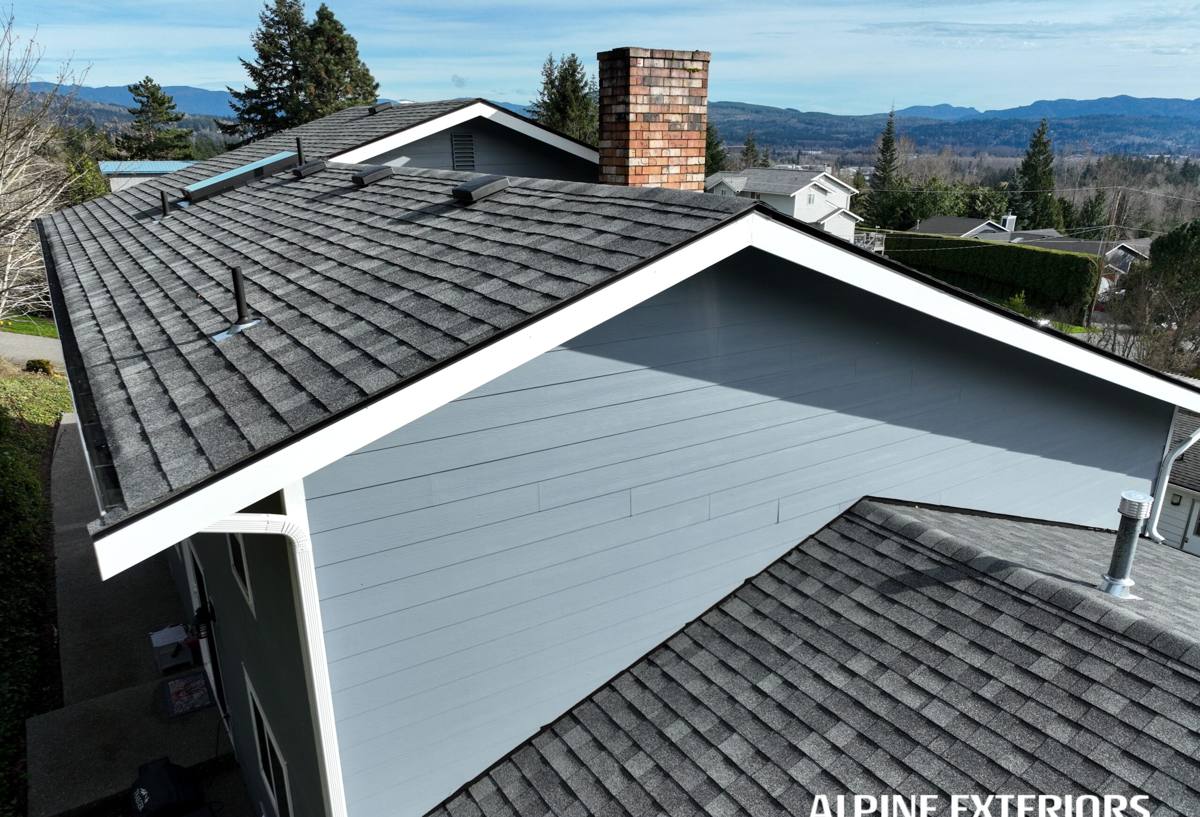
Signs a Ferndale Roof Needs Replacement, Not Just Repair
Not every roof problem calls for a full replacement. But there's a point where patching stops making financial sense and starts becoming a way of delaying the inevitable while water finds new ways into the house. Here's what we look for:
- Heavy granule loss, especially on south- and west-facing slopes that take the most sun and wind
- Shingles that are curling, cupping, or cracking rather than lying flat
- Moss colonies established at eaves, valleys, and around penetrations, not just surface streaking
- Soft or spongy spots underfoot, which usually mean decking rot underneath
- Daylight or damp insulation visible in the attic
- Leaks that keep reappearing in the same area after being patched
- A roof that's already past its expected service life for its material
Repair or Replace?
If the damage is isolated — a handful of wind-lifted shingles, a flashing detail that failed at one skylight — a repair is usually the right call and the honest one. But once granule loss is widespread, moss has worked its way under multiple shingle courses, or you're dealing with more than one active leak point, patching becomes a losing game. Each repair is a temporary fix on a roof that's failing as a system, and the money spent chasing leaks one at a time often adds up to more than a planned replacement would have cost.
What a Correct Roof Replacement Actually Involves
A roof replacement done right is not just stripping off old shingles and nailing on new ones. In a climate like this one, several details determine whether the new roof lasts two decades or gives out in ten years.
Full Tear-Off, Not an Overlay
Layering new shingles over old ones is faster and cheaper, but it hides problems instead of fixing them — and on a roof that's had years of moisture and moss exposure, that's a real risk. A full tear-off lets us see the decking itself, which is the only way to know whether it's still sound.
Deck Inspection and Repair
Moss and trapped moisture don't stop at the shingle surface. It's common to find soft or delaminated sheathing underneath old moss-covered roofing, particularly in shaded valleys and along eaves. That wood gets replaced before anything new goes down — installing new roofing over compromised decking just resets the clock on the same failure.
Underlayment and Water Barrier Details
Synthetic underlayment across the field, with self-adhering waterproof membrane at eaves, valleys, and around penetrations, gives the roof a real second line of defense against wind-driven rain — the kind that can push water sideways under shingle edges rather than letting it run straight off.
Ventilation
Balanced intake and exhaust ventilation (soffit vents pulling air in, ridge vents letting it out) keeps the attic space dry and temperature-stable. Without it, moisture builds up from the underside of the deck, which both shortens the roof's life and feeds the exact conditions that let moss take hold.
Flashing and Valleys
Most roof leaks don't start in the open field of shingles — they start at transitions: chimneys, skylights, sidewalls, and valleys. Properly formed step flashing and valley metal, installed so water is always directed onto the roofing material and never behind it, is where a lot of the real skill in this trade shows up.
Choosing a Roofing Material for a Ferndale Home
There's no single "best" roofing material — the right choice depends on your home, your budget, and how much upkeep you want to take on. Here's how the common options stack up against this region's moss, salt air, and rain:
| Material | Moss/Algae Resistance | Maintenance | Typical Lifespan |
|---|---|---|---|
| Architectural asphalt shingle | Good, especially with algae-resistant granules | Low — periodic gentle cleaning | Roughly 25-30 years |
| Standing seam metal | Very good — sheds moisture, little surface for moss to grip | Low | 40+ years |
| Cedar shake | Poor without diligent upkeep — wood holds moisture | High — regular treatment and cleaning | Varies widely with maintenance |
| Synthetic/composite shingle | Good | Low | Comparable to or longer than asphalt |
We'll be direct about cedar shake: it can look great, but in a climate this wet and shaded, it demands a level of ongoing maintenance most homeowners don't want to keep up with, and neglect shows up fast as rot and moss. That's a maintenance-burden and moisture-behavior tradeoff, not a knock on the product — it's simply not what we'd steer a Ferndale roof toward as a standard recommendation. Architectural asphalt with algae-resistant granules is the most common fit for the price, with metal as the upgrade path for homeowners who want the lowest long-term maintenance.
Our Roof Replacement Process
- On-site inspection of the existing roof, decking access points, and attic ventilation
- Written estimate covering tear-off, disposal, decking allowance, and material options
- Material selection based on your home's exposure, budget, and how the roof reads with your siding and trim
- Full tear-off and haul-away of old roofing
- Decking inspection with any rotten or delaminated sheathing replaced
- Underlayment, ice/water barrier, and new flashing installed at every valley, penetration, and transition
- New roofing installed to manufacturer specifications so warranty coverage stays intact
- Full site cleanup, including a magnetic sweep for stray nails
- Final walkthrough so you can see the finished work before we consider the job done
Moss and Algae: Managing the Long Wet Season
Moss isn't a cosmetic issue — left alone, it holds water against the roof surface, lifts shingle edges, and accelerates granule loss. A few things make a real difference over the life of a new roof:
Algae-resistant shingles with copper or zinc granules blended into the surface help slow regrowth, though they're a deterrent, not a permanent solution. Keeping nearby tree branches trimmed back improves sun exposure and airflow across the roof, which does more to prevent moss than any single product. Periodic gentle cleaning — never pressure washing, which strips protective granules and shortens shingle life — keeps buildup from getting established in the first place. Where a roof design allows it, zinc or copper strips near the ridge let rainwater carry trace metals down the roof surface, offering ongoing suppression without any extra maintenance work on your part.
Timing a Roof Replacement Around Whatcom County Weather
There isn't a strict season when roofing is off the table here, but drier stretches make for a smoother, faster job with less risk of a delay mid-tear-off. We plan installs around the weather forecast, not just the calendar, and if a job spans more than a day, the roof gets properly dried in and protected at the end of each work day so an unplanned rain event overnight isn't a problem. If you're flexible on timing, scheduling during a drier window is still the easiest way to keep a project moving without interruption.
Why a Crew That Already Works Ferndale Matters
A roofing crew that works this area regularly already understands what a roof here is up against — the salt exposure closer to the water, the shaded, moss-prone lots common throughout Whatcom County, and the wind patterns that make flashing and fastener choices matter more than they would somewhere drier. That familiarity shows up in small but real ways: knowing which fastener and flashing metals hold up to salt air instead of corroding early, having material suppliers lined up so a job doesn't sit exposed waiting on backordered shingles, and understanding local permitting so the project isn't held up by paperwork nobody anticipated. It's the difference between a roof that's built to the letter of a spec sheet and one that's actually built for the conditions it has to survive.
Questions Worth Asking Before You Hire
- Are you licensed and bonded to do roofing work in Washington State?
- Can I see proof of current liability insurance?
- Is the tear-off, decking allowance, and disposal spelled out in writing, not just "roof replacement" as a lump sum?
- What's the warranty on workmanship, separate from the manufacturer's material warranty?
- How do you handle a rain delay mid-project?
- Do you have manufacturer certification for the shingle or metal system you're recommending?
If your roof is showing its age or you're just not sure whether you're looking at a repair or a replacement, we're happy to take a look. The estimate is free, there's no pressure attached to it, and you'll get a straight answer about what your roof actually needs — you can request one using the form below.