 Blaine Siding
 Ferndale's Weather Is Hard on Windows — Here's Why
Ferndale sits close enough to the Salish Sea that salt-laden marine air reaches every neighborhood, not just the waterfront. Combine that with Whatcom County's driving winter rain and a moss season that can stretch from October well into spring, and you get conditions that are genuinely tough on window frames, seals, and the wood or trim around them. Salt air accelerates corrosion on hardware and fasteners. Wind-driven rain finds any gap in flashing or sealant and pushes water sideways, not just down. And the same damp, shaded conditions that grow moss on a roof also keep window sills and lower sashes wet longer than they'd stay in a drier climate, which is exactly the environment rot and failed seals need.
None of this means Ferndale homes need exotic materials or gimmicks. It means the installation itself — the flashing, the sealing, the fit — has to be done correctly for this specific climate, not just "correctly" in a generic sense that might hold up fine in a drier part of the state.
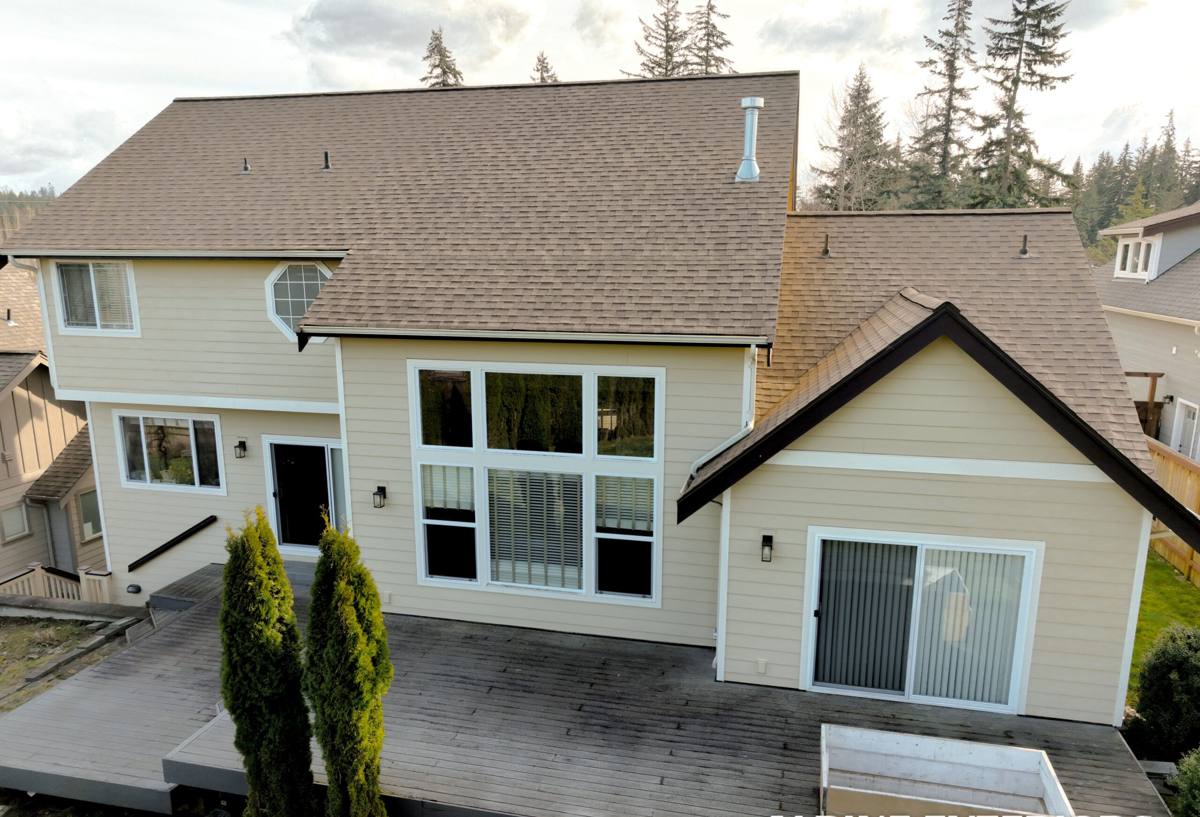
What Correct Window Installation Actually Involves
A window installation is judged by what you can't see once it's done. The window itself is usually the easy part; the flashing, sealing, and structural fit around it are what determine whether that window performs for twenty years or starts leaking in three.
Flashing and Water Management
Every opening needs a drainage plane that directs water down and out, never letting it pool behind the siding or trim. That means flashing tape or membrane at the sill pan, proper head flashing above the window, and integration with the house wrap or weather-resistive barrier already on the wall. Skipping or rushing this step is the single most common cause of hidden water damage behind window trim — and it's invisible from the outside until rot or mold shows up.
Air Sealing, Not Just Caulk
A bead of caulk around the trim is not an air seal. Proper installation uses low-expansion foam or backer rod and sealant in the gap between the window frame and the rough opening, sized correctly so it doesn't bow the frame out of square. Done right, this stops both drafts and the moist indoor air that causes condensation and mold if it's allowed to migrate into the wall cavity.
Fit, Shim, and Fastening
Windows have to be shimmed level, plumb, and square before they're fastened — an out-of-square window binds, won't seal properly at the sash, and puts uneven stress on the glass unit over time. Fasteners should be corrosion-resistant, which matters more here than in inland, drier parts of the state given the salt air Ferndale gets off the water.
Signs It's Time to Replace, Not Just Repair
Not every window problem means a full replacement, but there are a handful of signs that point that way rather than toward a simple repair:
- Fogging or a permanent haze between the panes of a double-pane window — the seal has failed and the gas fill or airspace is compromised
- Soft or spongy wood at the sill, corners, or trim, which usually means water has been getting behind the frame for a while
- Windows that are difficult to open, close, or lock, especially if that's a new problem and not just old hardware
- Noticeable drafts or a cold wall around the window frame even when the sash is fully closed
- Visible gaps, cracked caulk, or peeling paint concentrated around the window opening rather than the wall in general
If you're only seeing one of these on an otherwise sound window, a repair or re-seal may be enough. If you're seeing several, or the frame material itself is failing, replacement is usually the more honest recommendation.
Choosing a Frame Material for Coastal Whatcom County Conditions
There's no single "best" window frame material — each has trade-offs, and the right choice depends on your home's exposure, budget, and how much upkeep you want to take on. Here's how the common options hold up specifically against salt air and sustained damp conditions:
| Frame Material | How It Handles Salt Air & Moisture | Maintenance | Notes for This Area |
|---|---|---|---|
| Vinyl | Doesn't corrode or rot; performs consistently in salt air | Low — occasional cleaning | Common, reliable default for Ferndale's exposure |
| Fiberglass | Very stable, resists moisture and corrosion, minimal expansion/contraction | Low | Higher upfront cost, strong long-term performer in wet climates |
| Wood-clad | Exterior cladding protects the wood, but any breach in the cladding lets moisture into wood underneath | Moderate to high | Needs disciplined caulk/paint upkeep in this climate |
| Aluminum | Prone to condensation and thermal bridging in cold, damp conditions; can corrode near salt air over time | Moderate | We generally don't recommend it for this climate |
We don't push a single brand or material on every homeowner. What we do is explain the honest trade-offs for your specific home — sun exposure, how sheltered or exposed the wall is, and what you're comfortable maintaining — and let you make the call.
Glass and Performance Details That Matter Here
Frame material gets most of the attention, but the glass package matters just as much for comfort and condensation control. In a marine climate like Ferndale's, a few details are worth understanding rather than just taking on faith:
- Low-E coatings reduce heat loss through the glass, which also keeps interior glass surfaces warmer — warmer glass fogs and condenses less in our damp winters
- Argon or krypton gas fills between panes improve insulation value, but only matter if the seal holds — which is why installation quality affects long-term performance as much as the glass spec does
- Warm-edge spacers (as opposed to older metal spacers) reduce condensation right at the edge of the glass, which is usually the first place you'll notice moisture problems on an older window
None of this replaces good installation — a well-specified window installed with a poor air seal will still condensate and underperform.
How We Handle a Ferndale Window Installation, Start to Finish
- On-site assessment — we look at each opening individually, not just the house as a whole. Sun exposure, wall assembly, and existing water damage all factor into the plan.
- Measurement and material selection — accurate measurements and a frame/glass package that fits your budget and this climate's demands.
- Removal and opening inspection — once the old window is out, we check the rough opening and sill for hidden rot or moisture damage before anything new goes in. This is often where past problems get caught.
- Flashing and sill pan installation — built to shed water outward, tied into the existing weather barrier correctly.
- Setting, shimming, and fastening — leveled, squared, and secured with corrosion-resistant fasteners.
- Air sealing and interior/exterior trim — proper foam or sealant in the gap, then trim work that matches the rest of the house.
- Final check — operation, locking, and a visual water-management check before we consider the job done.
What Affects Cost
Every home is different, so we won't quote a number without seeing the openings, but the factors that move the price up or down are consistent from job to job:
| Factor | Why It Affects Price |
|---|---|
| Window size and type | Larger openings, custom shapes, or operable styles (casement, sliding) cost more than standard fixed or single-hung units |
| Frame material | Vinyl is typically the most budget-friendly; fiberglass and wood-clad run higher |
| Number of windows | Doing several at once usually lowers the per-window labor cost compared to one-off replacements |
| Condition of the opening | Hidden rot or water damage found during removal adds repair work before the new window can go in |
| Access and second-story work | Harder-to-reach openings take more time and equipment |
As a very broad range, homeowners in this area typically see per-window installed pricing anywhere from several hundred to a few thousand dollars depending on the factors above — the only way to know your actual number is a walkthrough.
Why a Crew That Already Works Ferndale Makes a Difference
A crew that regularly works Ferndale and the rest of Blaine's service area already knows how Whatcom County homes are typically built, what the local permitting process looks like, and — just as important — what this specific coastal climate does to a poorly installed window over a few winters. That's not something you get from a crew passing through from out of the area. We're not guessing at how salt air and driving rain behave here; we see the results of both good and bad installations on homes like yours regularly, and that experience shapes how we flash, seal, and fasten every job.
Being local also means straightforward accountability. If a question comes up after the install, you're not chasing down a company that was only in town for one job.
Keeping New Windows Performing for the Long Haul
A correctly installed window still benefits from a little seasonal attention, especially given how much rain and moss-favoring dampness this area gets:
- Clear debris and moss from window sills and tracks a couple times a year, especially on shaded or north-facing walls
- Check exterior caulk lines annually for cracking or gaps, particularly after a hard winter
- Make sure gutters and downspouts near windows are clear so water isn't sheeting across the glass or wall
- Operate each window a few times a season so hardware doesn't seize up from disuse
- Watch for early condensation or fogging between panes — catching a failing seal early is easier than dealing with full pane failure
If you're noticing drafts, water damage, or windows that just don't perform the way they used to, we're happy to take a look and give you a straightforward, no-pressure estimate — no obligation, just an honest read on what your home actually needs. The form below is the fastest way to get started.