 Blaine Siding
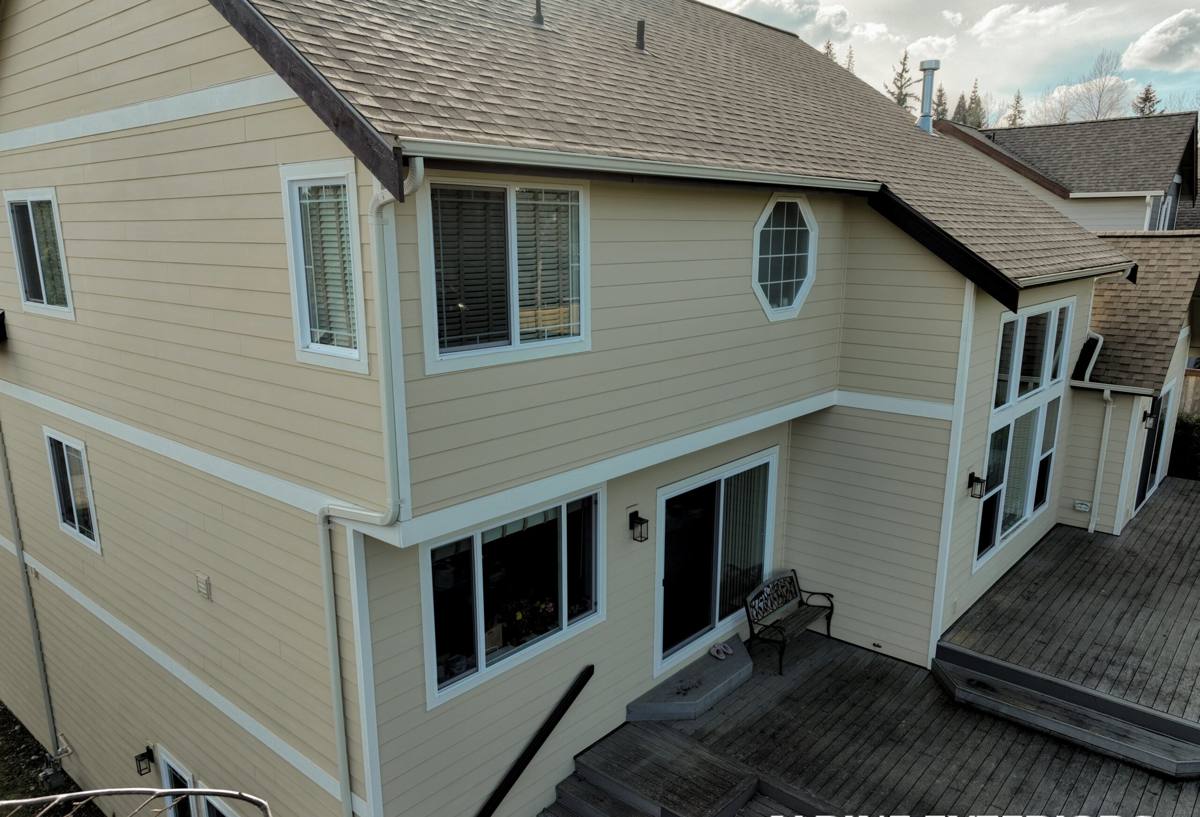
 James Hardie Siding Built for the Nooksack Area's Climate
Homes in and around Nooksack deal with a specific combination of weather that a lot of siding products were never really engineered to handle over the long haul: salt-carrying air, wind-driven rain that pushes water sideways into wall assemblies instead of just running down the face, and a long moss season that keeps shaded walls and trim damp for weeks at a time. We install James Hardie fiber cement siding exclusively, and for Nooksack homes specifically, that decision comes down to how the product handles moisture intrusion, salt exposure, and organic growth compared to everything else on the market.
This page covers what Nooksack homes actually need from their siding, what a correct James Hardie installation looks like in this climate, and why hiring a crew that already works Whatcom County matters more here than it would somewhere drier and more sheltered.
What Whatcom County Weather Does to Ordinary Siding
Salt Air and Slow Corrosion
Homes near the water in this part of Whatcom County are exposed to salt-carrying air more often than homeowners realize, even at a distance from the shoreline. Salt air accelerates corrosion on exposed metal fasteners, trim flashing, and hardware, and it degrades some paint and coating systems faster than manufacturers' standard ratings assume. Over years, that shows up as rust streaking, failing caulk joints, and paint that chalks and fades ahead of schedule.
Driving Rain and Wall Moisture
Pacific Northwest storms in this region don't just fall straight down — wind pushes rain sideways into lap joints, corner boards, and window trim. Siding that relies on a tight paint film or a thin factory coating to keep water out will eventually let moisture past the surface. Once water gets behind the cladding, wood-based products swell, delaminate at the edges, or rot from the inside where you can't see it until the damage is already extensive.
A Long Moss Season
Shaded elevations, tree cover, and the region's damp stretches between spring and fall create ideal conditions for moss, algae, and mildew to take hold on siding, trim, and roof lines. Products that absorb moisture or have a porous surface give moss more to grip onto and more moisture to feed on, which means more frequent cleaning and, in some cases, permanent staining that pressure washing can't fully remove.
Why James Hardie Holds Up Where Other Products Struggle
James Hardie fiber cement is built around a cement, sand, and cellulose fiber formulation that doesn't absorb water the way wood-based siding does and doesn't rely on paint alone to stay watertight. For the Nooksack area specifically, three things matter most:
- Non-combustible core. Fiber cement won't ignite from embers or radiant heat the way wood-based products can, which matters during the region's dry-season wildfire smoke and ember exposure.
- Engineered for Pacific Northwest exposure. James Hardie's HZ5 product line is formulated specifically for the freeze-thaw and moisture cycling that defines this climate zone, rather than being a one-size-fits-all national product.
- ColorPlus factory finish. The baked-on finish resists fading, chipping, and the chalking that comes from years of damp, salt-influenced air — and it holds its color far longer than field-applied paint on wood siding typically does.
None of that means James Hardie is maintenance-free. It means the maintenance you do have to do — occasional washing, caulk checks, repainting decades down the road instead of years — is manageable and predictable instead of a recurring fight against moisture and rot.
The James Hardie Product Lines We Install in Nooksack
Most Nooksack-area homes use a combination of these product lines, chosen based on the home's style, elevation exposure, and existing trim details.
| Product | Best Use | Why It Fits This Climate |
|---|---|---|
| HardiePlank lap siding | Primary wall cladding, most home styles | Textured or smooth finish, engineered lap profile sheds wind-driven rain |
| HardieShingle siding | Accent gables, Craftsman and cottage styles | Staggered or straight-edge look without the moisture absorption of cedar shingles |
| HardiePanel vertical siding | Modern facades, porch ceilings, accent walls | Clean vertical lines with the same non-combustible, moisture-stable core |
| HardieTrim boards | Corner boards, window and door trim, fascia | Won't swell or split at end cuts the way wood trim does in damp conditions |
What a Correct Installation Actually Involves
James Hardie siding performs the way it's rated to perform only when it's installed correctly. In this climate, the installation details matter more than the product itself. A correct job includes:
- A weather-resistive barrier installed and lapped correctly behind the siding, not just stapled up and covered
- Proper flashing at every window, door, and roof-to-wall intersection to direct water outward, not into the wall cavity
- Correct fastener spacing and placement per James Hardie's engineering specs — not just "close enough"
- Minimum clearance gaps between the siding and roofing, decking, and grade to prevent wicking
- Caulked and sealed joints only where James Hardie's install guide actually calls for sealant, not everywhere
- Factory-cut and painted panel edges wherever possible, since field cuts expose the raw substrate
Skipping any of these steps doesn't usually cause a visible problem in year one. It causes a problem in year eight, when water that's been getting behind an improperly flashed window finally shows up as a soft spot or a stain — long after the crew that installed it is gone.
Common Installation Mistakes We See on Older Nooksack-Area Homes
When we're called out to look at an existing home's siding — whether it's a repair, a partial replacement, or a full re-side — the recurring issues tend to be the same: missing or reversed flashing at window heads, fasteners driven too close to panel edges, siding installed tight against the roofline with no clearance gap, and caulk used as a substitute for proper flashing instead of a supplement to it.
Our Process for a Nooksack Siding Project
- On-site assessment. We look at your home's current siding condition, trim details, and the specific exposures each elevation faces — a shaded north wall and a windward west wall need different attention.
- Product and color selection. We walk through which James Hardie lines and ColorPlus colors fit your home's style and this climate's fade and moss-resistance needs.
- Tear-off and substrate check. Old siding comes off and we inspect the sheathing underneath for existing moisture damage before anything new goes up.
- Weather barrier and flashing. This is the step that determines whether the siding actually keeps water out for the next several decades — we don't rush it.
- Siding installation. Panels, planks, or shingles go up to James Hardie's fastening and clearance specifications, not a generalized approach.
- Trim, caulking, and cleanup. Final trim work, correct sealant application, and full site cleanup before we walk the job with you.
Living With Hardie Siding Through Moss Season
James Hardie siding still needs periodic cleaning in a climate like this one — no siding product is immune to moss and algae taking hold on a shaded, damp surface. The difference is that Hardie's factory finish doesn't absorb moisture the way wood-based products do, so growth tends to sit on the surface rather than working into the material. A soft wash with a garden hose and a mild cleaner once or twice a year, kept up on shaded and north-facing walls in particular, is usually enough to keep moss from getting established. Avoid high-pressure washing directly at joints and edges, since that can force water where it doesn't belong regardless of what siding product you have.
Keeping gutters and downspouts clear also matters more here than people expect — a clogged gutter that overflows onto a wall section during a heavy rain event is one of the more common causes of localized moss and staining we see on Whatcom County homes.
What Nooksack Siding Projects Typically Cost
Every home is different, but the factors that move the price on a Nooksack-area James Hardie project are consistent:
| Factor | How It Affects Cost |
|---|---|
| Home size and number of stories | More square footage and steeper access both add labor time |
| Tear-off vs. install over existing sheathing | Removing old siding and repairing damaged sheathing adds cost but is often necessary |
| Product line mix | Combining lap siding with shingle accents or vertical panels adds detail work |
| Trim complexity | Homes with lots of window trim, corners, and roof intersections need more flashing and cutting |
| Color selection | Standard ColorPlus colors vs. custom or premium finishes can shift pricing |
| Site access and exposure | Difficult access or extensive scaffolding needs add labor time |
We give firm, written estimates after an on-site assessment rather than ballpark figures over the phone — siding pricing depends too much on your home's specific condition and detailing to guess accurately without seeing it.
Why Hire a Crew That Already Works the Nooksack Area
Installing James Hardie siding correctly in this climate isn't the same as installing it in a drier, more sheltered part of the country. A crew that regularly works Whatcom County homes already knows how to detail flashing for wind-driven rain, how much clearance to leave for a moss-prone, high-moisture environment, and which elevations on a given home style tend to take the worst weather exposure. That local pattern recognition is what keeps a siding job performing for decades instead of needing repairs in year six or seven.
It also matters for something more basic: availability. A crew based in the region can respond to a caulking check, a minor repair, or a warranty question without treating your home as a one-off trip. For a product like James Hardie, where the transferable warranty depends partly on correct original installation, working with a contractor who's still around — and who installed it right the first time — is part of what protects that warranty's value.
Get a Free, No-Pressure Estimate
If your Nooksack-area home needs new siding, or you're planning ahead for a project down the road, we're happy to take a look and walk you through what James Hardie would involve for your specific home — no obligation and no pressure. Fill out the form below and we'll get in touch to schedule a time that works for you.