 Blaine Siding
 Storm Damage Roof Repair for Lynden-Area Homes
When a windstorm rolls off the Strait of Georgia or a heavy winter system dumps driving rain across Whatcom County, roofs in and around Lynden take a real beating. We're a Blaine-based crew that works this corner of the county regularly, and storm damage repair is one of the calls we get most after a rough week of weather. This page covers what actually goes wrong up here, what a correct repair looks like, and how we handle the job from the first phone call to the final inspection.
Lynden's mix of open farmland and mature tree cover means roofs face two different storm problems at once: wind-driven rain that finds every weak seam, and falling limbs or debris that can puncture or crack roofing material outright. Add in a long moss season that softens shingles and holds moisture against the deck, and storm damage here rarely stays "minor" if it sits untreated.
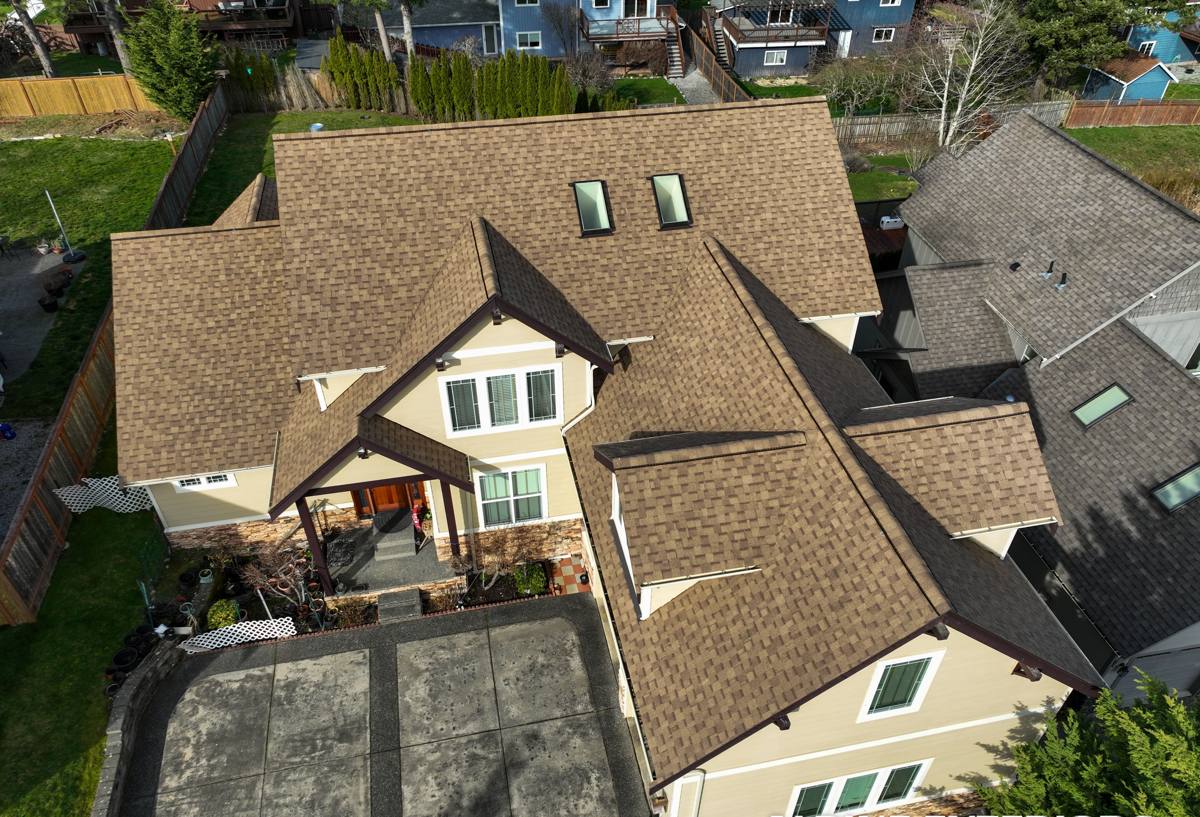
What Whatcom County Weather Does to a Roof
This isn't a market where roofs fail from one dramatic event. Most of the storm damage we see is the result of repeated stress: gusty windstorms that lift shingle edges, months of low-angle rain that gets pushed sideways into flashing and valleys, and a wet, mild climate that lets moss and moisture sit on the roof deck for weeks at a time. Being close to Blaine and the coastline also means a steady dose of salt-laden air, which speeds up corrosion on nails, flashing, and any exposed metal fasteners.
None of these factors is dramatic on its own. Together, over a few storm seasons, they're what turns a small leak into a rotted deck or a lifted shingle into a full section of water intrusion.
The Three Recurring Culprits
- Wind uplift — gusts get under shingle tabs or panel edges, breaking the seal and creating a path for wind-driven rain
- Moss and moisture retention — moss holds water against shingles and decking long after the rain stops, softening materials from underneath
- Flashing and fastener corrosion — salt air and constant damp cycles corrode metal faster than in drier inland areas
Signs Your Roof Took Storm Damage
Not all storm damage announces itself with an active leak. A lot of what we find during post-storm inspections in Lynden is damage the homeowner hadn't noticed yet — the kind that gets worse with the next storm if it's left alone. After any significant wind or rain event, it's worth checking for the following:
- Shingles that look lifted, curled, cracked, or are missing outright
- Granules collecting in gutters or at downspout outlets (a sign of impact or wear damage)
- Dented or bent flashing around chimneys, vents, and skylights
- Sagging or soft spots when walking the attic (never the roof itself) after a storm
- New water stains on ceilings or in the attic, especially near exterior walls
- Debris, branches, or moss buildup concentrated in valleys and behind chimneys
- Gutters pulling away from the fascia or overflowing during rain
If you see two or more of these after a storm, it's worth having someone look before the next system moves through — not because every item is an emergency, but because water finds the weakest point fast in this climate.
What a Correct Storm Damage Repair Actually Involves
The biggest mistake we see with storm repairs — whether done by a homeowner or a rushed contractor — is treating the visible symptom instead of the actual entry point. A missing shingle is easy to spot; the underlayment or decking damage underneath it is not, and it's usually the part that causes the next leak.
1. A Full Inspection, Not a Patch-and-Go
We start by inspecting the whole roof plane, not just the spot the homeowner points to. Wind damage is rarely isolated to one shingle — if wind lifted one tab, it likely stressed the seal on the shingles around it too. We check flashing, valleys, pipe boots, and the attic side of the deck before deciding on scope.
2. Deck and Underlayment Assessment
If water has been getting in for any length of time, the plywood or OSB decking underneath may be soft, delaminated, or stained. Replacing shingles over damaged decking just hides the problem. Any compromised sections of deck get cut out and replaced before new underlayment and roofing go back down.
3. Matching Materials Correctly
Shingle color and profile drift over the years as manufacturers update product lines. We source the closest available match and, where an exact match isn't possible, plan the repair layout (like breaking at a ridge or valley line) so the difference is as unnoticeable as reasonably possible.
4. Flashing and Sealing Details
A large share of storm-driven leaks trace back to flashing, not the shingle field itself. We re-seat or replace flashing at chimneys, valleys, and penetrations rather than just caulking over old metal — caulk is a short-term fix, not a repair.
Temporary Protection vs. a Permanent Fix
Right after a storm, especially if a leak is active, the priority is stopping water intrusion — not necessarily doing the full permanent repair that same day. We're upfront with Lynden-area homeowners about the difference between the two, because they're not interchangeable and skipping the permanent step is how small damage turns into a bigger claim later.
| Stage | What It Does | What It Doesn't Do |
|---|---|---|
| Emergency tarp-over | Stops active water intrusion the same day, protects interior and decking from further damage | Not weatherproof long-term; won't hold up through repeated storms |
| Targeted repair | Replaces damaged shingles, flashing, and decking in the affected area; restores the roof to a sound, weathertight condition | Doesn't extend the life of unrelated, older roofing nearby |
| Full section or roof replacement | Addresses widespread damage or an aging roof where repair costs approach replacement value | Larger scope and cost; not needed for isolated storm damage |
What Drives the Cost of a Storm Repair
Every storm-damaged roof is different, so we don't quote sight-unseen. But the honest range on most Lynden-area storm repairs comes down to a handful of factors that are worth understanding before you get a number from anyone.
| Damage Type | Typical Repair Approach | What Affects Cost |
|---|---|---|
| Isolated missing or torn shingles | Spot replacement matched to existing material | Roof pitch, access, and how close a color/profile match is available |
| Damaged valley or chimney flashing | Flashing removal and reinstallation, sometimes with adjacent shingle work | Metal type, complexity of the roof penetrations involved |
| Localized deck rot from a slow leak | Cut-out and replacement of affected decking before re-roofing that section | Extent of rot, whether it's spread past the visible leak point |
| Widespread wind-lift across a slope | Full slope or section re-roof rather than shingle-by-shingle patching | Total square footage, underlayment condition, disposal |
As a general rule, the earlier storm damage gets addressed, the smaller and less expensive the repair. Deck replacement is almost always the costliest line item on a storm repair invoice, and it's the one most avoidable by catching damage early.
Insurance Claims: What to Know Before You Call
Many storm repairs in Whatcom County get filed as insurance claims, especially after a named windstorm or a documented severe weather event. A few practical points that come up often with Lynden homeowners:
- Take photos of visible damage and any interior water intrusion before repairs begin, if it's safe to do so
- Get an inspection and written estimate promptly — most policies have a claim-filing window
- Ask whether your policy covers actual cash value or replacement cost for roofing, since this changes what you're reimbursed
- A contractor can provide documentation and scope for your adjuster, but the claim itself is between you and your insurer
We're glad to provide a written scope of damage and photos to support a claim, but we don't inflate estimates or promise claim outcomes — that's not something an honest contractor can guarantee, and adjusters see through it anyway.
Why Hiring a Crew That Already Works Lynden Matters
Storm repair is one of the areas where local experience actually changes the outcome, not just the sales pitch. A crew that works Blaine and Lynden roofs through multiple storm seasons already knows which flashing details tend to fail first in this climate, how aggressive the moss growth gets on north-facing slopes, and how salt air from the coast accelerates fastener corrosion compared to drier inland regions. That's the difference between a repair that holds and one that reopens with the next storm.
It also matters for response time. After a significant windstorm, roofing crews get busy fast, and out-of-area contractors are often booked solid in their home markets before they even get to a Whatcom County call. A local crew can typically get eyes on storm damage faster, which matters when water is actively getting into a house.
Preventing Repeat Damage After the Repair
A storm repair is a good moment to address the conditions that made the damage worse in the first place, not just patch the hole. A few things we typically flag during a repair visit:
- Moss buildup on shaded or north-facing slopes that should be treated before it spreads further
- Gutters and downspouts that were undersized or clogged, contributing to water backing up under shingles
- Overhanging branches that increase both debris impact risk and shade-driven moss growth
- Older flashing nearby that's showing early corrosion and is worth replacing proactively rather than waiting for it to fail
None of this needs to happen the same day as the repair, but it's worth having on your radar for the next dry stretch of weather.
Get a Free, No-Pressure Estimate
If your Lynden-area roof took damage in a recent storm — or you're just not sure whether what you're seeing is a problem — we're happy to take a look. There's no cost and no pressure to move forward. Fill out the form below and a local Blaine crew member will follow up to schedule an inspection.