 Blaine Siding
 Birch Bay's Weather Is Harder on a Roof Than It Looks
Birch Bay sits right on the water, and that location shapes everything about how a roof ages here. Salt-laden air moves in off the bay and settles on every exposed surface, including your roofline. Add driving rain that comes in sideways during winter storms, plus a moss season that stretches across most of the year in this part of Whatcom County, and you have a combination that wears out the wrong roofing system fast. A roof that would hold up fine forty miles inland can show corrosion, leaks, or moss damage within a few seasons out here if it wasn't built for this specific exposure.
That's the starting point for any conversation about metal roofing in Birch Bay. It's not just about picking a durable material — it's about specifying the right metal, the right fasteners, and the right detailing for a coastal, wet, moss-prone environment.
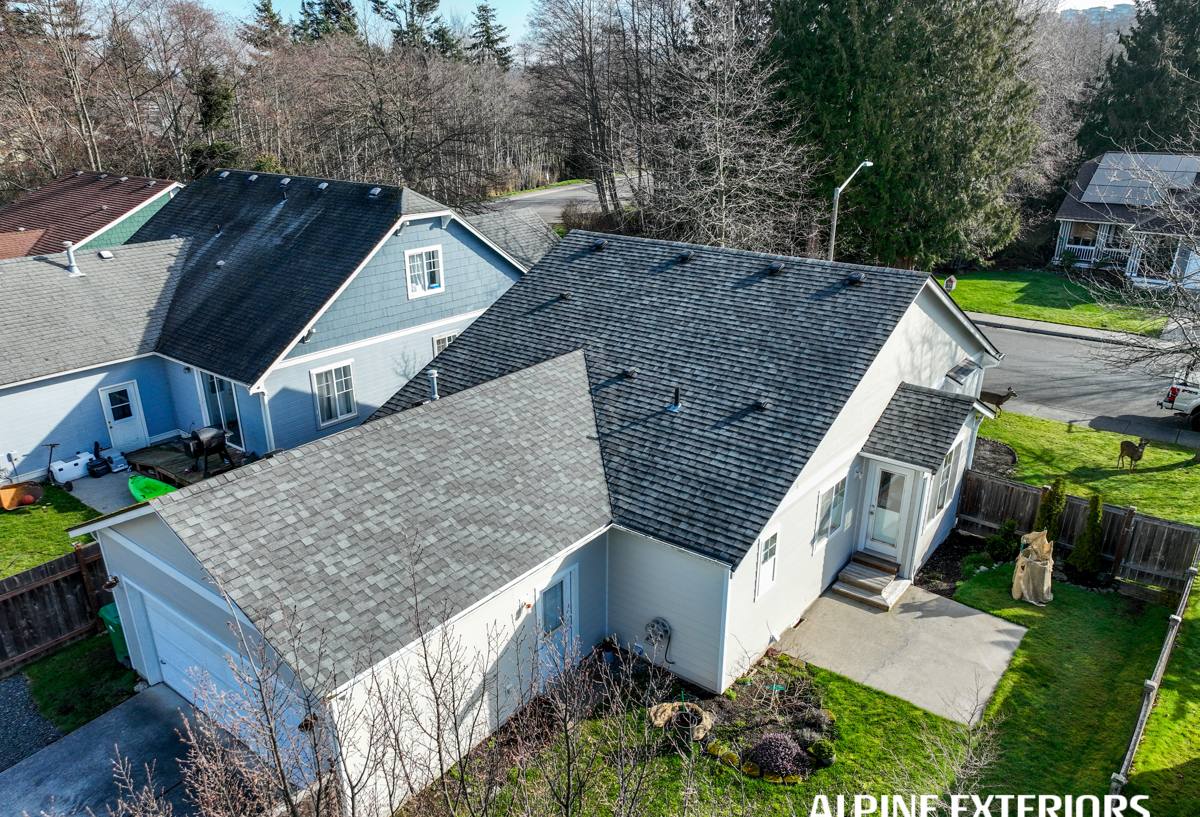
Why Metal Roofing Makes Sense Here
Metal roofing has real advantages for Birch Bay properties when it's installed correctly. A properly seamed metal roof sheds water fast, which matters when rain is coming in at an angle off the water. Smooth panel surfaces give moss and algae far less to grip onto than a rough shingle surface, which helps in a climate where moss pressure is constant rather than seasonal. Metal also handles wind uplift well when fastened to spec, which matters on homes with more open, wind-exposed sites near the shoreline.
None of that happens automatically just because the roof is metal. A metal roof installed with the wrong fasteners, the wrong underlayment, or sloppy flashing work will corrode and leak just like any other bad roof job — sometimes faster, because water finds the gaps at seams and penetrations if they aren't detailed properly.
Where Homeowners Get Surprised
The biggest surprise for Birch Bay homeowners is usually corrosion at fasteners and cut edges, not the panels themselves. Bare steel edges exposed during cutting, mismatched metals in contact with each other, or the wrong fastener coating can start rusting within a couple of years in salt air, even though the rest of the roof looks fine. This is a detailing problem, not a metal roofing problem, and it's entirely preventable with the right materials and technique.
What a Correct Metal Roof Installation Actually Involves
Underlayment and Water Protection
Under the metal, you need a synthetic or self-adhered underlayment rated for high-moisture climates, with extra protection at eaves, valleys, and low-slope transitions where wind-driven rain is most likely to work its way backward under the panels. In a climate like this, skipping or skimping on underlayment is one of the fastest ways to end up with a hidden leak that shows up as rot before anyone sees water indoors.
Fastening and Panel Seams
Fasteners need to be matched to the panel metal to avoid galvanic corrosion, and they need to be set correctly — not overdriven, which crushes the gasket and lets water in, and not underdriven, which leaves a gap. On standing seam systems, the seams themselves need to be mechanically locked, not just lapped, so wind and driving rain can't force water sideways into the seam.
Flashing at Penetrations and Edges
Every pipe boot, chimney, skylight curb, and roof-to-wall transition is a place where two materials meet, and that's where most metal roof leaks actually start. Flashing has to be formed to the specific profile of the panel, sealed with compatible materials, and lapped in the right direction so gravity and wind both work with it instead of against it.
Ventilation
A metal roof over a poorly ventilated attic can trap moisture underneath the deck, which leads to condensation problems that have nothing to do with the roofing material itself. Balanced intake and exhaust ventilation keeps moist air moving out instead of condensing on the underside of the roof deck — an easy thing to overlook and a common source of "why is my metal roof leaking from the inside" calls.
Choosing the Right System: Standing Seam vs. Exposed Fastener
Both systems are used on homes in this area, and both can perform well, but they behave differently in salt air and driving rain. Here's how they compare for a Birch Bay application:
| Factor | Standing Seam | Exposed Fastener |
|---|---|---|
| Fastener exposure | Fasteners hidden under the seam, not exposed to weather | Fasteners penetrate the panel face directly |
| Coastal corrosion risk | Lower — fewer exposed metal-to-metal points for salt air to attack | Higher — exposed fastener heads and washers need periodic checking |
| Expected service life | Longer in exposed, salt-air locations when installed correctly | Shorter fastener life; panels can outlast the fasteners |
| Maintenance | Minimal once installed correctly | Fastener washers and seals should be inspected periodically |
| Typical cost | Higher material and labor cost | Lower upfront cost |
For homes with direct water exposure or that catch the brunt of winter storms off the bay, standing seam is usually the better long-term investment. For more sheltered lots or outbuildings, a well-installed exposed fastener system can still give solid performance if it's maintained.
Salt Air, Corrosion, and Material Choice
Not all metal roofing materials handle salt air the same way. Aluminum resists corrosion from salt exposure better than uncoated or lightly coated steel, which is a real consideration for a shoreline location like Birch Bay. Steel panels with a quality factory-applied coating can still perform well, but the coating and the cut-edge treatment matter more here than they would on an inland property.
We also pay close attention to fastener grade and to keeping dissimilar metals from touching directly — stainless steel fasteners are a common upgrade in coastal applications specifically because of how much longer they hold up against salt air than standard-coated fasteners. These are the kinds of decisions that don't show up in a quick estimate but show up ten years later in whether the roof is still tight.
Moss, Debris, and Roof Design in a Damp Climate
Whatcom County's mild, wet climate keeps moss pressure high nearly year-round, and many Birch Bay lots have tree cover that adds shade and organic debris to the mix. Metal sheds moss better than shingles, but it isn't moss-proof — debris that collects in valleys, against chimneys, or where branches overhang the roof can trap moisture long enough for moss and algae to get a foothold even on metal.
Panel profile and slope both affect how well a roof sheds debris. Steeper slopes and simpler rooflines shed leaves and needles more effectively than complex rooflines with lots of valleys and low-slope sections. When we design or replace a roof system, we look at where debris naturally collects and whether the current gutter and valley layout is helping or working against the roof.
Our Process, Start to Finish
- Inspection and estimate. We walk the roof, check the deck condition, note existing corrosion or moisture damage, and talk through material options for your specific site and exposure.
- Material and system selection. We go over standing seam vs. exposed fastener, panel material, and fastener grade based on how exposed your property is to wind and salt air.
- Prep and underlayment. Deck repairs as needed, then a high-moisture-rated underlayment installed with extra attention at eaves and valleys.
- Panel installation. Panels and seams installed to manufacturer spec, with fasteners matched to the panel metal.
- Flashing and detail work. Custom-formed flashing at every penetration, edge, and transition — the part of the job that determines whether the roof actually stays dry.
- Cleanup and walkthrough. Site cleaned, magnetic sweep for stray fasteners, and a walkthrough so you know what to expect from the new roof.
Keeping a Metal Roof Performing Long-Term
A correctly installed metal roof in this climate needs less maintenance than shingles, but "less" isn't "none." A simple annual check catches small issues before they become leaks or corrosion problems.
- Clear debris from valleys, gutters, and anywhere leaves or needles collect against the roof
- Look for rust starting at cut edges, fastener heads, or flashing seams
- Check that gutters and downspouts are flowing freely, especially after fall leaf drop
- Watch for moss or algae starting in shaded valleys or against chimneys and skylights
- After major windstorms, do a visual check for lifted flashing or loosened fasteners
- Have a professional inspection every few years, especially for homes with heavy tree cover or direct water exposure
Why It Matters That We Already Work in Birch Bay
A crew that installs metal roofs across a range of climates will get the general installation right. A crew that works specifically in Birch Bay and the surrounding Blaine area knows which houses catch the worst of the wind off the water, which lots hold moss the longest, and which details tend to fail first in this particular environment. That local knowledge shows up in small decisions — fastener choice, flashing details, where to add extra underlayment — that don't cost much extra during installation but save real money and hassle over the life of the roof.
We're also nearby if something comes up after a storm, and we're familiar with the permitting and inspection process for roofing work in this area, which keeps the job moving without surprises.
If you're considering a metal roof for a Birch Bay home, we're happy to walk the roof with you, talk through honest options for your specific exposure, and give you a straightforward estimate. There's no pressure and no obligation — just a clear look at what your roof actually needs. The form below will get you started.