 Blaine Siding
 Metal Roofing Built for the California Creek Climate
California Creek sits close enough to the water that salt air is part of daily life, and close enough to the Cascades' rain shadow gap that Whatcom County's wet season shows up hard and often. A roof out here isn't just shedding water — it's fighting corrosion, standing up to wind-driven rain that comes in sideways off the bay, and surviving months of shade and moisture that turn into moss season almost every year. Asphalt shingles can handle a lot of that, for a while. Metal roofing, installed correctly, handles it a lot longer and with a lot less babysitting.
This page is about metal roofing specifically for California Creek homes — what the climate actually does to a roof here, what a correct installation looks like, and what our process is when you call us for an estimate. We're not going to tell you metal is the right answer for every house or every budget. We'll tell you honestly what it does well, what it costs to do right, and what corners get cut when it's done wrong.
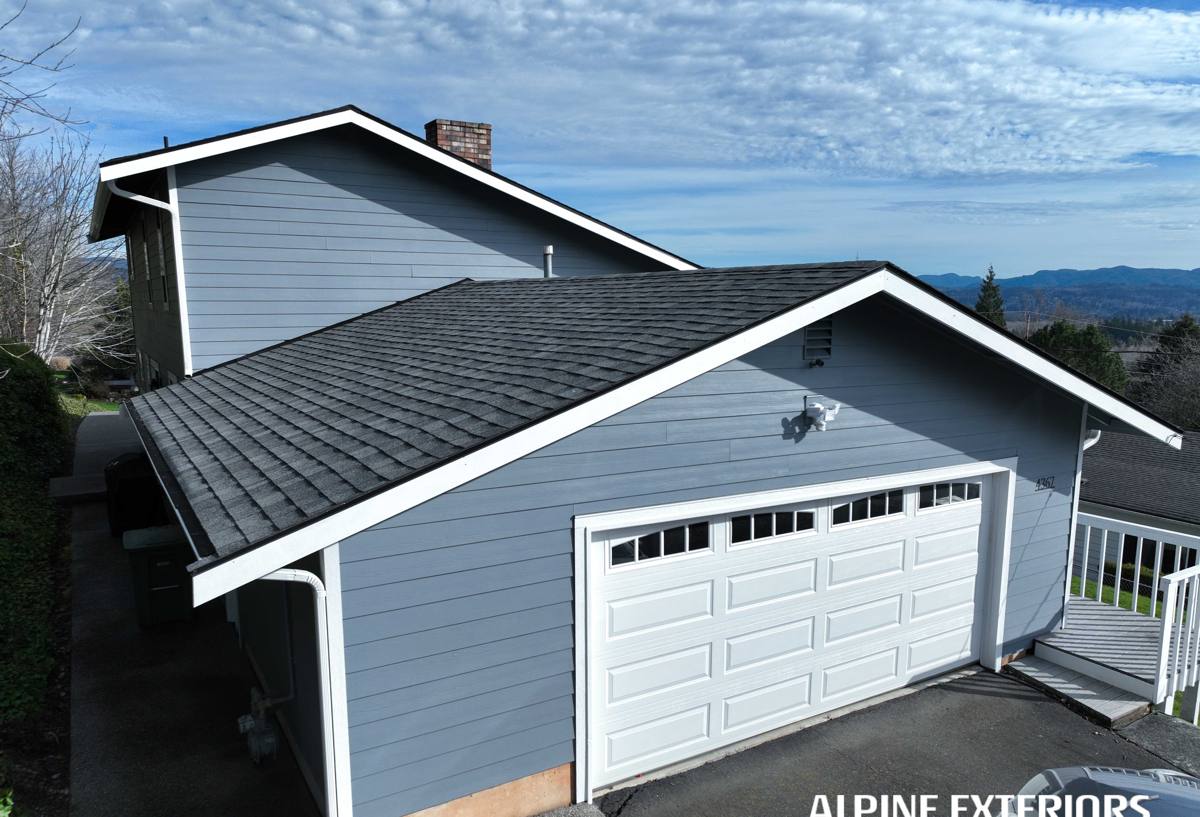
What Salt Air, Driving Rain, and Moss Actually Do to a Roof
Every roofing material in this part of Whatcom County is up against the same three things, and they don't act alone — they compound each other.
Salt Air and Corrosion
Airborne salt off Drayton Harbor and Semiahmoo Bay settles on every exposed surface, including your roof. On metal roofing, that means fasteners, flashing, and cut edges are the first places corrosion starts if they're not properly coated or protected. It's not that salt air destroys metal roofing — it's that it punishes cheap fasteners, exposed raw edges, and coatings that weren't rated for a marine-influenced environment. The difference between a metal roof that looks new in fifteen years and one that's streaking with rust in five almost always comes down to what hardware and finish were used, not the base panel material itself.
Driving Rain and Wind-Driven Water
Rain that falls straight down is easy to shed. Rain that comes in at an angle off the water, pushed by wind, is a different problem — it finds every lap, seam, and penetration that wasn't detailed correctly. Metal roofing sheds water fast, which is an advantage, but only if the underlayment, seam design, and flashing at valleys, chimneys, and vents are built for wind-driven conditions and not just a calm-day rain test.
Moss Season and Trapped Moisture
Whatcom County's long damp stretch, combined with shaded lots and tree cover common around California Creek, gives moss plenty of time to establish. Moss doesn't grow well on bare, properly finished metal panels the way it does on shingles or shaded wood, but it can still take hold in debris that collects in valleys, around penetrations, or on north-facing slopes that never fully dry out. Left alone, that trapped organic matter holds moisture against the panel and its fasteners far longer than the surrounding roof, which is exactly where corrosion and finish failure tend to start first.
Metal Roofing Options for This Area
Not all metal roofing is built the same way, and not every option makes sense for a salt-air, high-rain environment. Here's how the common choices stack up for a California Creek home.
| Type | Best For | Coastal/Rain Performance | Maintenance |
|---|---|---|---|
| Standing seam steel | Homes wanting a clean, low-profile look with minimal exposed fasteners | Excellent — concealed fastener system sheds wind-driven rain well and reduces corrosion entry points | Low; occasional debris clearing in valleys |
| Exposed-fastener steel (ag panel) | Budget-conscious projects, outbuildings, some main homes | Good if fasteners and washers are rated for marine exposure; fastener seals are the weak point over time | Moderate; fasteners and gaskets need periodic inspection |
| Stone-coated steel | Homeowners wanting a shingle or tile look with steel underneath | Good; coating adds protection but overlaps and fasteners still need correct detailing | Low to moderate |
| Aluminum standing seam | Properties closest to the water or with heavy salt exposure history | Excellent; aluminum doesn't rust the way steel can, though it costs more upfront | Low |
For most California Creek homes, we lean toward standing seam in steel or aluminum because the concealed fastener design directly addresses the two biggest local risks: wind-driven rain finding a way in, and exposed hardware corroding from salt air. Exposed-fastener panels can still be the right call on a garage, shop, or budget-driven project — we'll tell you honestly when that trade-off makes sense and when it doesn't.
What a Correct Installation Actually Involves
The panel you pick matters less than how the roof underneath and around it is built. This is where most problems on coastal Whatcom County roofs actually start.
Underlayment
A synthetic, water-resistant underlayment rated for the panel type goes down first, with extra attention at eaves, valleys, and any low-slope sections where wind-driven rain is most likely to test the system.
Fasteners and Flashing
We use fasteners and flashing rated for the panel material and for marine/coastal exposure — mismatched metals (like the wrong screw against the wrong panel) set up galvanic corrosion that shows up as rust streaks years before it should. Flashing at chimneys, skylights, vents, and valleys gets custom-formed and sealed, not just caulked over.
Ventilation
Metal roofs need proper ridge and soffit ventilation to keep moisture from condensing on the underside of the panels, especially in a climate where the air outside is damp for months at a time. Skipping ventilation to save a step is one of the more common shortcuts we see, and it causes problems years down the road that are far more expensive than doing it right the first time.
Panel Layout and Seams
Panel runs and seam placement are planned around the roof's actual slopes and water paths, not just laid out for convenience. On a home near California Creek with mixed roof pitches and valleys, that planning is what keeps wind-driven rain from finding a way under a lap.
Our Process
- On-site inspection. We look at your current roof, note trouble spots (moss buildup, past leaks, flashing condition), and talk through what's realistic for your home and budget.
- Measurement and plan. We measure the roof, account for valleys, penetrations, and slope changes, and put together a panel and fastener plan suited to your exposure to salt air and prevailing weather.
- Tear-off or overlay decision. Depending on your existing roof's condition, we'll walk you through whether a full tear-off or an approved overlay makes sense — and explain why, not just tell you.
- Installation. Underlayment, flashing, and panels go in with attention to the details that matter most in this climate: sealed penetrations, correctly lapped seams, and ventilation.
- Final walkthrough. We check the finished roof with you, cover care and what to watch for, and make sure everything is cleaned up before we leave.
Living With a Metal Roof in a Moss-Prone, Salty Climate
Metal roofing needs far less maintenance than shingles, but "far less" isn't "none." A little attention once or twice a year keeps a well-installed metal roof performing the way it should for decades.
- Clear leaves, needles, and debris out of valleys and around penetrations before they trap moisture
- Rinse off accumulated salt and grime periodically, especially on roofs with a direct water view
- Check exposed fasteners (if you have an exposed-fastener panel) for loose screws or worn washers
- Look at flashing around chimneys, vents, and skylights for gaps or sealant that's pulled away
- Trim back overhanging branches that keep sections of the roof shaded and slow to dry
- Address any scratches to the finish promptly — bare metal exposed to salt air corrodes faster than coated metal
Repair or Replace?
Not every issue on a metal roof means a full replacement. Isolated fastener failures, a damaged section of flashing, or a leak at one penetration are usually repairable if the rest of the panel system and underlayment are sound. What pushes a roof from "repair" to "replace" territory is usually widespread fastener corrosion, underlayment failure that's let moisture in over a large area, or a panel system that was never detailed correctly for this climate in the first place. We'll give you a straight answer on which situation you're in rather than defaulting to the more expensive option.
Why Hire a Crew That Already Works in California Creek
A metal roof installed by someone unfamiliar with this specific stretch of coastline can look fine for a year or two and still be set up to fail early — the problems from salt air, wind-driven rain, and moss season don't show up on day one. They show up in year three, five, or eight, in the form of rust streaks at fastener heads, a slow leak at a valley that was never flashed for sideways rain, or moisture trapped under panels with no way to vent out.
Working in and around Blaine and Whatcom County means we're used to specifying hardware and finishes for marine exposure as a default, not an upgrade. It means we know which roof details actually matter when the wind is coming off the water and the rain isn't falling straight down. And it means when you call us back three years later with a question, we're still local and still here.
If you're weighing metal roofing for a California Creek home, we're glad to walk your roof with you and give you a straightforward, no-pressure estimate — no invented urgency, just an honest look at what your roof needs and what it would take to do it right. Use the form below to get started.