 Blaine Siding
 Why Sandy Point Roofs Work Harder Than Most
Sandy Point sits right up against the water, and that changes what a roof has to survive. Homes just a few miles inland in Blaine deal with plenty of rain, but they don't get the same steady salt spray carried in off the water, and they usually have more tree cover breaking up direct wind. Out at Sandy Point, roofs take driving rain at low angles, near-constant salt-laden air, and long stretches of shade and dampness that keep moss and moisture active for most of the year. None of that means a roof out here needs to be exotic or overbuilt — it means the details have to be right, because there's less margin for error than on a sheltered inland roof.
We've installed and repaired roofs across Whatcom County, and the difference in wear patterns between a shoreline home and an inland one is obvious the moment you get on the roof. Fasteners corrode faster near the water. Flashing that would last decades inland can start failing in half that time if the wrong metal or the wrong install technique was used. And moss doesn't just grow on old roofs — it grows on new ones too, if the roof wasn't detailed to shed water and dry out properly.
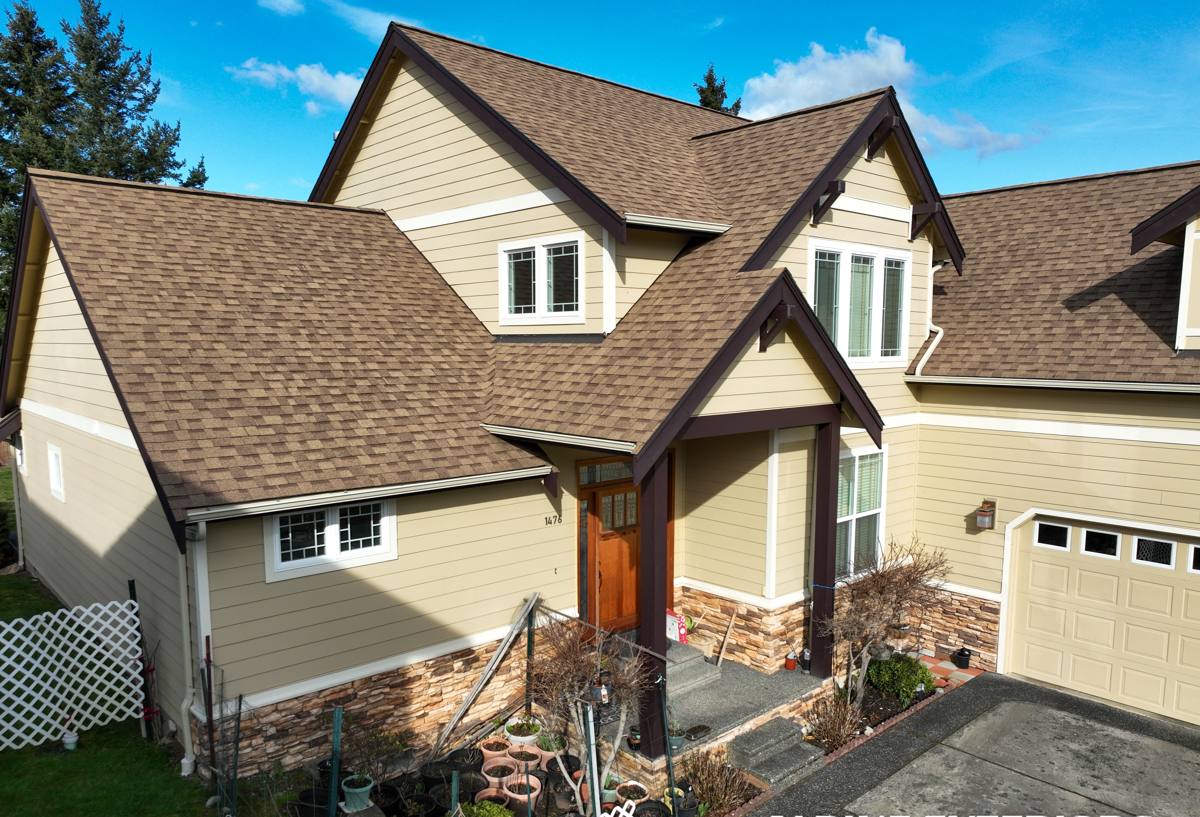
Signs a Sandy Point Home Needs a New Roof
Roofs rarely fail all at once. In this climate, the warning signs usually show up gradually, and homeowners often wait longer than they should because the roof "still looks fine" from the ground. A few things worth checking before winter storms roll in:
- Granule loss showing up in gutters or at downspouts, especially after a windy rain
- Moss or dark streaking that comes back within a season or two of being cleaned
- Curling, cracked, or lifted shingle edges, particularly on north- and west-facing slopes
- Rusted or discolored fasteners, flashing, or roof vents
- Soft spots in the decking when walked, or sagging visible from the ground
- Daylight visible through the attic roof boards, or damp insulation after a storm
- A roof approaching or past 20-25 years old, even if it "looks okay" from the driveway
Any one of these on its own might just call for a repair. Several together, or a roof that's past its expected service life, usually means it's time to talk about full replacement rather than patching the same weak spots again.
What a Correct New Roof Installation Involves
A new roof is only as good as what's underneath the shingles or panels — and that's especially true here, where wind-driven rain will find any weak point in the underlayment or flashing. A correct install isn't complicated, but it does require doing every layer properly instead of rushing to the finish coat.
Tear-Off and Deck Inspection
We remove the old roofing down to the deck rather than laying new material over old. That's the only way to actually see what's underneath — soft or rotted decking, old leaks, or improperly done past repairs. Any damaged sheathing gets replaced before anything new goes down. Skipping this step is the single most common shortcut that leads to a new roof failing early.
Underlayment and Ice-and-Water Protection
Given the amount of driving rain Sandy Point sees, we pay close attention to underlayment coverage, not just at the field of the roof but at eaves, valleys, and any low-slope transitions where wind can push water backward under the shingles. Self-adhered ice-and-water membrane goes in at the vulnerable areas as standard practice, not an upsell.
Flashing Details
Flashing around chimneys, skylights, vents, and wall-to-roof transitions is where most leaks actually start — not in the field of the roof itself. We install new flashing rather than reusing old pieces, and we choose corrosion-resistant metal given the salt exposure this close to the water.
Fasteners and Hardware
Standard fasteners can corrode faster in a salt-air environment than they would a few miles inland. We use fasteners and hardware rated for coastal exposure so the roof isn't held together by parts that start failing years before the shingles or panels do.
Ventilation
Proper intake and exhaust ventilation keeps the attic dry and temperature-balanced, which does two things that matter here: it reduces the moisture buildup that feeds moss and rot, and it protects the shingles from underneath, extending the life of the whole roof system.
Choosing a Roofing Material for This Climate
There's no single "best" roofing material — the right choice depends on your home's exposure, roof pitch, budget, and how much upkeep you want to do. Here's how the common options generally hold up against salt air, driving rain, and moss compared with a typical inland Whatcom County home.
| Material | Salt Air Performance | Moss Resistance | Maintenance |
|---|---|---|---|
| Architectural asphalt shingle | Good with corrosion-resistant fasteners and flashing | Moderate — benefits from periodic cleaning and good airflow | Low to moderate |
| Metal (standing seam) | Very good when finish and fasteners are coastal-rated | Good — sheds moisture quickly, less surface for moss to grip | Low |
| Cedar shake/shingle | Requires more care; end grain absorbs moisture near the coast | Poor without regular treatment and cleaning | High |
| Composite/synthetic shingle | Good — engineered to resist moisture and corrosion | Moderate to good depending on product | Low |
We don't push one product on every home. We'll walk you through what fits your roof's pitch, your home's exposure to wind and salt spray, and how much maintenance you're realistically willing to keep up with. If a material isn't a good fit for a Sandy Point home, we'll say so and explain why, rather than let a homeowner find out the hard way after installation.
What Affects the Cost of a New Roof
Every roof is priced based on its own specifics, but a few factors consistently move the number up or down. Knowing them ahead of time makes it easier to understand your estimate instead of just comparing a bottom-line figure between contractors.
| Factor | Why It Matters |
|---|---|
| Roof size and pitch | Steeper roofs take longer and require more safety setup, which affects labor cost |
| Number of existing layers | Tear-off of multiple old layers takes more time and disposal |
| Decking condition | Rotted or soft sheathing found during tear-off adds material and labor |
| Roof complexity | Valleys, dormers, chimneys, and skylights each add flashing work |
| Material choice | Asphalt, metal, and specialty materials carry different material and install costs |
| Site access | Waterfront lots and narrow approaches can affect staging and delivery |
We give a written, itemized estimate before any work starts, so you know what you're paying for and why — not a vague lump sum.
Our Installation Process
- On-site inspection. We look at the roof, attic ventilation, and any visible problem areas, and talk through what we find with you directly.
- Written estimate. A clear scope of work and pricing, including material options suited to a Sandy Point exposure.
- Scheduling around weather. We plan installation windows with Whatcom County's rain patterns in mind, so tear-off and dry-in happen on the same day whenever possible.
- Tear-off and deck inspection. Old material removed, decking checked and repaired as needed.
- Underlayment, flashing, and installation. Done in the order and to the standard described above — no skipped layers.
- Cleanup and magnetic sweep. Job site cleared of debris and stray fasteners before we leave.
- Final walkthrough. We go over the finished roof with you and answer any questions before calling the job done.
Why a Crew That Already Works Sandy Point Matters
A roofing crew that mainly works inland can still do competent work, but they may not think through the coastal-specific details until something fails — the fastener grade that's fine in town but corrodes faster here, the flashing detail that matters more with constant wind-driven rain, or the moss growth pattern that's different on a shaded, damp lot near the water. A crew that regularly works Sandy Point and the surrounding Blaine shoreline builds those decisions into the plan from the start, instead of learning them from a callback.
There's also a practical side: familiarity with local access, permitting through Whatcom County, and realistic scheduling around this area's weather windows all make the job smoother, with fewer surprises mid-project.
After Installation: Keeping a New Roof Performing
A correctly installed roof in this climate still needs a bit of upkeep to reach its full lifespan. Keep gutters and valleys clear so water isn't sitting against the shingles longer than it should. Have moss growth addressed early rather than letting it establish, since moss that's allowed to spread can lift shingle edges over time. And have the roof looked at after any major windstorm — catching a lifted shingle or a piece of damaged flashing early is a lot cheaper than dealing with the water damage that follows months later.
If your Sandy Point home is due for a new roof, or you're just not sure whether repair or replacement makes more sense, we're happy to take a look and give you a straight answer. Use the form below to request a free, no-pressure estimate — no obligation, just an honest assessment of what your roof actually needs.