 Blaine Siding
 Windows Built for Nooksack's Weather, Not Just Its View
Nooksack sits inland from Blaine but shares the same weather pattern that defines this corner of Whatcom County: wet, marine-influenced air moving in off the Salish Sea, long stretches of driving rain in the fall and winter, and a moss season that seems to run nine or ten months out of the year. Windows here don't fail because of one bad storm. They fail slowly, from years of moisture finding its way into places it shouldn't be — sills, corners, and frame joints that were never sealed correctly the first time.
When we talk about "custom windows" for a Nooksack property, we mean windows sized, flashed, and installed to fit that specific house and that specific exposure, not a stock size forced into an opening with extra caulk to make up the difference. That distinction matters more here than in drier climates, because a sloppy fit doesn't just look bad — it becomes a slow leak that rots framing you can't see until the damage is already done.
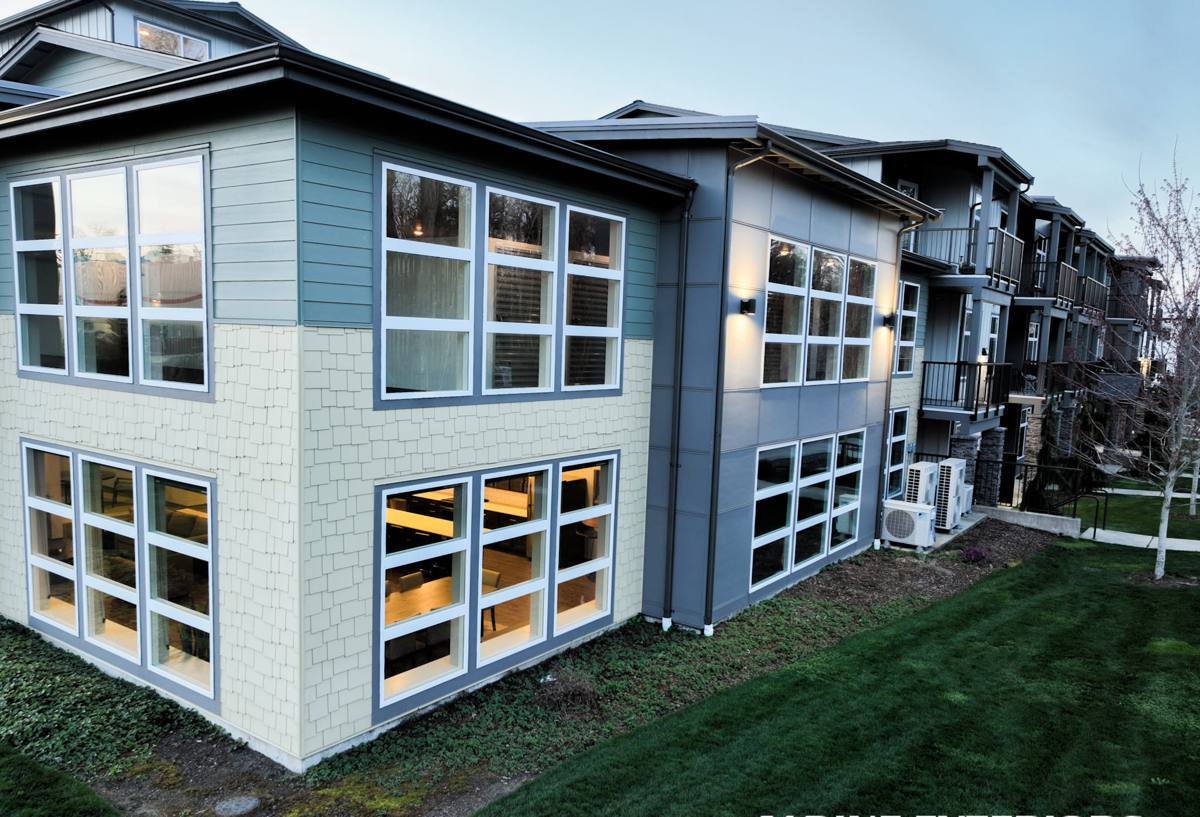
What Whatcom County's Climate Actually Does to Windows
Constant moisture exposure
Whatcom County gets a lot of rain, but it's the duration and the wind-driven angle of it that wears windows down. Water doesn't just fall here — it's pushed sideways against siding and window trim during winter storms, which means any gap in flashing or sealant becomes an entry point.
Salt-influenced air
Properties throughout the Blaine and Nooksack service area sit close enough to the coast that salt-laden air is part of the equation, even away from the immediate waterfront. Salt air accelerates corrosion on metal hardware — hinges, locks, balance mechanisms — and breaks down cheaper vinyl and finishes faster than it would inland.
Moss and organic growth
The long moss season isn't just a roof problem. Moss and algae take hold on window sills, in track channels, and along exterior trim wherever moisture sits without enough sun or airflow to dry it out. Left alone, that growth holds water against wood and finish surfaces and shortens the life of both.
Signs a Nooksack Home Needs New Windows
Most homeowners don't notice window failure until it shows up as a comfort or utility problem, by which point moisture damage is often already underway. Here's what we look for during an assessment:
- Fogging or persistent moisture between glass panes (failed seal on double-pane units)
- Soft or discolored wood trim around the window frame, inside or outside
- Drafts you can feel near the frame even when the window is fully closed and locked
- Difficulty opening, closing, or locking — often a sign the frame has shifted or swollen
- Visible gaps between the window frame and siding or trim
- Moss, algae, or dark staining building up on sills or in track channels
- Noticeably higher heating bills without another obvious cause
Any one of these on its own isn't necessarily an emergency. Several at once, especially on the same wall or elevation, usually points to a moisture problem that's been building for a while.
What a Correct Custom Window Installation Involves
The window unit itself is only part of the job. Where jobs go wrong — on this house or any other in the area — is almost always in the details around the window, not the window itself.
Accurate measurement and sizing
Older Nooksack homes, especially those built or renovated over multiple decades, often have openings that aren't perfectly square or standard-sized anymore. A custom approach means measuring the actual opening as it exists now, not assuming it matches a catalog size.
Flashing and moisture management
This is the step that determines whether a window lasts fifteen years or forty. Proper installation means integrating window flashing with the existing weather-resistive barrier and siding so water is directed out and away from the wall assembly, never trapped behind it. In a climate that sees as much wind-driven rain as this one does, flashing sequence and overlap isn't optional detail work — it's the whole ballgame.
Air sealing without trapping moisture
A tight seal around the frame matters for energy efficiency, but sealing the wrong way — for example, caulking the exterior solid without any path for incidental moisture to escape — can trap water inside the wall instead of keeping it out. We seal the exterior for weather resistance and leave appropriate details on the interior and at weep points so any moisture that does get in has somewhere to go.
Matching materials to exposure
Which wall of the house a window sits on changes what it needs. A window on the side of the house that takes the brunt of southwest storms needs more attention to flashing detail and material durability than one tucked under a deep eave on a sheltered wall.
Frame Material Comparison for This Climate
| Material | Moisture Resistance | Maintenance | Notes for This Area |
|---|---|---|---|
| Vinyl | Good when properly sealed | Low | Budget-friendly; quality varies a lot between manufacturers — cheaper vinyl can become brittle over time in cold, damp swings |
| Fiberglass | Very good | Low | Dimensionally stable in temperature and humidity swings; holds up well to the wet-dry cycling common here |
| Wood (clad exterior) | Good on exposed face, wood interior needs care | Moderate | Exterior cladding protects against rain and moss; interior wood still needs periodic attention where humidity is high |
| Aluminum | Fair | Moderate | Conducts cold and can condense moisture in this climate unless thermally broken; hardware needs corrosion-resistant coatings near coastal air |
There's no single "best" material for every house — the right choice depends on the home's exposure, existing trim details, and budget. Part of an honest estimate is walking through these trade-offs for your specific walls, not just quoting a default option.
Our Process for a Nooksack Window Project
- On-site assessment. We look at every window in question, check for existing moisture damage around frames and sills, and note which walls take the heaviest weather exposure.
- Measurement and material discussion. We measure actual openings and talk through frame material, glass options, and any structural or trim repairs the assessment turned up.
- Removal and inspection of the opening. Once the old window is out, we inspect the framing and sheathing underneath. This is often when hidden moisture damage from years of poor sealing shows up, and we address it before anything new goes in.
- Flashing and installation. New flashing is integrated with the existing weather barrier, the window is set, shimmed, and fastened to manufacturer spec, and the assembly is sealed correctly for both weather resistance and drainage.
- Interior and exterior finish work. Trim, casing, and interior sealing are completed to match the rest of the house.
- Final check. We test operation, confirm seals, and walk the job with the homeowner before calling it done.
Cost Factors for Custom Window Projects
Every project is different, but the same handful of factors drive most of the cost variation we see on jobs in this area:
| Factor | Why It Matters |
|---|---|
| Number of windows | Per-unit cost typically drops as the total count on a project goes up |
| Frame material | Vinyl, fiberglass, wood-clad, and aluminum carry different material costs and lifespans |
| Existing damage | Rot or structural repair around the opening adds labor beyond the window swap itself |
| Wall exposure | Walls facing prevailing storms may warrant upgraded flashing details or materials |
| Custom sizing | Non-standard or out-of-square openings require more measurement and fabrication work |
| Glass package | Additional glazing layers or coatings for energy performance change unit pricing |
We'd rather walk a property and give a real number based on what we actually find than throw out a broad estimate that doesn't hold up once we're on the ladder.
Why Local Experience Matters for This Job
A window installer who mostly works drier inland climates doesn't always plan for how much water this region actually throws at a house over a winter. Flashing details that would be fine in a low-rain climate can fall short here, and it usually takes a few seasons before the failure shows up as a soft spot in the wall.
Working regularly in Blaine, Nooksack, and the surrounding Whatcom County area means we see the same failure patterns repeatedly — which walls take the worst weather, which older trim details tend to trap moisture, and which shortcuts don't hold up once the moss season sets in. That's not something you can fully substitute with a manufacturer's install manual; it comes from seeing how these houses actually behave over years of local weather.
Get an Honest Look at Your Windows
If you're dealing with drafts, fogged glass, sticking frames, or you just want a second opinion before committing to a window project, we're happy to take a look. We'll give you a straight assessment of what your windows actually need — no pressure, no inflated scope — using the form below to set up a free estimate.