 Blaine Siding
 Roofing in Peace Arch Takes a Different Kind of Wear
Peace Arch sits right up against the water and the border, which means homes here catch weather that inland Whatcom County neighborhoods mostly avoid. Salt-laden air moves in off the Strait of Georgia, wind-driven rain hits roof planes sideways instead of straight down, and long stretches of grey, damp winter give moss every chance it needs to take hold. An asphalt shingle roof can handle all of that, but only if it's specified and installed with this specific exposure in mind. A roof built for a drier, more sheltered part of the state won't hold up the same way out here.
This page covers what asphalt shingle roofing actually needs to succeed in Peace Arch — what the climate does to it over time, what a correct installation or repair looks like, and how to tell when a roof needs patching versus full replacement.
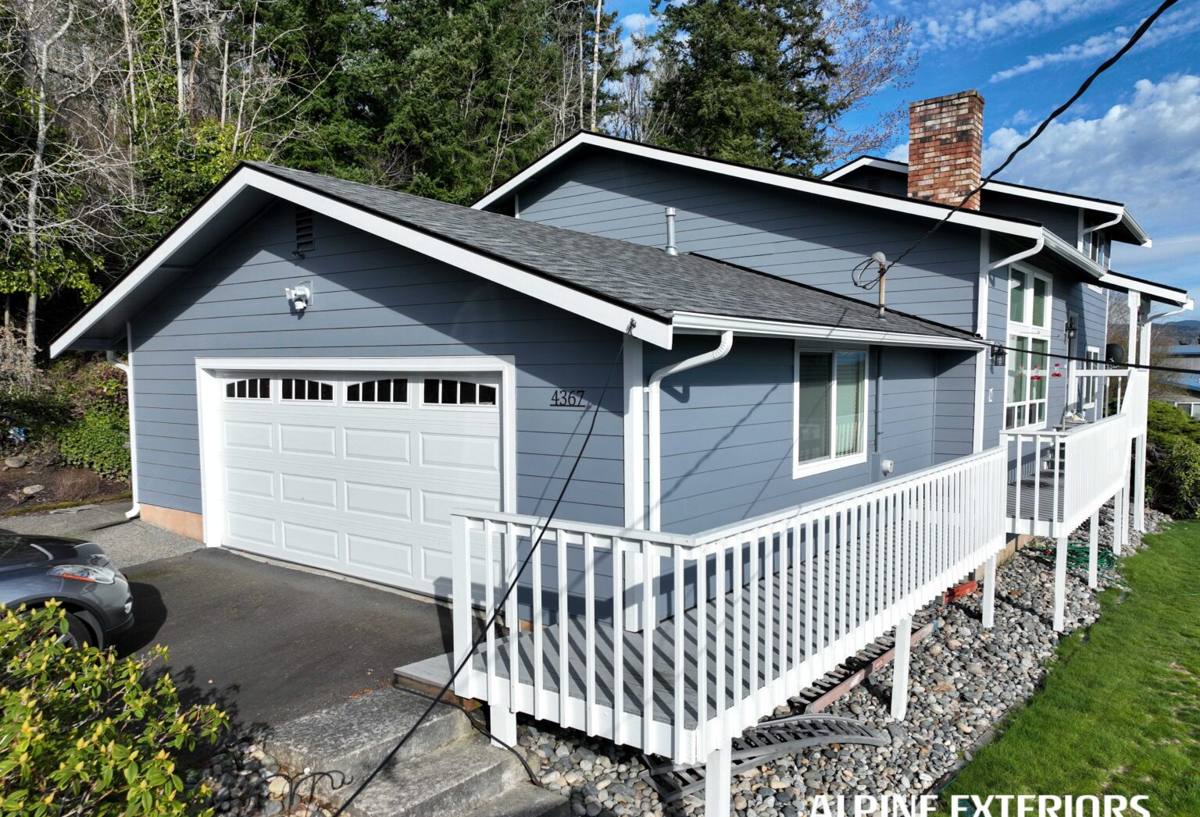
What the Local Climate Does to a Shingle Roof
Salt Air and Metal Fatigue
Asphalt shingles themselves are fairly resistant to salt air, but the metal components around them are not. Flashing, drip edge, nail heads, and vent housings all corrode faster this close to the water. Once flashing starts to pit or rust through, it stops shedding water correctly at the exact seams and transitions where roofs are already most vulnerable — chimneys, valleys, sidewalls, and roof-to-wall intersections. A roof can look fine from the ground while its flashing is quietly failing underneath.
Wind-Driven Rain and Water Intrusion
Rain that comes in at an angle behaves differently than rain that falls straight down. It can work its way up under shingle tabs, push past poorly lapped underlayment, and find gaps at exposed nail heads. In Peace Arch, storms off the water regularly bring this kind of sideways rain, which is why nailing pattern, shingle overlap, and underlayment quality matter more here than they would in a calmer inland setting.
Moss, Shade, and Slow Roof Damage
Whatcom County's long wet season gives moss and algae months at a time to establish themselves, especially on north-facing slopes and roof sections shaded by trees. Moss doesn't just look bad — its root structure holds moisture against the shingle surface and can lift tabs over time, which lets water underneath. Left unaddressed for a few seasons, moss growth shortens a roof's useful life noticeably.
What a Correct Asphalt Shingle Roof Involves
Deck and Underlayment
Everything starts with the roof deck. Soft, delaminated, or water-damaged sheathing needs to be identified and replaced before a single shingle goes down — installing over a compromised deck just hides a problem that will resurface. Over a sound deck, we use a synthetic or felt underlayment appropriate to the roof's pitch and exposure, with self-adhered ice-and-water barrier at eaves, valleys, and other vulnerable transitions where wind-driven rain is most likely to intrude.
Flashing and Edge Details
Given how hard local salt air is on metal, we pay close attention to flashing material and installation at every penetration and transition: chimneys, skylights, vent stacks, valleys, and sidewalls. Properly lapped, corrosion-resistant flashing is one of the biggest differences between a roof that stays watertight for its full service life and one that develops slow leaks within a few years.
Ventilation
Balanced intake and exhaust ventilation keeps the attic space dry and temperature-stable, which matters for shingle lifespan and for controlling condensation in our damp climate. Poor ventilation traps moisture under the deck, which can lead to rot, mold, and premature shingle failure from underneath — problems that are invisible until they're expensive.
Nailing and Installation Standards
Manufacturer nailing patterns exist for a reason, and in a wind-exposed area like Peace Arch, following them precisely — correct nail count, placement, and fastener type — is what keeps shingles from lifting or blowing off during winter storms. Shortcuts here are one of the most common causes of early shingle failure we see on re-roofs.
Choosing Shingles for This Climate
Not every asphalt shingle product is a good fit for a salt-air, high-moss environment. The table below outlines the practical trade-offs for the options most homeowners in Peace Arch are choosing between.
| Shingle Type | Typical Lifespan | Moss/Algae Resistance | Best Fit |
|---|---|---|---|
| Standard 3-tab | Shorter end of the range | Standard granules only | Budget-conscious projects, secondary structures |
| Architectural (laminated) | Longer, thicker construction | Standard granules only | Most primary homes; better wind performance |
| Algae-resistant (AR) architectural | Same as standard architectural | Copper- or zinc-infused granules resist streaking and growth | Shaded lots, north-facing roofs, moss-prone properties |
For most Peace Arch homes — especially those with mature trees or north-facing roof planes — an algae-resistant architectural shingle is worth the modest upfront difference in cost. The granule treatment doesn't make a roof immune to moss, but it meaningfully slows growth compared to standard shingles, which means fewer cleanings and a longer effective lifespan.
Repair or Replace?
Not every roofing issue in Peace Arch calls for full replacement. The table below covers the factors we walk homeowners through during an inspection.
| Factor | Leans Toward Repair | Leans Toward Replacement |
|---|---|---|
| Age of roof | Well within expected service life | At or near end of expected lifespan |
| Extent of damage | Isolated area — one valley, one flashing point | Widespread wear, multiple failure points |
| Granule loss | Localized, minor | Heavy, widespread bald spots |
| Deck condition | Sound underneath | Soft, rotted, or water-stained sheathing |
| Moss/algae history | First occurrence, treatable | Repeated growth despite cleaning, lifted shingles |
An honest inspection will tell you which category your roof falls into. We don't recommend full replacement when a targeted repair will genuinely solve the problem — but we also won't patch a roof that's structurally past the point where repair makes financial sense.
How Our Process Works
- Inspection. We get on the roof (not just a look from the driveway) to check the deck, flashing, ventilation, and shingle condition, and to identify moss or water damage that isn't visible from the ground.
- Written estimate. You get a clear scope of work and pricing before anything is scheduled — no vague allowances or surprise add-ons once work starts.
- Prep and protection. Landscaping, siding, and gutters are protected before tear-off begins.
- Tear-off and deck check. Old roofing is removed down to the deck so we can verify sheathing condition and replace anything compromised before new materials go down.
- Underlayment and flashing. Ice-and-water barrier, underlayment, and corrosion-resistant flashing are installed at every vulnerable point before shingles go on.
- Shingle installation. Installed to manufacturer nailing specifications, with attention to proper ventilation balance.
- Cleanup and final walkthrough. Site is cleared of debris and nails, and we walk the finished roof with you.
Maintaining an Asphalt Shingle Roof in Peace Arch
A well-installed roof still needs periodic attention in this climate. Homeowners can stay ahead of most problems with a short seasonal routine:
- Clear gutters and downspouts before the fall rains arrive, so water has somewhere to go
- Check shaded and north-facing slopes for early moss growth once or twice a year
- Trim back overhanging branches to reduce shade, debris buildup, and abrasion on shingles
- Look for granules collecting in gutters, which can signal accelerated shingle wear
- After major windstorms, do a visual check from the ground for lifted or missing shingles
- Have flashing points (chimneys, valleys, vent stacks) checked periodically, since these fail before the shingle field usually does
Why a Local Crew Matters for This Job
A roof built for Peace Arch's exposure — salt air, wind-driven rain, extended moss season — needs decisions made by someone who's already dealt with those conditions on other roofs nearby. That means knowing which flashing details tend to fail first in this environment, which roof orientations need extra attention for moss, and how local wind patterns off the water affect shingle and fastener choices. It also means being familiar with the permitting and inspection process in this part of Whatcom County, so the job moves without unnecessary delays.
A crew that only occasionally works this close to the water is learning these lessons on your roof. A crew that works Peace Arch regularly already knows them.
Get a Straight Answer About Your Roof
If your roof is showing moss, granule loss, or you just want a second opinion before a repair turns into a bigger project, we're happy to take a look. Use the form below to request a free, no-pressure estimate — we'll give you a clear read on what your roof actually needs, not just what's easiest to sell.