 Blaine Siding
 Building Near the Peace Arch: What the Weather Actually Does to a New Window
The Peace Arch area sits right where Blaine meets the water and the border, and that location comes with a specific set of building conditions. Homes here take on salt-laden air off the Salish Sea, long stretches of wind-driven rain, and a wet season that can stretch for months at a time. None of that is a problem for a window that's installed correctly. All of it is a problem for a window that isn't.
When we install new-construction windows in this part of Whatcom County, we're not just setting glass into a rough opening. We're building the first line of defense against moisture that will try to get behind the siding for the next 30-plus years. Salt air accelerates corrosion on hardware, fasteners, and cheaper cladding finishes. Driving rain finds any gap in the flashing sequence and pushes water sideways, not just down. And a long moss season means anything that stays damp — a sill that doesn't drain, a corner that traps water — stays damp for weeks, not hours.
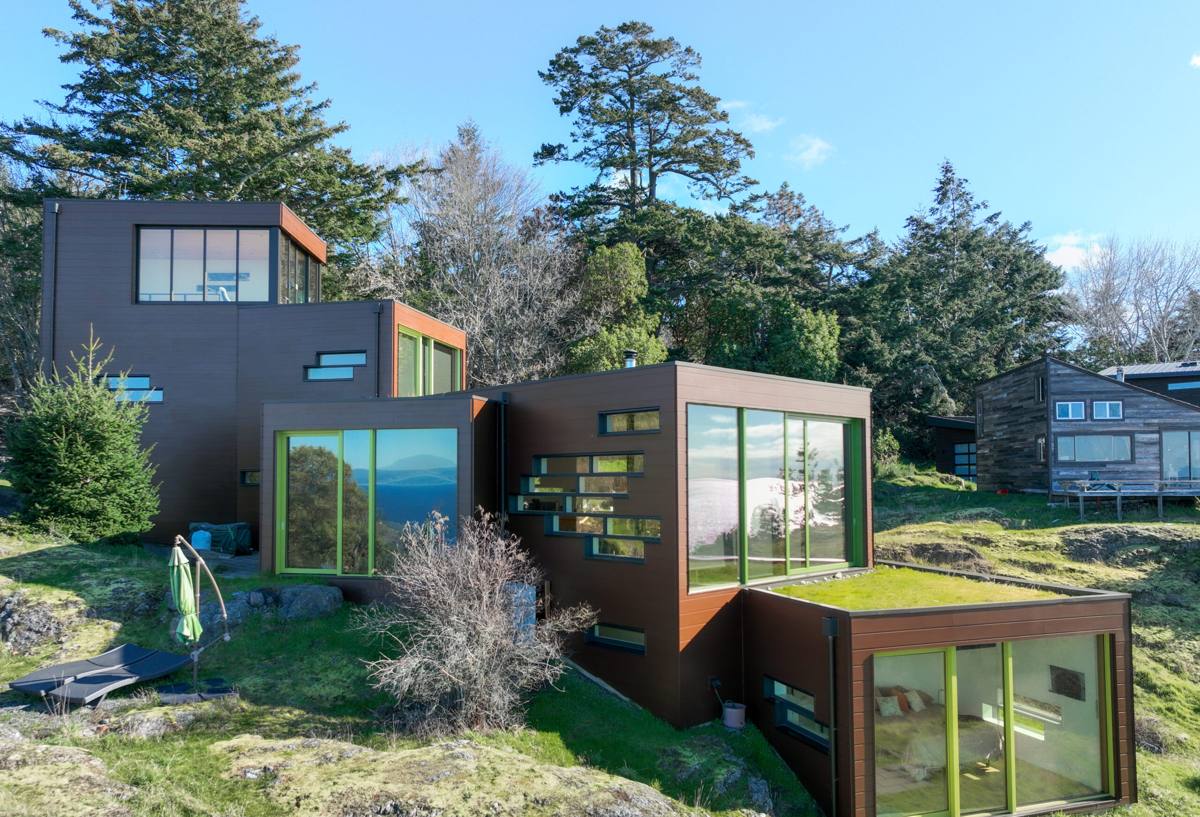
New-Construction Windows Are a Different Job Than Replacement Windows
It's worth being clear about what "new-construction windows" actually means, because it's a different scope than swapping out an old window in an existing wall. On a new build or an addition, the window goes in before the siding, while the wall is still open framing wrapped in a weather-resistive barrier (WRB). That gives us access to do the job right the first time — full flashing integration, proper shimming, and a window that's built into the wall assembly rather than fitted into an existing opening after the fact.
That access is an advantage, but it also raises the stakes. On a replacement job, a mistake is usually contained behind trim you can pull off later. On new construction, a flashing error gets buried under siding, house wrap, and finish work — and it can sit there quietly failing for years before anyone sees a stain on the drywall. Getting the sequence right the first time matters more here, not less.
What "Correct" Looks Like on a New Build
A properly installed new-construction window in this climate isn't just level and square. It's tied into the building's water management system — the WRB, the flashing, and eventually the siding — so that water hitting the wall is directed out and away from the framing, never trapped behind it.
Choosing a Frame Material for Salt Air and Coastal Wind
Frame material matters more here than it does further inland, because salt air and near-constant moisture are harder on some materials than others. There's no single "right" answer for every home — it depends on budget, the home's design, and how exposed the elevation is to wind and rain. Here's how the common options compare for a Peace Arch build:
| Frame Material | Salt Air / Moisture Behavior | Maintenance | Typical Cost Position |
|---|---|---|---|
| Vinyl | Won't corrode or rust; performs well in coastal air | Low — occasional cleaning | Most affordable |
| Fiberglass | Very stable in moisture and temperature swings; strong resistance to warping | Low | Mid to upper-mid |
| Aluminum-clad wood | Attractive exterior finish, but the wood core needs the exterior seal to stay intact to avoid moisture intrusion over time | Higher — relies on caulking/finish upkeep at joints | Highest |
| Bare aluminum | Conducts cold and can pit or corrode faster in salt air without a quality finish | Moderate | Lower to mid |
We'll talk through these trade-offs with you rather than push one option — the right call usually comes down to how much of the home faces open water or prevailing wind, and how much long-term maintenance you want to take on.
Flashing and Sequencing: The Part That Actually Prevents Leaks
Most window leaks in this region aren't caused by a bad window. They're caused by a flashing sequence that was done out of order or left with gaps. In a marine climate with driving rain, the sequence has to shed water like shingles on a roof — each layer overlapping the one below it, so water always has a path down and out, never a path in.
The steps we don't skip
- Sill pan flashing under the rough opening, sloped to drain outward, before the window ever goes in
- Window set plumb, level, and square, shimmed at the manufacturer's specified points — not just at the corners
- Nailing fin or flange fastened per the manufacturer's schedule, not "close enough"
- Side and head flashing lapped correctly over the WRB, so water sheds down and over each layer
- Proper integration with the house wrap and, later, the siding drainage plane
- Interior and exterior sealant used only where specified — over-sealing can trap moisture instead of releasing it
- Final check for square, smooth operation, and weathertight seal before the opening is closed up behind siding
Every one of those steps is invisible once the siding goes on. That's exactly why they can't be shortcuts.
Energy Performance for a Marine Climate
Whatcom County's climate isn't extreme cold, but it is persistently damp and often windy, and Washington's energy code sets minimum performance requirements for new construction. For Peace Arch homes, we typically look at:
- U-factor — how well the window resists heat loss; more important here than in a dry climate because of the near-constant temperature differential from wind and moisture
- Low-E glazing — helps manage heat transfer without darkening the view, useful given how many homes in this area are oriented toward the water
- Argon or krypton fill — improves insulating performance in the sealed unit
- Condensation resistance — a real factor in a climate this humid; a poorly rated unit will fog or sweat on cold, damp mornings
We size and spec windows to meet or exceed code minimums for the project, and we'll flag when upgrading glass or frame performance is worth the cost versus when it isn't — that depends on the specific elevation and exposure.
How Our New-Construction Process Works
On a new build or addition, timing is everything. We coordinate directly with your builder or general contractor so windows arrive and get installed at the right point in the framing schedule — after the WRB is on, before siding starts.
- Review plans and rough openings against ordered window sizes before anything ships, to catch mismatches early
- Confirm frame material and glazing package based on the home's exposure to wind, rain, and salt air
- Install sill pan flashing and prep each opening
- Set, shim, and fasten each window to manufacturer specification
- Complete head and side flashing integration with the WRB
- Walk each opening for square, operation, and seal before it's covered by siding
- Hand off a clean, weathertight opening ready for the next trade
We treat that handoff seriously — a builder shouldn't have to double-check our flashing before their siding crew shows up.
Why a Crew That Already Works Peace Arch Matters
A window installed the same way in Blaine as it would be inland isn't wrong, exactly — it's just not accounting for what this specific location does to a building over time. Crews who regularly work near the Peace Arch and the water know which elevations take the worst of the wind-driven rain, how far salt air travels inland on this stretch of coast, and where moss and moisture tend to collect on a roofline or wall long after a storm passes. That knowledge shows up in small decisions — where to add extra flashing lap, which frame material holds up better on a west-facing wall — that don't show up on a spec sheet.
It also matters for follow-through. If a question comes up two years after your home is finished, you want a contractor who's still working in Blaine, still reachable, and still standing behind the install — not a crew that only passed through for one job.
Cost Factors to Expect
Every new-construction window project prices out differently based on window count, frame material, glazing package, and how many openings face direct wind and rain exposure. In general, expect vinyl to sit at the lower end, fiberglass in the middle, and aluminum-clad wood at the top of the range. Larger units, corner windows, and custom shapes all add cost beyond standard sizes. We'll walk through actual numbers for your project once we've seen the plans — broad ranges online rarely match what a specific home and elevation actually need.
If you're planning a new build or addition near the Peace Arch and want windows installed right the first time, we're happy to take a look at your plans and talk through options. Use the form below to request a free, no-pressure estimate.