 Blaine Siding
 A Peninsula Climate That Doesn't Forgive Shortcuts
Point Roberts sits on a small peninsula surrounded on three sides by water, which means every wall on every home there is doing more work than a wall fifteen miles inland in Blaine. Salt-laden air off the Strait of Georgia and Boundary Bay accelerates corrosion on fasteners and trim, wind-driven rain finds its way into any gap in a wall assembly that a calmer climate would never expose, and the long gray stretch of fall and winter keeps siding damp for days at a time. That dampness is exactly what moss, algae, and mildew need to take hold, and once they're established on a wall they hold even more moisture against the surface underneath.
None of that is a reason to avoid board and batten siding in Point Roberts. It's a reason to be precise about the material and the installation. A vertical siding pattern with exposed seams and a distinct shadow line only looks good for the long haul if the assembly behind it is built for a marine climate, not a mild one.
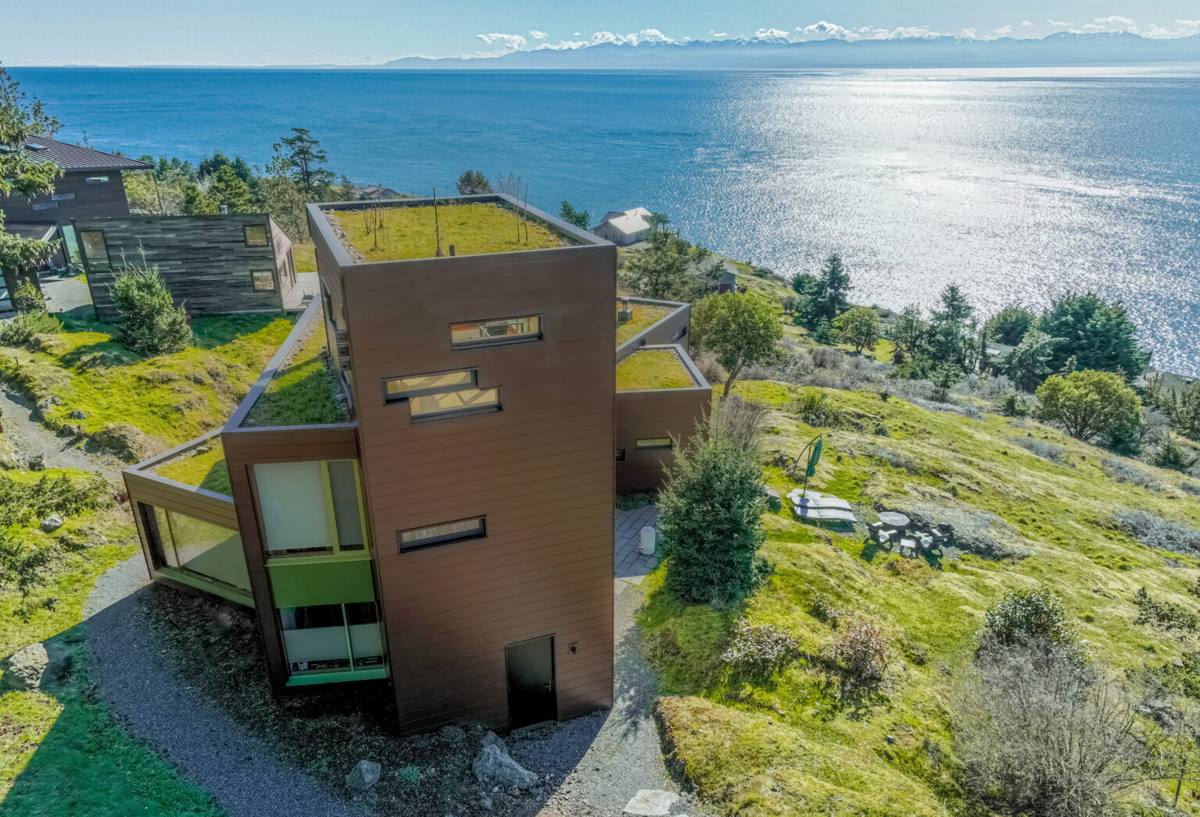
Why Board & Batten Fits This Part of Whatcom County
Board and batten is a vertical siding pattern: wide flat panels or boards installed with narrower strips (battens) covering the seams between them. It's historically associated with barns, cabins, and coastal cottages, which is part of why it reads so naturally on homes near the water in Whatcom County. Beyond the look, the vertical lines shed water differently than horizontal lap siding — done correctly, water runs down the face of the panel and off the bottom edge rather than pooling on horizontal ledges the way it can with lap profiles.
That drainage behavior matters more in Point Roberts than almost anywhere else in the county. Homes here take rain from multiple directions depending on the season and the wind, and a vertical pattern with a well-detailed rainscreen gap behind it gives water fewer places to sit against the wall.
Where Board & Batten Works Best
- Accent gables, entries, and dormers paired with lap siding on the main walls
- Full-elevation vertical siding on cottage, farmhouse, or modern coastal home styles
- Waterfront-facing walls where a stronger shadow line and cleaner vertical drainage path are wanted
- Additions or garages that need to visually separate from the main structure without changing color
What a Correct Board & Batten Installation Actually Involves
Board and batten looks simple from the ground, which is part of the problem — it's an easy siding pattern to install poorly and not notice for a year or two, until moisture damage shows up behind the battens. A correct installation on the coast involves several details that get skipped more often than they should:
Rainscreen Gap
A drainage gap between the back of the siding and the water-resistive barrier lets any moisture that gets past the panels drain and dry instead of sitting against the sheathing. On a peninsula with this much sustained damp weather, skipping the rainscreen is one of the most common causes of premature rot we see behind old siding.
Fastening Pattern
Battens and panels need to be fastened into framing or proper blocking, not just into sheathing, with corrosion-resistant fasteners spaced to manufacturer specification. In a salt-air environment, the wrong fastener corrodes years before the siding itself shows any wear, leaving loose boards and streaking.
Flashing and Transitions
Every window, door, deck ledger, and roof-to-wall intersection needs flashing detailed for a vertical pattern, not adapted on the fly from a lap-siding approach. Water that gets behind a badly flashed transition travels down the wall cavity and can show up far from where it entered.
Bottom Termination and Ground Clearance
Board and batten needs a proper starter strip and enough clearance above grade, decks, and roof lines. Homes close to the water are also close to splash-back from landscaping and hardscape, so this clearance is not optional trim-out — it's a moisture control detail.
Caulking and Joint Treatment
Factory-finished panels reduce how much field caulking is needed, but the joints that do require sealant need the right product, applied to a properly prepared surface, not just run along the seam as a cosmetic finish.
The James Hardie Board & Batten System We Install
We install James Hardie fiber cement exclusively, and for vertical applications that generally means HardiePanel or Artisan-profile products paired with Hardie's factory-finished battens, all under the ColorPlus finish system. A few reasons this matters specifically for a saltwater-adjacent peninsula climate:
- Non-combustible fiber cement — doesn't rot, and doesn't provide fuel or feed insects the way wood board and batten can over time
- Engineered for moisture cycling — Hardie's HZ product lines are formulated for the Pacific Northwest's wet-dry cycling, which is a different stress than a dry climate or a hot-humid one
- ColorPlus factory finish — baked-on finish that resists the fading and moisture intrusion at the paint layer that field-painted board and batten is prone to, especially in salt air
- Consistent panel dimensions — factory-milled panels and battens keep seams straight and shadow lines even, which matters more on a pattern this visually simple than it does on lap siding
We don't install LP SmartSide, vinyl board and batten, Cemplank, Allura, or primed wood board and batten. Each of those has legitimate uses somewhere, but for the moisture load and salt exposure this stretch of coastline sees, we've standardized on Hardie because it's the product we're comfortable warranting our workmanship against, long-term, without hedging.
Comparing Board & Batten Material Options
| Material | Moisture Resistance in Marine Climate | Maintenance | Typical Lifespan |
|---|---|---|---|
| James Hardie fiber cement | High — non-combustible, engineered for wet-dry cycling | Occasional wash, no repainting with ColorPlus | 30+ years with correct install and care |
| Solid or primed wood | Moderate — vulnerable at end grain and joints, needs sealed cuts | Repainting/staining every 3–7 years, moss and rot watch | 15–25 years, highly install-dependent |
| Vinyl board and batten | Low-moderate — sheds water but seams and fasteners can trap moisture behind panel | Low, but cracks/fades and can't be spot-repainted | 20–30 years, shorter in direct salt exposure |
| LP SmartSide (engineered wood) | Moderate — treated strand product, sensitive to sustained edge moisture | Field-painted finish needs monitoring at seams and cuts | 20–30 years per warranty, install-sensitive |
Getting the Right Crew to Point Roberts
Point Roberts is a U.S. exclave — the only land route in and out crosses the Canadian border twice. That's not a footnote; it's a real logistics factor for any siding project out there. Crews and material deliveries need to be planned around border crossing times, and a contractor who doesn't already have a rhythm for working in Point Roberts can end up burning half a workday on logistics that a Blaine-based crew familiar with the route has already worked out.
It also means fewer contractors are willing to take on smaller or more complex jobs out there, which can leave homeowners with a shorter list of bids and less leverage to compare workmanship and pricing. Working Point Roberts regularly, rather than as an occasional trip, is what lets us keep material staging, crew scheduling, and border logistics predictable instead of adding delay and cost to the project.
Cost Factors for a Point Roberts Board & Batten Project
| Factor | Why It Moves the Price |
|---|---|
| Full elevation vs. accent application | Covering an entire wall costs more in material and labor than gables, dormers, or entry accents |
| Existing wall condition | Rot or sheathing damage found during tear-off, more common on older waterfront-adjacent homes, adds repair cost |
| Panel and batten profile chosen | Wider reveals and premium Artisan-style profiles cost more than standard panel-and-batten combinations |
| Trim and flashing complexity | Homes with more windows, dormers, and roof intersections need more custom flashing work |
| Site access and logistics | Point Roberts' border-crossing access can affect delivery scheduling and staging compared to mainland Blaine sites |
Caring for Board & Batten Siding on the Peninsula
Correctly installed Hardie board and batten is low-maintenance, but "low" isn't "none," especially in a climate that grows moss on nearly anything that stays damp long enough. A simple annual routine keeps a wall looking and performing the way it should:
- Rinse the siding once a year with a garden hose and soft brush, focusing on north-facing and shaded walls where moss establishes first
- Trim back landscaping and tree cover that keeps a wall in shade and holds moisture against it
- Check that gutters and downspouts are directing water away from the base of the wall, not letting it splash back onto the lower courses
- Walk the exterior once a year and look at batten seams, flashing lines, and any field-caulked joints for cracking or separation
- Address moss or algae growth early with a gentle wash rather than pressure-washing, which can force water behind panels and damage the finish
What to Ask Before Hiring for a Board & Batten Job Here
Because this pattern hides installation mistakes better than lap siding does at first glance, it's worth being specific when vetting a contractor for a Point Roberts project:
- Do they install a true rainscreen gap behind board and batten, or fasten directly to the water-resistive barrier?
- What fastener type do they use, and is it rated for coastal/salt-air exposure?
- Have they completed board and batten projects specifically in Point Roberts or comparable waterfront areas of Whatcom County?
- How do they detail flashing at windows, decks, and roof-to-wall transitions on a vertical pattern?
- What does their workmanship warranty cover, separate from the manufacturer's material warranty?
If you're weighing board and batten siding for a home in Point Roberts, we're happy to take a look and talk through what the wall actually needs — no pressure, no inflated scope. Reach out for a free estimate using the form below.