 Blaine Siding
 Roof Repair Built for the Peace Arch Area's Coastline Climate
Homes in the Peace Arch area of Blaine sit close to the water and close to the border, which means they take weather from two directions: wind-driven rain off Semiahmoo Bay and the Strait of Georgia, and salt-laden air that never really lets up. That combination is harder on a roof than most homeowners realize. It's not one big storm that causes the damage we get called out for — it's the slow, steady wear of salt air corroding metal, driving rain finding the smallest gap in a flashing detail, and moss holding moisture against shingles for months at a stretch. A roof repair here has to account for all three, not just patch the spot that's leaking today.
We work on roofs throughout Blaine and Whatcom County, and Peace Arch is one of the areas where we see this coastal wear pattern most consistently. This page covers what actually goes wrong with roofs in this specific area, what a repair should include to hold up here, and how we approach the job from first call to final cleanup.
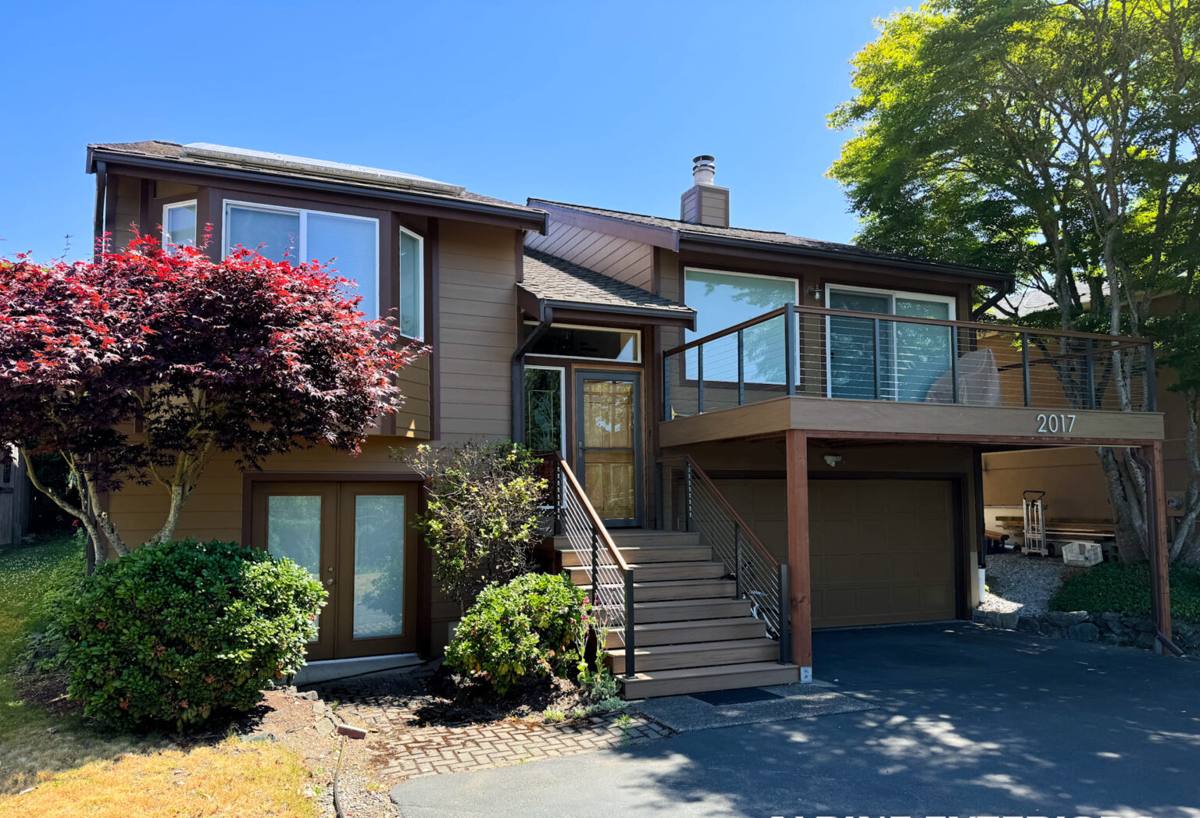
What Peace Arch Roofs Are Up Against
Salt Air and Metal Fatigue
Salt air accelerates corrosion on anything metal — flashing, fasteners, drip edge, roof vents, and the metal components inside a roofing system that most homeowners never see. Once corrosion starts on a fastener or a flashing seam, it doesn't heal itself. It spreads, and eventually it opens a path for water. On homes near the water in Blaine, we see this show up years earlier than it would on the same roof set further inland.
Driving Rain and Wind Direction
Rain that comes in sideways off the water behaves differently than rain that falls straight down. It gets pushed up under shingle edges, into valleys, and around chimney and vent flashing at angles a roof isn't always detailed to handle. A repair that only addresses the visible leak point — without checking how wind-driven rain is actually reaching that spot — tends to fail again within a season or two.
A Long Moss Season
Blaine's mild, damp climate gives moss a long growing window compared to drier parts of the state. Moss doesn't just look bad; it holds moisture directly against the roofing material, lifts shingle edges as it grows, and works its way under the surface layer over time. Left alone, a moss problem turns into a leak problem, usually in the shaded, north-facing slopes that dry out slowest.
Signs a Repair Is Overdue
- Water stains on interior ceilings or upper walls, especially after a windy rainstorm rather than a calm one
- Granules collecting in gutters or at the base of downspouts
- Visible moss growth, particularly on shaded or north-facing roof sections
- Lifted, curled, or missing shingles near valleys, edges, or roof penetrations
- Rust streaking below metal flashing, vents, or fasteners
- Soft or spongy decking felt underfoot in the attic near an exterior wall
- Daylight visible through the roof deck from inside the attic
What a Correct Repair Actually Involves
A roof repair that's built for this climate isn't just swapping out a few damaged shingles. It's a short diagnostic process followed by work that matches the original detailing, or improves on it where the original detailing was the actual problem.
1. Find the Real Source, Not Just the Symptom
Water travels before it shows up as a stain. A leak that appears over one room can originate several feet away, following a rafter or the underside of the decking. We trace the path back to the actual entry point — often a flashing seam, a nail pop, or a compromised valley — rather than just patching where the stain appears.
2. Match Materials and Detailing
Repairs should blend into the existing roof system, not sit on top of it as a mismatched patch. That means matching shingle type, color run where possible, and flashing profile, and it means re-establishing proper overlap and fastening patterns so the repaired section performs the same as the rest of the roof under wind-driven rain.
3. Check Ventilation While You're Up There
Poor attic ventilation traps moisture, which accelerates deck rot and shortens the life of the roofing material from underneath. Any time we're repairing a section of roof, we check that intake and exhaust venting are working as intended, since a repair on a poorly ventilated roof tends to need another repair sooner than it should.
4. Address Moss at the Root, Not Just the Surface
Cutting moss off the surface without addressing what's underneath leaves damaged, moisture-softened material in place. A proper moss-related repair removes the affected shingles or shakes, checks the decking underneath for soft spots, and replaces what's compromised before closing the roof back up.
Our Repair Process
- Inspection. We get on the roof (weather permitting) and in the attic to trace leaks to their actual source, not just the visible symptom.
- Honest assessment. We tell you plainly whether this is a repair, or whether the roof's age and condition mean a repair would just be a short-term fix. We're not in the business of selling repairs on roofs that need replacing, or replacements on roofs that just need a repair.
- Written estimate. A clear scope of work and price before anything starts, no vague line items.
- The repair itself. Matched materials, correct flashing and fastening detail, and a check of surrounding areas that took similar wear.
- Cleanup and walkthrough. Debris removed, magnetic sweep for stray fasteners, and a walkthrough so you can see what was done and why.
Repair or Replace? What Actually Determines It
This is the question we get asked most, and the honest answer depends on more than just the roof's age. Here's how we weigh it:
| Factor | Leans Toward Repair | Leans Toward Replacement |
|---|---|---|
| Extent of damage | Isolated to one section, flashing, or valley | Spread across multiple slopes or the whole roof |
| Roof age | Well within the material's expected service life | At or beyond its expected lifespan for this climate |
| Decking condition | Solid, dry decking under the damaged area | Soft, rotted, or repeatedly wet decking |
| Repair history | First or second repair in this location | Same spot has been patched multiple times before |
| Moss/algae extent | Localized to shaded sections | Widespread across most of the roof surface |
What Affects the Cost of a Roof Repair
Repair pricing is genuinely case-by-case, but the factors that move the price are consistent:
| Cost Factor | Why It Matters |
|---|---|
| Size and location of the damaged area | A single flashing repair costs far less than a full valley or multi-slope repair |
| Roof pitch and access | Steeper roofs and harder-to-reach areas take more time and safety setup |
| Material type | Matching existing shingles, shakes, or metal roofing affects both material and labor cost |
| Decking condition | Rotted decking discovered mid-repair adds material and labor to replace it properly |
| Underlying cause | A repair that also needs a ventilation fix or moss remediation costs more than a like-for-like patch |
We give a firm written estimate after inspection, not a phone-quote guess. If we open up a section and find something worse than expected, like rotted decking, we stop and talk to you before doing anything beyond the original scope.
Moss and Debris: The Maintenance That Prevents Repairs
Given how long moss season runs in this part of Whatcom County, the single most cost-effective thing a homeowner can do is stay ahead of moss and debris buildup rather than waiting for a leak to force the issue.
- Keep gutters and valleys clear of needles and leaf debris, especially under overhanging trees
- Have moss treated or physically removed before it establishes a thick mat, not after
- Trim back branches that shade roof sections and keep them damp longer than the rest of the roof
- Schedule a roof check after major windstorms, since wind-driven rain events are when small gaps turn into active leaks
- Address small issues (a lifted shingle, a loose piece of flashing) before winter's wet season, not during it
Why a Crew That Already Works Peace Arch Matters
Roofing crews that mostly work drier, inland areas don't always detail flashing and valleys with wind-driven coastal rain in mind, because they don't need to most of the time. Working regularly in Blaine and the Peace Arch area means we're used to sizing up how salt air, prevailing wind direction, and moss exposure have specifically affected a given roof, rather than applying a generic repair approach and hoping it holds. It also means faster response — we're not driving in from across the county when a storm knocks flashing loose or a wind-driven rain event finds a new gap.
We're licensed and insured to work in Washington, and we stand behind the repair work we do. If you're dealing with a leak, missing shingles, or a moss problem on a Peace Arch area roof, we're glad to take a look and give you a straight answer — repair, monitor, or replace — with no pressure either way.
If you've got a roof issue in the Peace Arch area, reach out for a free, no-pressure estimate using the form below. We'll take a look, explain what we find, and give you a clear, written scope before any work begins.