 Blaine Siding
 Siding Built for the Nooksack Valley, Not Just Sold Here
Everson sits along the Nooksack River in Whatcom County, and homes here deal with a specific kind of weather pressure: long stretches of damp, overcast days, heavy tree cover in a lot of yards, and humidity that lingers in the valley longer than it does out on open ground. Add in the driving rain that comes through this part of Washington for months at a stretch, and a moss season that can run from fall through spring, and you've got conditions that are genuinely hard on exterior siding — especially siding that wasn't engineered for it in the first place.
We've been doing siding replacement work across Whatcom County long enough to know that Everson homes fail in fairly predictable ways: moisture wicking up from grade, moss and algae holding water against the wall assembly, and old siding materials that were never rated for this kind of sustained exposure. A siding replacement here isn't just a cosmetic upgrade. Done right, it's a moisture-management system for the whole house.
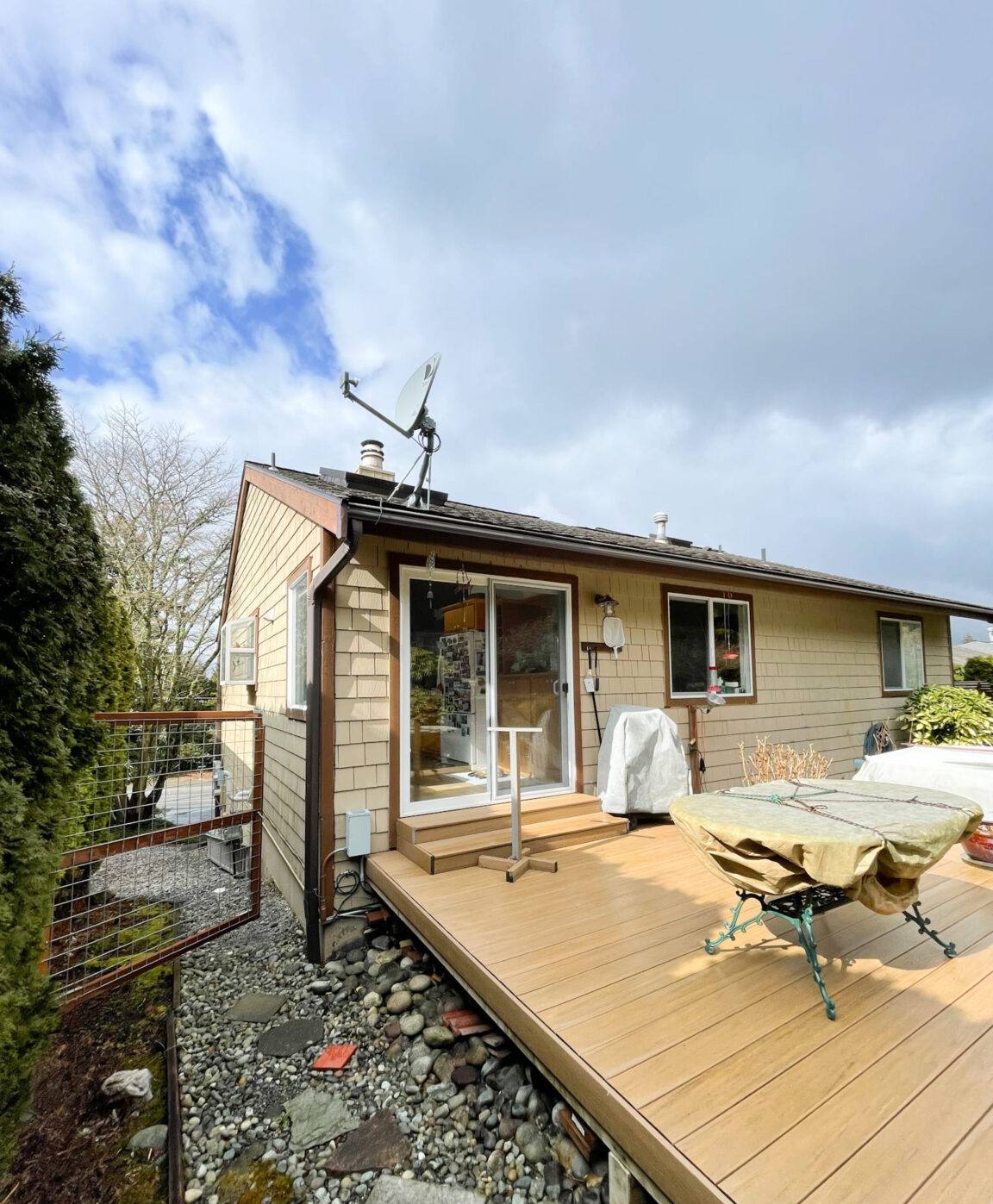
Why Older Siding Struggles in This Climate
Moss and Algae Aren't Just Cosmetic
A lot of homeowners see moss or green streaking on their siding and think it's a cleaning problem. Often it's a moisture problem. Moss holds water against the surface of the siding for extended periods, and depending on the material underneath, that sustained dampness can lead to swelling, delamination, or rot — problems that don't show up until they're expensive.
Driving Rain Finds the Gaps
Wind-driven rain doesn't just fall straight down — it gets pushed sideways into laps, seams, and trim joints. On a house where the water-resistive barrier, flashing, or fastening was done poorly (or has simply aged out), that rain works its way behind the siding over time. By the time it's visible from the outside, there's usually already damage to the sheathing underneath.
Regional Coastal Influence
Whatcom County's proximity to Puget Sound and the Strait of Georgia means salt-laden marine air is a real factor for exterior materials across the region, even for homes set back from the water. Combined with the valley's humidity, it's one more reason siding materials and fasteners need to be chosen for durability, not just appearance.
Signs an Everson Home Needs Siding Replacement
Not every siding problem means a full replacement, but these are the signs we take seriously when we're out doing an assessment:
- Soft or spongy spots when you press on the siding, especially near the bottom courses
- Persistent moss or algae growth that returns quickly after cleaning
- Visible gaps, warping, or cupping in individual boards or panels
- Paint that's peeling, bubbling, or failing faster than a normal repaint cycle
- Staining or discoloration around seams, trim, and window flashing
- Interior signs — musty smell, peeling interior paint, or soft drywall near exterior walls
- Siding that's visibly original to a home 20+ years old and was never a premium product to begin with
What a Correct Siding Replacement Actually Involves
Siding replacement is easy to do badly and hard to do right. A correct job isn't just pulling off old material and nailing up new boards — it's rebuilding the water-management layer behind the siding, which is the part that actually protects the house.
Tear-Off and Inspection
We remove the old siding down to the sheathing and actually look at what's there. In older Everson homes, this is often where we find out whether the house has hidden moisture damage that never showed on the surface. This step matters — you can't fix what you don't uncover.
Water-Resistive Barrier and Flashing
A new weather-resistive barrier goes on correctly lapped, with flashing detailed around every window, door, and penetration so water is directed out and down, never trapped behind the cladding. This is the single most important part of the job for a climate like this one, and it's also the part that gets rushed on cheap installs.
Correct Fastening and Clearances
Fiber cement siding has a manufacturer-specified fastening schedule, and proper clearance from grade, roofing, and decks matters just as much as the siding itself. Get these details wrong and you're inviting the exact moisture problems that make replacement necessary in the first place.
Finish Work
Trim, caulking at appropriate joints only (not as a substitute for flashing), and a factory-applied finish that doesn't rely on field-painting to hold up to years of damp weather.
Why We Install Only James Hardie Fiber Cement
We standardized on James Hardie fiber cement siding because it's engineered for exactly the conditions Everson and the rest of Whatcom County deal with. It's non-combustible, it doesn't swell or rot the way wood-based products can when moisture gets to them, and Hardie's ColorPlus factory finish is baked on and warrantied against fading and peeling — which matters when you're dealing with months of damp weather and a real moss season every year. Hardie also makes climate-engineered HZ product lines specifically formulated for different regions, and their transferable warranty backs the product for the long haul, not just the first few years.
We don't install vinyl siding, LP SmartSide, or untreated wood products like primed spruce or cedar. That's a deliberate call, not a sales pitch — those products each have real trade-offs in sustained moisture and humidity that we'd rather not put our name behind. If you're weighing a replacement, we're happy to talk through the honest pros and cons of what's out there. But what we put on homes ourselves is Hardie, installed to spec.
Material Comparison for This Climate
| Material | Moisture / Moss Resistance | Maintenance Over Time | Typical Lifespan |
|---|---|---|---|
| James Hardie Fiber Cement | Non-combustible, dimensionally stable, holds up to sustained damp | Low — factory finish resists fading/peeling | 30+ years with correct install |
| Vinyl | Doesn't rot, but can warp/crack and trap moisture behind panels | Low, but limited repair options when damaged | 15–25 years |
| Wood (cedar, primed spruce) | Vulnerable to moisture, rot, and moss without diligent upkeep | High — regular painting/sealing required | Highly variable, often 10–20 years |
| Engineered Wood (e.g., LP SmartSide) | Treated for moisture resistance but still wood-based, sensitive to installation errors | Moderate — edge sealing and caulking upkeep matters | 20–30 years, install-dependent |
What Drives Cost on an Everson Siding Project
Every home is different, but the same handful of factors tend to move the price on a siding replacement in this area:
- The condition of the sheathing underneath — hidden moisture damage found during tear-off adds repair scope
- Home size, number of stories, and roofline complexity around dormers, gables, and porches
- Trim and detail work — corner boards, window trim, and fascia often get replaced alongside siding
- Siding profile and Hardie product line chosen (lap width, texture, ColorPlus color selection)
- Access — tree cover, fencing, and tight lot lines common in Everson can affect setup and disposal logistics
Our Process, Start to Finish
We start with an on-site assessment, not a guess from a photo. We look at your current siding, check for moisture intrusion at trim and grade, and talk through what's realistic for your home and budget. From there we handle permitting where required, schedule the tear-off and inspection, rebuild the water-resistive barrier and flashing correctly, install the Hardie product and trim to spec, and do a final walkthrough with you before we consider the job done. We stand behind our install, and Hardie's transferable warranty backs the material.
Why Hiring a Crew That Already Works Everson Matters
A lot of siding failures we get called out for weren't caused by bad material — they were caused by an installer who didn't account for the local conditions. Crews who don't regularly work in river valleys with this kind of humidity and rain exposure can underestimate how much the water-management details matter here. We know what to expect when we pull off old siding on an Everson home — where moisture tends to collect, what grade clearance issues show up, and how the local weather patterns stress a wall assembly over time. That local pattern-recognition is worth more than it sounds like on paper, and it's the difference between a siding job that lasts and one that needs attention again in five years.
If your Everson home's siding is showing its age — or you just want an honest read on whether repair or full replacement makes more sense — we're glad to come take a look. There's no pressure and no obligation, just a straight assessment and a clear estimate for what it would take to do the job right.