 Blaine Siding
 Window Installation for Sumas Homes
Sumas sits at the far edge of Whatcom County, right against the Canadian border where the flat farmland of the Sumas Prairie runs up against Sumas Mountain. It's a different setting than the towns closer to Bellingham Bay — more open valley floor, more distance from open water — but a window installation here still has to answer for a demanding stretch of Pacific Northwest weather. Wind-driven rain, a valley that holds moisture and fog longer than higher ground, real freeze-thaw cycling in winter, and a moss season that runs most of the year all put a window's installation to the test long before the glass or hardware ever wears out.
We're based in Blaine, and Sumas is regular territory for our crew across Whatcom County. That matters for window work specifically, because a window isn't a standalone product — it's an opening cut into a wall assembly, and how it's flashed, sealed, and integrated with that wall determines whether it performs for twenty-five years or starts leaking behind the trim in five. This page covers what correct window installation looks like for a Sumas home, and why the details we build in matter more here than they would in a calmer, drier market.
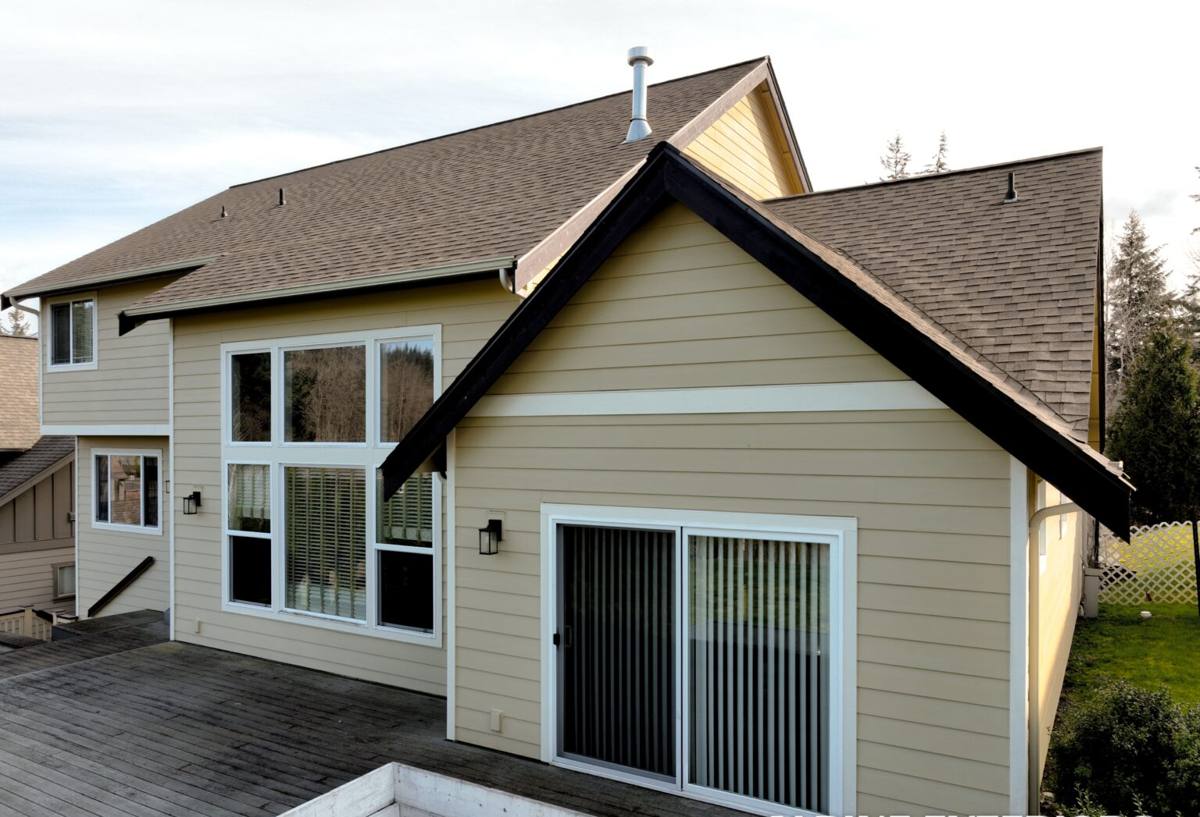
What Sumas's Location Does to a Window Installation
Driving Rain Across Open Farmland
Storms moving through this part of Whatcom County rarely drop rain straight down. Wind pushes it sideways into window flashing, head trim, and sill pans, and on the flat, open farmland around Sumas there's less high ground and tree cover to break that wind than in more sheltered parts of the county. That means window openings here take a more direct, sustained sideways load during a storm, and installation details that would pass in a calmer setting get tested harder on a Sumas property.
Cold Outflow Wind from the Fraser Valley
Sumas sits near the mouth of the corridor that funnels cold air down out of British Columbia's Fraser Valley, and homes here see sharper, windier cold snaps in winter than towns farther south in the county. That combination of wind and cold puts real stress on window seals, weatherstripping, and frame joints — materials that flex and contract more under a hard temperature swing are more likely to open a gap than ones rated for it.
Freeze-Thaw Cycling
Because Sumas sees more frequent hard frosts than the milder, coastal parts of Whatcom County, moisture that gets into a poorly sealed frame or sill has more opportunity to freeze, expand, and crack the surrounding material than it would in a consistently mild climate. A window installation that ignores this — treating the job like a simple product swap rather than a seal against a real freeze-thaw cycle — tends to show cracked caulk, drafts, and soft trim within a few winters.
Valley Humidity and a Long Moss Season
Sumas sits low in the Nooksack River valley, and low ground holds moisture and fog longer after a storm than higher, more exposed terrain. That extra dwell time matters at a window sill and lower frame corners, where mild temperatures and consistent dampness support moss and mildew growth for most of the year. A sill that doesn't shed water cleanly becomes the first place that shows it.
Full-Frame vs. Insert Replacement: Getting the Right Call
One of the first decisions on any window project is whether to do a full-frame replacement — removing the old unit down to the rough opening and rebuilding the flashing from scratch — or an insert replacement, which sets a new window into the existing frame. Insert replacement is faster, less disruptive to surrounding siding and trim, and works well when the existing frame is sound and was flashed correctly the first time. Full-frame replacement takes longer and costs more, but it's the honest call whenever there's already moisture damage at the sill or jambs, or when the original flashing was never done right — which we see often enough on older Sumas Prairie farmhouses that predate current flashing standards.
We won't default to the cheaper option just because it's faster to sell. If an insert replacement would seal a moisture problem up behind a new window instead of fixing it, we'll tell you that before you commit, along with what a full-frame approach actually involves.
Frame Materials for a Freeze-Thaw Climate
Frame material choice matters more in a border-valley climate like Sumas's than it would somewhere milder, because the material has to hold up to both sustained moisture and real winter temperature swings, not just one or the other.
| Frame Material | Freeze-Thaw & Moisture Behavior | Typical Maintenance | Realistic Lifespan Here |
|---|---|---|---|
| Vinyl | Won't rot; quality varies by weld and seam construction, which matters more under repeated cold snaps | Low; occasional track and weep-hole cleaning | 20-30 years |
| Fiberglass | Dimensionally stable across temperature swings; resists moisture well | Low | 30-40+ years |
| Wood, painted or clad | Attractive but vulnerable at joints and sills unless finish is diligently maintained | Higher; regular paint or finish upkeep | 15-30 years depending on upkeep |
| Aluminum | Conducts cold directly into the frame during outflow wind events; can corrode over time without a good finish | Moderate | 20-30 years |
We'll walk through the honest trade-offs for your specific home rather than defaulting to whichever product is easiest to install. On a Sumas property that sees real winter cold snaps, we lean toward vinyl or fiberglass on most weather-facing walls, but the right call still depends on your budget and how the house is used.
What a Correct Installation Involves
Removal and Opening Prep
The old window comes out carefully, and we check the condition of the rough opening before anything new goes in. On older Sumas farmhouses, this is often where we find out whether the original framing or flashing needs correction — something worth knowing before a new window is set, not after.
Sill Pan and Flashing
This is the step that decides whether a window installation holds up in this climate. A properly pitched sill pan sheds water outward instead of letting it pool under the frame, head flashing ties into the housewrap or building paper above the window so water sheds down and out, and jamb flashing integrates with the wall assembly rather than relying on caulk alone. In a spot exposed to Sumas's driving rain and cold outflow wind, none of these steps are optional.
Setting, Sealing, and Insulating
The window gets shimmed square and plumb, sealed with materials rated for real temperature swings, and insulated around the frame in a way that doesn't trap moisture against the framing. Weep holes and drainage paths stay clear and functional rather than getting sealed shut by accident during installation.
Trim and Finish
Exterior trim gets integrated to match the surrounding siding, and any corrosion-resistant fasteners and hardware are chosen with this climate's moisture and cold in mind, not a generic spec sheet.
A Quick Checklist Before You Sign Off
- Confirm whether the job is insert or full-frame, and why that's the right call for your opening
- Ask how the sill pan will be pitched and what the flashing sequence looks like
- Check that weep holes and drainage paths are left clear, not sealed over
- Ask what frame material is recommended for your specific wall exposure and why
- Get a clear answer on what's covered under the window's warranty versus the installation labor warranty
- Confirm the crew has worked on properties in Sumas or similar border-valley locations before, not just coastal towns
Our Process, Start to Finish
- On-site assessment — we look at the existing opening, the condition of the current frame and flashing, and the wall's exposure to wind and rain
- Honest recommendation — insert or full-frame replacement, explained with the reasoning behind it, not just whichever is quickest to sell
- Material selection — we walk through frame options suited to your home's specific exposure and budget
- Removal and opening prep — the old unit comes out carefully, with any hidden framing or flashing issues addressed before the new window goes in
- Installation and flashing — the new window is set, sealed, and flashed to a sequence built for driving rain and winter wind, not a generic manufacturer minimum
- Trim and finish — exterior trim is matched to the surrounding siding for a clean, finished look
Cost Factors for Sumas Window Projects
| Factor | Why It Matters |
|---|---|
| Insert vs. full-frame | Full-frame costs more but is the honest fix when there's existing moisture or flashing damage |
| Frame material | Vinyl, fiberglass, wood, and aluminum differ in upfront cost and long-term maintenance in this climate |
| Number of openings | Whole-house projects typically have better per-window economics than one or two units |
| Opening condition | Rot, prior flashing failures, or out-of-square framing on older homes add repair work before install |
| Glass package | Double- versus triple-pane and Low-E coatings affect both cost and cold-weather performance |
| Wall exposure | Weather-facing walls that see the most wind and rain sometimes warrant extra flashing detail |
We won't quote a number without seeing the openings — exact pricing depends on the home, the scope, and what condition the existing framing is actually in.
Signs a Sumas Home Needs Window Attention
- Fogging or condensation trapped between panes, usually a sign of a failed seal
- Noticeable drafts or cold spots near a closed window, especially during a winter outflow event
- Soft, discolored, or spongy sill and trim material
- A window that's become hard to open, close, or latch smoothly
- Cracked or shrinking caulk lines around the frame after a cold snap
- Moss or dark staining building up on or below the sill
- Water staining on interior walls or ceilings near a window
Any one of these is worth a professional look before another wet season passes. Caught early, most point to a repair or reseal. Left alone, several point to moisture already working into the surrounding wall framing.
Why a Crew That Already Works Sumas Matters
Manufacturer installation guides are written for average conditions, and Sumas doesn't average out to much of anything — it's got the same sustained rain and moss season as the rest of Whatcom County, plus a colder, windier winter than the towns closer to the water. A crew that has actually installed and repaired windows on properties out on the Sumas Prairie knows which manufacturer details are non-negotiable here and where it's worth spending extra time on flashing or sealant even when a spec sheet says it's optional.
That experience shows up in decisions that don't make it into a sales pitch: how much lap a head flashing course needs on a wall that catches the worst of a cold outflow wind, when a sill needs a sloped composite pan instead of relying on caulk, which fastener finish actually holds up through repeated freeze-thaw cycles instead of just looking fine on install day. Those are the details that decide whether a window installation is still performing cleanly in twenty years or drafting and staining within five.
Get a Free, No-Pressure Estimate
If your Sumas home has windows that are drafty, fogging, hard to operate, or original to a house that's due for an upgrade, we're glad to take a look and give you a straightforward read on what it actually needs — insert or full-frame, and why. Use the form below to schedule a free, no-pressure estimate.